

3I/ATLAS Emerges: Its Chemical Fingerprint Is Not From Our Solar System
Interstellar comet 3I/ATLAS is visible in the UK. This alien visitor, moving at 221,000 km/h, has a chemical makeup older than our Sun.
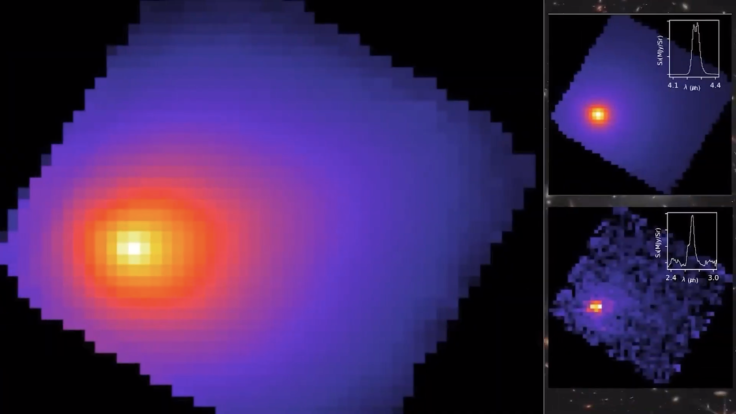
Imagine an object sailing through the black void, a piece of cosmic shrapnel that was formed in a star system light years away, perhaps even before our own Sun ignited. This is not science fiction; it is the reality of interstellar comet 3I/ATLAS, and it has just been captured in a moment of sublime solitude over one of Earth's most ancient landscapes.
Following its passage behind the Sun in autumn 2025, the rare visitor is now a fleeting feature in our winter night sky, giving astronomers—both amateur and professional—a brief, unrepeatable window to gaze upon an alien artefact. For UK stargazers, 3I/ATLAS is now observable in the pre-dawn sky, currently positioned in the constellation of Leo.
The visibility of 3I/ATLAS has sparked a viewing frenzy, meaning that even those with basic equipment, such as smart telescopes, can instantly hone in on and capture beautiful images of the comet. It is important for observers to note that the object is far too faint to be seen with the naked eye, requiring a telescope to view its delicate structure.
While the heavy-hitters of space exploration, including the Hubble Space Telescope and the James Webb Space Telescope, have been tracking its progress, it took one dedicated photographer, Osama Fathi, to ground the celestial event with a stunning, earthy perspective from Egypt's Black Desert. His resulting photograph, marrying the unfathomable scale of the cosmos with the silent beauty of our own planet, has captivated the world.

The Unrepeatable Journey of Interstellar Comet 3I/ATLAS
The term 'interstellar comet' is key to understanding the significance of the visitor, marking it out as a true cosmic trespasser. Formally designated as the third (3I) interstellar object ever confirmed to be passing through our cosmic neighbourhood, following the famous 1I/ʻOumuamua and 2I/Borisov, 3I/ATLAS originated beyond our Solar System.
It is merely passing through our cosmic environs, a wanderer that will soon be jettisoned back into the endless blackness of deep space, passing through the Solar System only once before returning to interstellar space.
This colossal speed is estimated to be over 221,000 kilometres per hour (137,000 mph), driven by the object's hyperbolic trajectory. This is why every observation, every captured photograph, is treated as a historic event that will literally never be repeated.
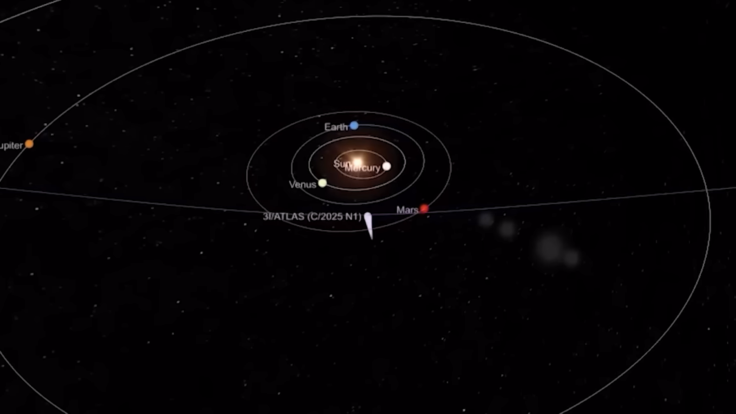
The comet is due to make its closest approach to Earth on December 19, 2025, when it will still be a staggering 270 million kilometres (170 million miles) away, posing absolutely no threat to our planet.
The sheer breadth of the global effort to observe this comet highlights its universal importance. Its movements have been meticulously tracked not just by Earth-orbiting observatories but also by NASA solar missions, a Mars spacecraft, and even a European probe on its way to Jupiter.
It's a celestial target that unites the global astronomical community, yet for most people, it has remained an abstract data point. That is until Fathi's simple, terrestrial capture brought the spectacle back down to Earth.
Standing alone beneath the vast Saharan sky, he managed to immortalise the comet against a backdrop of ancient, earthly rock and silent trees. His image serves as a powerful reminder that the universe's greatest spectacles can still be viewed and appreciated from our own small corner of the cosmos.
Reflecting on the experience, Fathi described the scene with an almost poetic reverence. 'From the heart of Egypt's Black Desert, where volcanic hills rise like silent sentinels and acacia trees stand alone against the night, an object from another star system drifts through our sky: interstellar comet 3I/ATLAS', he says.
The image itself holds an incredible secret about the object's mysterious origins. 'In this frame, the faint green glow of 3I/ATLAS slips between the desert trees, a visitor older than our Sun, passing through the Solar System only once before returning to interstellar space'.
That ethereal green or cyan hue, he explains, is a chemical fingerprint: 'The comet's subtle cyan hue comes from faint cyanide radical gas emission in its coma; a chemical fingerprint shared with distant comets but arriving here from a planetary system we will never see'.
The Extreme Dedication Required to Photograph 3I/ATLAS
Capturing such a faint, fast-moving, and transient object requires immense patience and technical rigour, especially for an amateur photographer trying to secure a moment in time for 3I/ATLAS. Fathi's success offers a masterclass in deep-sky astrophotography, providing a clear blueprint for others who are now trying to capture an image of the comet using smart telescopes or more traditional setups.
Fathi detailed the professional-grade equipment and meticulous process he used to achieve the stunning result. 'This image was captured using an astro-modified Nikon Z6 camera paired with a RedCat telescope lens', he says, 'pushed to 3× optical zoom to achieve an effective focal length of about 750mm. That was enough to isolate this rare traveler against the desert horizon'.
To make the faint nucleus and surrounding gas halo visible, he had to employ a technique known as stacking, combining dozens of individual shots taken over a long period. 'To reveal the comet's structure and faint gas halo, the scene was stacked from 60 exposures of 60 seconds at ISO 1500, then 60 exposures of 30 seconds'.
These extended exposure times were necessary to gather enough light from the distant object, and they could only be accomplished under the most pristine viewing conditions. 'These long integrations allowed the comet's delicate coma and motion against the background stars to emerge clearly, even under the extremely dark Saharan skies.'
The frame itself was planned and captured from the Black Desert in Egypt on the night of 29 November 2025, a session that began in the dead of night. 'I began the session around 03:00 in complete desert silence. No city lights, just the dark silhouettes of the trees and the pure sky above'.
It is in these moments of profound stillness, under skies untainted by human light pollution, that the most extraordinary cosmic encounters take place. Fathi's photograph is not just a scientific record; it is a human record of a once-in-a-lifetime moment. 'In that still, beautiful scene, 3I/ATLAS appeared in the field of view: a faint visitor from another star system, crossing our sky once in a lifetime while the desert slept'.
As this enigmatic visitor continues its long drift back into the interstellar void, its image will serve as a poignant reminder of the dedication required to bring those distant mysteries into dazzling focus.
© Copyright IBTimes 2026. All rights reserved.