NASA Unveils 3I/ATLAS Photos Tonight: Is The Mysterious Object an Alien Probe?
NASA is set to unveil new images of 3I/ATLAS. Get the details on this mysterious interstellar comet and the alien probe speculation
It has hurtled through the void for billions of years, a very old, very cold chunk of rock and ice that has travelled from a distant, unknown star system. Now, this mysterious traveller, officially known as 3I/ATLAS, has everyone on Earth waiting. Scientists are calling it only the third interstellar comet ever found (after the now-famous 1I/'Oumuamua' in 2017 and 2I/'Borisov' in 2019), and its existence alone is enough to excite the global astronomical community.
But this isn't just a scientific curiosity; thanks to some high-profile speculation about alien technology, the object has become a cultural phenomenon. Tonight, all eyes turn to NASA as it releases new photos and information during its live update, hoping to unveil the true nature of this remarkable cosmic visitor.

The Discovery and the Intrigue Surrounding 3I/ATLAS
The journey of 3I/ATLAS into the public consciousness began on July 1, 2025, when it was spotted by the ATLAS system — a network of robotic telescopes meticulously watching the sky for moving objects. ATLAS spotted a faint moving dot of light, and after more checks, it became clear that it was not from our Solar System.
Its speed and trajectory confirmed that it's moving on a one-way path through our Solar System; it's 'not orbiting the sun' and will continue travelling into deep space again after its pass-by. This extremely fast transit is the crucial clue that it originated far away, beyond the gravitational pull of our home star. In fact, at an inbound velocity of approximately 58 kilometres per second (36 miles per second), it is the fastest of the three known interstellar objects.
The mystery was instantly amplified when Avi Loeb, a scientist at Harvard, spoke about the discovery. Loeb's claim to fame stems from his advocacy for the possibility that the first interstellar visitor, 'Oumuamua', was 'some sort of alien probe'. Though most scientists disagreed with him then, his comments put 3I/ATLAS in the spotlight and sparked fervent speculation online that this new object 'might be an artifact from an alien civilisation'. Scientists maintain that for now, the most simple explanation is that it's a natural comet. Nevertheless, the excitement and curiosity surrounding such a rare interstellar object remain palpable.
What We Have Learnt So Far About 3I/ATLAS
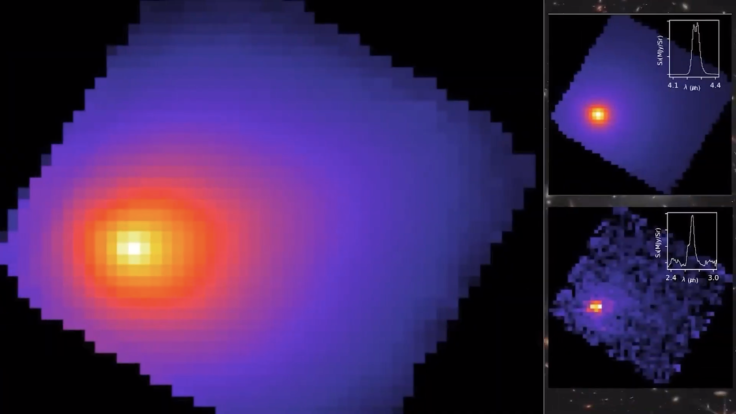
Despite its fleeting visit, powerful instruments have already been 'focused' on 3I/ATLAS. Both the Hubble Space Telescope and the James Webb Telescope have looked at it, providing scientists with fascinating early data. The Hubble observations helped estimate the comet's nucleus size to be between 320 metres (1,050 feet) and 5.6 kilometres (3.5 miles) in diameter.
These initial studies show that the object contains 'a lot of carbon dioxide, more than most comets we see near Earth'. This finding is significant. It strongly suggests the comet was formed in a 'very cold place', perhaps around 'a star much weaker than our sun'.
The high concentration of preserved volatile ices, like carbon dioxide, indicates that it hasn't spent much time in warmer conditions, cementing its origin in a distant, frigid stellar nursery. Some estimates suggest that 3I/ATLAS is almost certainly older than our 4.6-billion-year-old sun, making it a true time capsule of star formation in the Milky Way.
The fact that it is only the third interstellar comet found means that astronomers are scrambling to gather as much data as possible before it leaves our planetary neighbourhood for good. The object's high velocity further complicates observations, but it reinforces its origin outside of our stellar system. It has already passed its closest approach to the sun on Oct. 29 2025, and is now heading towards its closest approach to Earth, which will occur on Dec. 19, 2025 at a safe distance of 270 million kilometres (168 million miles).
The Imminent NASA Revelation: Unanswered Questions for 3I/ATLAS
The excitement will culminate tonight. People all over the world are waiting to see what NASA will show: 'At 9 p.m. Paris time, NASA will release new photos and information' about the mysterious object. The update is expected to provide images and data that could settle some long-standing questions:
- 'What does 3I/ATLAS really look like?'
- 'Does it behave like a normal comet?'
- 'Is its shape or tail in any way peculiar?'
- 'Could there be signs of something unexpected?'
While many scientists think tonight's update will ultimately confirm it's a natural comet, the nature of interstellar objects is so rare and so little-understood that every new photograph carries the possibility of an extraordinary reveal. All eyes now turn to NASA, with everyone waiting for what the new images will reveal about this mysterious visitor from another star.
The possibility of a natural 'space iceberg' or something far more unusual is what makes 3I/ATLAS so compelling. Whether it's an ancient messenger from a dying star or simply a chunk of ice, its passage offers a once-in-a-lifetime opportunity to study the origins of matter from outside our system. The moment of truth arrives tonight, when NASA finally pulls back the curtain.
© Copyright IBTimes 2026. All rights reserved.
- MOST POPULAR IN Trending