3I/ATLAS Was Ejected From Another Star System Billions Ago: Report
Interstellar comet 3I/ATLAS makes closest approach — track the cosmic outsider before it leaves

December is finally here, and with it comes the much-anticipated close approach of the interstellar comet 3I/ATLAS. This strange celestial visitor, which has captivated both the scientific community and the general public, is about to make its closest-ever pass to our planet.
For a brief period, this ancient space object — composed of planetary material from another star — will offer astronomers their best chance to study a genuine cosmic outsider. Of course, the phenomenon has also fuelled a rather sensational conspiracy theory: that 3I/ATLAS could be an incoming spaceship.
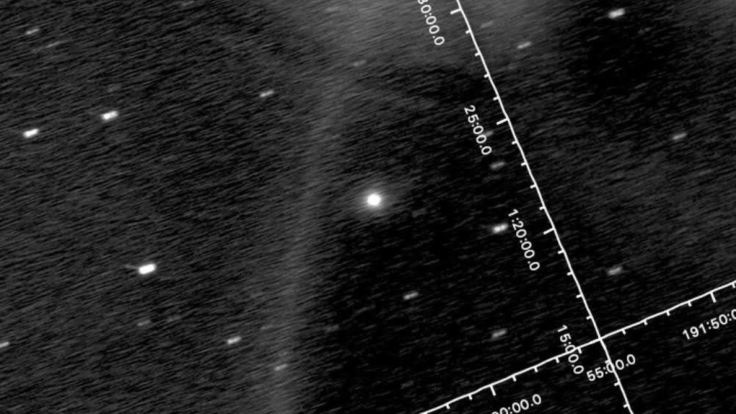
The Mystery of Interstellar Object 3I/ATLAS
In July, the astronomical community confirmed the existence of 3I/ATLAS, marking it as only the third-ever object discovered to have originated outside Earth's solar system. It was first spotted on July 1, 2025, by the NASA-funded Asteroid Terrestrial-impact Last Alert System (ATLAS) telescope in Río Hurtado, Chile.
The object's name itself reflects its remarkable nature: The '3I' stands for the third (3) confirmed interstellar (I) object to visit our Solar System, following the famous 1I/'Oumuamua and 2I/Borisov. The 'ATLAS' part names the survey that discovered it. This is what makes it so fascinating: it is not gravitationally bound to our sun. According to NASA, the object was spotted 'whizzing at about 137,000 mph'.
Crucially, observations concerning 3I/ATLAS's speed and trajectory conclusively 'confirmed to astronomers that it formed in another star system and was ejected into interstellar space — the region between the stars', explains NASA. Its hyperbolic orbit is proof of its fleeting visit; unlike comets born here, 3I/ATLAS will eventually be flung back out into the dark vastness from which it came. This comet has been drifting for potentially billions of years, travelling from the general direction of the constellation Sagittarius in the centre of the Milky Way before recently entering our cosmic neighbourhood.

The Close Approach and the True Scale of 3I/ATLAS
The object's close approach to Earth is projected for Dec. 19. While exciting, the comet is 'not a threat to Earth', as it will pass within about 170 million miles of our planet — a safe distance that is approximately twice the distance between Earth and the sun. Previously, on Oct. 30, the object came within 130 million miles of the sun, just inside the orbit of Mars.
Astronomers are still working to determine the precise size of the comet. Estimates of its solid, icy nucleus have a wide range, based on data returned from the Hubble Space Telescope, suggesting it is anywhere from about 1,400 feet to 3.5 miles wide, according to the European Space Agency.
Dispelling the Alien Spaceship Theory of 3I/ATLAS
The sudden jaunt of this strange outsider through our solar system has, predictably, sparked several outlandish conspiracy theories. The most notorious theory came from a Harvard astrophysicist named Avi Loeb, who speculated that 3I/ATLAS 'could be an alien spaceship'. While Loeb later conceded on the publishing platform Medium that the object is 'most likely a comet of natural origin', he has not entirely 'ruled out the possibility that it could be extraterrestrial technology'.
However, NASA officials have been emphatic in their rejection of the idea. In a social media exchange with reality television star Kim Kardashian in October, NASA Acting Administrator Sean Duffy offered a concise and definitive statement: 'No aliens. No threat to life here on Earth'.
Echoing this scientific consensus during the agency's November news conference, Nicola Fox, associate administrator of NASA's Science Mission Directorate, stated that 'we certainly haven't seen any technosignatures or anything from it that would lead us to believe it was anything other than a comet'.
For those hoping to catch a glimpse, you will need at least a small telescope, as 3I/ATLAS is not visible to the naked eye. Observers can spot the comet in the pre-dawn sky until spring 2026. NASA has also released a trove of never-before-seen images of 3I/ATLAS on Nov. 19, courtesy of its fleet of space telescopes. The agency's 'Eyes on the Solar System' online simulation allows the public to track the exact current location and path of 3I/ATLAS as it continues its spectacular but brief journey through our solar system.
The journey of the interstellar comet 3I/ATLAS represents a rare and profound opportunity to study material from another star system, a genuine cosmic outsider. Don't miss this fleeting encounter as it speeds through our neighborhood before returning to the interstellar void. Track its spectacular, brief journey using NASA's 'Eyes on the Solar System' online simulation and grab your small telescope for a chance to spot this billion-year traveler before it leaves us in spring 2026.
© Copyright IBTimes 2026. All rights reserved.
- MOST POPULAR IN Trending