Scientists Stunned As 3I/ATLAS Poised To Unleash Biggest Cosmic Surprise Since Hale-Bopp on December 19
Carbon-rich interstellar wanderer 3I/ATLAS returns for closest Earth pass in December, offering rare chance to unlock secrets of other star systems.
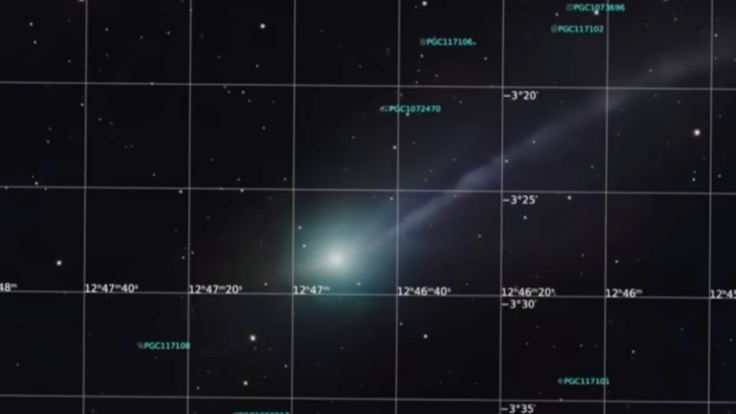
Scientists are preparing for a potential cosmic revelation as interstellar comet 3I/ATLAS makes its closest pass to Earth on 19 December 2025. Since its discovery, the comet has defied many expectations with its unusual chemical makeup and behaviour, offering a rare window into planetary systems beyond our own.
Researchers believe the upcoming approach could deliver the most revealing data yet on how comets from other star systems compare with those formed around our Sun. This makes the event a critical opportunity to test and potentially revise our understanding of comet formation across the galaxy.
A Rare Interstellar Visitor — And Nothing as We've Seen
3I/ATLAS was first spotted by the NASA-funded ATLAS survey telescope in Chile, with its discovery formally reported on 1 July 2025.
Astronomers quickly determined that the comet's path is hyperbolic, meaning it is not gravitationally bound to the Sun but is merely passing through our Solar System. This categorises 3I/ATLAS as the third confirmed interstellar object ever observed, following 1I/ʻOumuamua and 2I/Borisov.
Observations from the Hubble Space Telescope suggest a diameter between 440 metres and 5.6 kilometres.
As of its next close pass, the comet will stay a safe distance from Earth, about 1.8 astronomical units, or roughly 270 million kilometres.
A Composition That Challenges Norms
What makes 3I/ATLAS especially compelling is its unusual chemical makeup. Observations using the infrared NIRSpec instrument aboard the James Webb Space Telescope (JWST) revealed a coma dominated by carbon dioxide (CO₂). The ratio of CO₂ to water (H₂O) measured was approximately 8:1, placing 3I/ATLAS among the most CO₂-rich comets ever recorded.
This unusual composition suggests two possibilities: either 3I/ATLAS formed in an environment vastly different from our own Solar System's typical comet-forming regions, or its outer layers were processed by cosmic radiation over aeons. A recent analysis proposes that galactic cosmic rays may have altered its surface chemistry, converting CO to CO₂ and creating an organic-rich crust on the nucleus.
Furthermore, ultraviolet observations from the Neil Gehrels Swift Observatory (Swift) in late July 2025 detected OH emission near 3I/ATLAS, a signature of water-ice sublimation. The inferred water production rate was around 40 kilograms per second, indicating a substantial active surface (roughly 19 square kilometres) far larger than is typically seen on Solar System comets at similar distances from the Sun.
Unusual Behaviour, Incredible Opportunity
As 3I/ATLAS sweeps through the inner Solar System, it has already been captured by multiple spacecraft. The Mars Reconnaissance Orbiter (MRO) snapped images during a close fly-by in early October 2025, among the closest imaging ever achieved by any spacecraft of an interstellar visitor.
The STEREO‑A heliophysics mission also succeeded in detecting 3I/ATLAS via stacked exposures, a notable feat given that the comet was expected to be too faint for such instruments. This marks the first time NASA's fleet of heliophysics spacecraft has deliberately tracked a confirmed interstellar object.
Solar observatories and comet researchers now regard the 19 December pass as a critical observational window. By then, the comet will have exited the glare of the Sun and will be observable again with ground- and space-based instruments, offering a final chance to collect high-resolution data as the object exits our system.
The night skies have some special gifts for you this December:
— NASA (@NASA) December 1, 2025
- The peak of the Geminid meteor shower
- The closest approach of 3I/ATLAS to Earth (at about 170 million miles)
- A Jupiter-Moon conjunction
Get more details on this month’s celestial sights: https://t.co/wmmYGYDqgb pic.twitter.com/hpm5fyOmTc
What 19 December Could Reveal — And Why It Matters
If observations around 19 December confirm that the comet's unusual composition and activity are stable or evolving, the implications would be profound.
It could demonstrate that comets from other star systems are chemically different, shaped by radiation or formation environments alien to our own. That would force scientists to revise models of comet formation, volatile distribution, and the diversity of small bodies across the galaxy.
Moreover, the comet's highly processed surface, potentially the result of long exposure to galactic cosmic rays, could offer a glimpse into the effects of interstellar travel on icy bodies.
Ultimately, each interstellar visitor offers a rare opportunity to compare extrasolar materials with those from our own system, shedding light on planetary formation processes across the Milky Way.
© Copyright IBTimes 2026. All rights reserved.
- MOST POPULAR IN Trending