

Scientists Link Australia's 20km-Long Trenches to Hidden Caves That Could Hold Clues to Life on Mars
Researchers linked shallow surface depressions to ancient underground cave collapses, offering a possible method for identifying concealed environments on the Red Planet
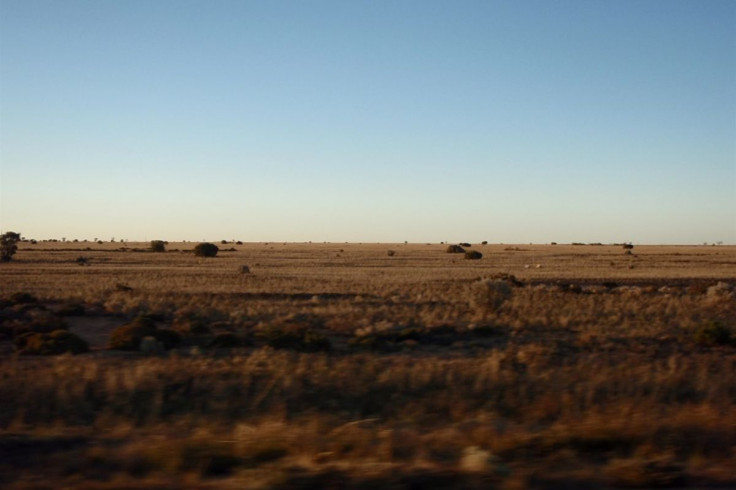
Scientists investigating mysterious geological formations across southern Australia's Nullarbor Plain have identified evidence of ancient underground cave systems that could help researchers determine where extraterrestrial life might exist on Mars.
The research, announced by Curtin University on 17 September 2026 and receiving renewed attention in November, identified surface depressions extending for more than 20 kilometres that researchers linked to the gradual collapse of subterranean caves.
The findings could provide planetary scientists with a new method of identifying concealed underground environments without necessarily having to physically explore them.
Australia's Mysterious Underground World Revealed
Viewed from ground level, the Nullarbor Plain appears remarkably flat, with few obvious indications of the geological structures concealed beneath it. Researchers investigated elongated depressions that superficially resembled drainage channels formed through erosion.
However, their investigation identified underground cavities and geological evidence pointing towards a different explanation involving the deterioration of cave ceilings.
As underground rock formations weakened and collapsed, material above them gradually subsided, producing depressions visible at the surface. Some of these formations extend beyond 20 kilometres in length and measure between 100 and 500 metres across, despite being less than nine metres deep.
Their relatively shallow profiles make them particularly difficult to distinguish across the enormous Australian landscape.
Lead researcher Dr Matej Lipar and his colleagues examined the terrain using digital elevation models, geological mapping and subsurface investigation techniques. Their findings suggest that apparently insignificant surface formations can provide valuable information about the existence of much larger structures underground.
How Australian Caves Could Help Scientists Find Life on Mars
The discovery has implications extending far beyond Earth's geological history.
Mars presents significant challenges for scientists searching for evidence of extraterrestrial life because its surface experiences radiation exposure, extreme temperatures, and an exceptionally thin atmosphere.
Underground environments could theoretically offer greater protection from some of these conditions, making them important locations for future astrobiological investigations. Identifying accessible caves, however, remains a significant challenge for researchers studying distant planetary surfaces.
The Australian findings suggest that examining subtle changes in terrain could help scientists identify potential underground structures that might otherwise escape detection.
Curtin University associate professor Milo Barham explained that the characteristics identified in Australia could assist researchers investigating concealed caves elsewhere, including on Mars.
Such environments could potentially preserve evidence of ancient biological activity, although scientists have not established that life exists or previously existed beneath the Martian surface.
Could Underground Caves Become Homes for Future Astronauts?
The research also has potential implications for future human exploration of Mars.
Astronauts undertaking extended missions would require protection against environmental hazards, including radiation and substantial temperature fluctuations. Naturally occurring underground formations could provide some protection, potentially reducing the amount of shielding required for future habitats.
However, their structural stability, accessibility and suitability for sustained human occupation would require extensive investigation before any settlement could be considered.
The study, titled 'Subdued surface expression of deep cave collapse', was published in the scientific journal Communications Earth & Environment. Although the Australian discovery does not provide direct evidence of extraterrestrial life, it offers another way to investigate environments where such evidence might survive.
The search for life beyond Earth could ultimately depend as much on understanding what lies beneath planetary surfaces as on exploring what is immediately visible above them.
© Copyright IBTimes 2026. All rights reserved.