

'Hiding From Us All This Time': Scientists Uncover Evidence of a Hidden Planet Twice Earth's Mass
Computer simulations suggest an unseen world could explain the unusual orbits of distant icy objects, though no telescope has detected it
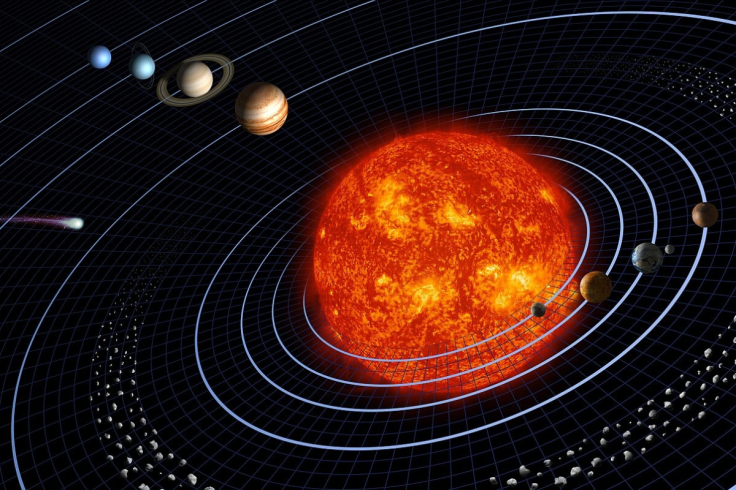
Astronomers may have found fresh clues to a hidden planet lurking far beyond Neptune, and it could be up to twice as heavy as Earth. The proposed world, nicknamed Planet X2, has sparked a wave of excitement about the secrets of our solar system.
The idea comes from a new study published on 23 November 2026 in the Monthly Notices of the Royal Astronomical Society. Its lead author believes another planet may have been 'hiding from us all this time'.
What Is Planet X2 and Where Could It Be Hiding?
No telescope has ever seen Planet X2, or PX2 for short. Scientists built it on paper, using computer simulations that replay 4.5 billion years of the solar system's history.
According to the researchers, the planet would weigh roughly 1.5 to 2 times as much as Earth. Its stretched, oval-shaped orbit would average around 350 to 500 times the Earth–Sun distance.
Even at its closest, it would stay at least 200 times that distance away. That makes it an extremely hard target for any telescope.
Why Strange Icy Orbits Point to a Hidden Planet
Beyond Neptune lies a frozen region packed with icy objects. Most travel in a broad, flat band, but a growing number follow oddly tilted or stretched paths that the known planets struggle to explain.
One famous example is Sedna, a distant icy world on a hugely elongated orbit. The simulations suggest PX2's gravity could pull such objects out of Neptune's reach or tip their orbits to steep angles.
In simple terms, the team asked a straightforward question: could one more planet explain the oddities? Their answer is a cautious yes, although it is far from proven.
Lead researcher Patryk Sofia Lykawka, who works at Kindai University in Japan, admits the model is not perfect. Some differences between the simulations and real observations still need to be investigated.
How Is Planet X2 Different From Planet Nine?
Space fans may remember Planet Nine, another unseen world thought to lurk in the dark outskirts. Planet Nine is believed to be far heavier, with estimates reaching about ten times Earth's mass.
PX2 is a lighter, Earth-class alternative. It would be much closer to Earth's own weight. The two ideas are rivals rather than twins, and neither world has been confirmed.
The hunt for a missing planet also has a long history. Astronomer Percival Lowell's search for a 'Planet X' helped lead to the discovery of Pluto in 1930.
Can Astronomers Actually Find the Hidden Planet?
Spotting a dim planet so far from the Sun is a huge challenge. However, the Vera C. Rubin Observatory's ongoing sky survey could help put the theory to the test.
Co-author Professor Jonti Horner of the University of Southern Queensland said the survey should bring new clues about the distant solar system. Those clues may show whether another planet is still waiting to be found.
For now, PX2 remains a hypothesis, not a discovery. If it proves real, it would be one of the biggest space stories in years, and textbooks about our cosmic neighbourhood would need a rewrite.
© Copyright IBTimes 2026. All rights reserved.