

'She Never Contacted Us': Tongva Tribe That Owns the Land Where Billie Eilish's Mansion Sits Speaks Out
Pop star's political remarks ignite fierce debate as Tongva tribe says her £3m Los Angeles home stands on their ancestral land
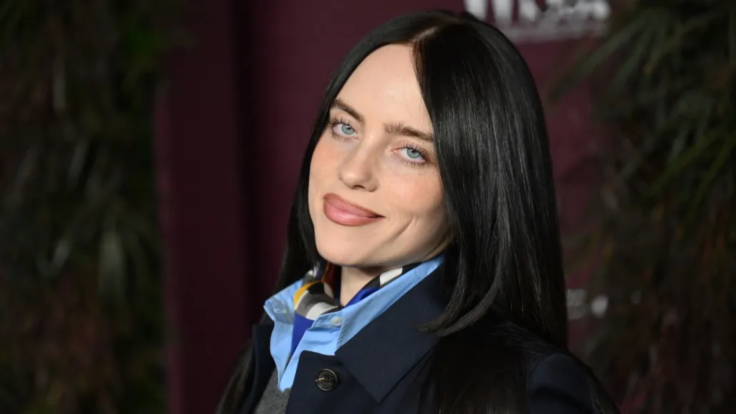
Billie Eilish's stark political declaration at the Grammy Awards has triggered an intense cultural and political confrontation over land, identity, and accountability. At the 68th Annual Grammy Awards in Los Angeles, the singer used her acceptance speech for Song of the Year to declare that 'no one is illegal on stolen land' before urging continued activism and condemning US Immigration and Customs Enforcement (ICE) policies.
Within hours of the ceremony, critics and commentators linked those remarks to her personal real estate holdings, arguing that her own wealth stands in stark contrast with the sentiment she expressed on stage. The Gabrielino/Tongva people, the Indigenous community historically tied to the Los Angeles Basin, confirmed that Eilish's £2.4 million to £3 million ($3 million) home sits on what they describe as their ancestral territory.
Grammy Speech Becomes Flashpoint
During the televised awards ceremony, Eilish thanked her collaborators and then shifted to a broader political message. 'In this room, I honestly don't feel like I need to say anything but that no one is illegal on stolen land', she said, to loud applause. She continued by calling for protest and unity, saying voices and people matter, before ending with a censored denunciation of ICE that was widely circulated online.
The comments aligned with a larger trend at the ceremony of artists addressing social issues, but Eilish's remarks were amongst the most explicitly political of the night. Supporters argued the speech underscored a commitment to human rights and immigrant dignity. Detractors called it performative and disconnected from lived realities.
Billie Eilish says "f*ck ice" during her #Grammys acceptance speech: "Nobody is illegal on stolen land. We need to keep fighting and speaking up. Our voices do matter." pic.twitter.com/Sz1um3afYJ
— Variety (@Variety) February 2, 2026
Tribal Response and Ancestral Land Claims
The controversy sharpened when the Gabrielino/Tongva tribe issued statements in the wake of the Grammys. 'As the First People of the greater Los Angeles basin, we do understand that her home is situated in our ancestral land', the tribal spokesperson said, emphasising that the singer had not contacted them directly regarding the property. The tribe appreciated the broader conversation sparked by her remarks but urged public figures to explicitly name Indigenous nations to contextualise discussions of history and land properly.
Indigenous land acknowledgement policies in Los Angeles County recognise that the modern urban landscape occupies territory historically cared for and inhabited by the Tongva, along with other tribes. Tongva history extends back thousands of years, with archaeological evidence and tribal narratives affirming deep cultural and territorial connections long before European colonisation. The tribe's response underscores a persistent problem for many Native communities: official recognition and restitution for lands long since transformed by colonial and state expansion.
JUST IN: The Tongva tribe — whose ancestral land Billie Eilish's multi-million-dollar Los Angeles mansion sits on — confirmed she has not contacted them about returning the “stolen land.”
— RedWave Press (@RedWave_Press) February 3, 2026
A spokesperson for the Tongva tribe told The Daily Mail: “‘As the First People of the… pic.twitter.com/hymwRyCnpU
Political and Cultural Backlash Intensifies
For many critics, linking Eilish's speech to her property holdings provided a potent narrative about celebrity activism and perceived hypocrisy. Political commentators and social media users highlighted her 'stolen land' message while pointing out that her own mansion stands on land historically taken from Indigenous inhabitants. Some critics suggested she should materially act on her words by transferring property or otherwise committing financially to Native communities.
The backlash has also entered broader political discourse. Prominent conservative figures used her remarks to critique not only her stance but celebrity political interventions as a whole. In contrast, supporters contended that the conversation has elevated visibility for Indigenous histories and contemporary Native issues, pushing audiences beyond superficial land acknowledgements. Public engagement metrics indicate the issue has quickly become one of the most discussed cultural moments of the year on social platforms, reflecting a rare intersection of music, politics, and Indigenous rights in mainstream news.
Exciting news: I’ve decided to move into Billie Eilish’s $6 million Malibu beachfront mansion because no human being is illegal on stolen land.
— Drew Pavlou 🇦🇺🇺🇸🇺🇦🇹🇼 (@DrewPavlou) February 2, 2026
Thank you Billie for your generosity. pic.twitter.com/1egsPPKs5i
Historical and Legal Context of Ancestral Land Claims
The Gabrielino/Tongva peoples' land claims reflect complex interactions between historical occupation, federal recognition, and modern property law. Unlike many federally recognised tribes, the Tongva have historically lacked a formal land base despite millennia of occupation and cultural stewardship in the region now known as the Greater Los Angeles Basin. Federal and state processes in the 19th and 20th centuries often resulted in the extinguishment of Indigenous land rights without equitable treaties, leaving many Native communities without federally protected territory.
Contemporary efforts by Tongva descendants and allied organisations seek to repatriate land, strengthen cultural preservation, and secure formal recognition. These legal and historical dynamics complicate discussions about land, ownership, and restitution in ways that extend far beyond celebrity activism.
Billie Eilish calls America "stolen land"
— End Wokeness (@EndWokeness) February 2, 2026
Ok, Billie. Your $14,000,000 mansion in LA is built where the Tongva tribes once lived. Any plans on returning it?
pic.twitter.com/3qu0ubWX8G
🚨 BREAKING: Americans are calling on Hollywood elitist Billie Eilish to RETURN her $14M LA mansion to the Tongva tribe after she claimed, "no one is illegal on stolen land"
— Eric Daugherty (@EricLDaugh) February 2, 2026
She could also graciously host illegal aliens in her mansion. After all, she has the moral high ground.… pic.twitter.com/WGivdABveH
Cultural Reckoning and the Future of Activism
Eilish's Grammy moment has ignited crucial questions about the responsibilities of public figures when engaging with historical injustices. Critics ask whether moral messaging is sufficient without material engagement, while supporters argue that visibility on such a stage matters in itself.
For Indigenous advocates, the debate highlights both the potential and pitfalls of contemporary allyship. Explicitly naming tribes and deepening understanding of historical context may be seen as a first step towards more substantive change. As conversations continue, they underscore a broader cultural tension over how societies reconcile colonial legacies, contemporary inequality, and the expectations placed on artists who choose to speak on political issues.
© Copyright IBTimes 2026. All rights reserved.