

'Voters Probably Think There Are More Republicans': California Billionaire Records Tell Another Story
California's billionaire voter records complicate assumptions about wealth and political allegiance
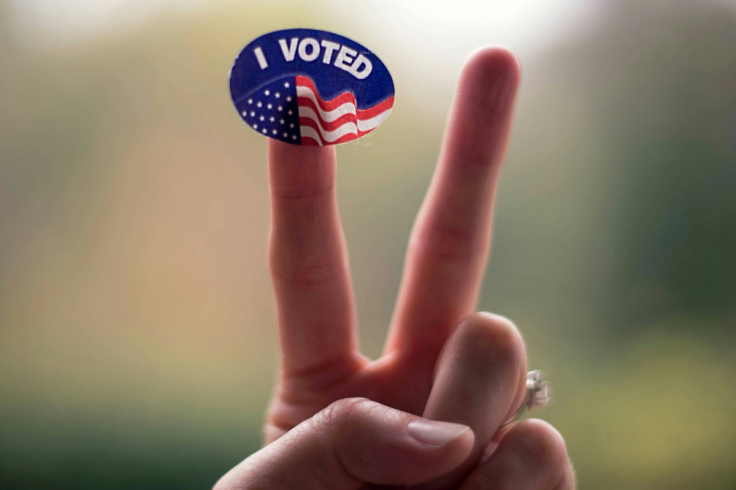
California's billionaires spent heavily throughout the state's 2026 election cycle, which culminated on 3 November, but their voter registrations tell a less predictable political story. Democrats outnumbered Republicans among the wealthy individuals whose records could be identified, while the largest group had no party preference, according to a POLITICO analysis.
California's richest residents backed candidates and ballot measures with extraordinary sums. Meetings between prominent technology executives and President Donald Trump also attracted attention, but such appearances do not necessarily reflect how those executives are registered to vote.
'Voters probably think there are more Republicans' among California's billionaires, said Paul Mitchell, a Democratic political data expert. He suggested that recent images of technology leaders alongside Trump had helped shape that perception.
California Billionaires Defy Simple Party Labels
POLITICO identified more than 250 current or recent California billionaires using Forbes data and matched 166 to the state's voter file. Its findings describe those individuals, not every billionaire connected to California.
Of those matched, 36 per cent were registered Democrats and 39 per cent had no party preference. Democrats outnumbered Republicans, but neither major party accounted for the largest share. For comparison, California's secretary of state reported in October that about 45 per cent of registered voters statewide were Democrats and 23 per cent had no party preference.
The billionaire records were provided in early September, so the datasets were compiled on different dates. Registration also does not disclose how a person votes or establish their private political beliefs.
Among the Democrats identified in the records were Meta chief executive Mark Zuckerberg, Anthropic co-founder and chief executive Dario Amodei, and OpenAI chief executive Sam Altman. Zuckerberg has met Trump, and Amodei has visited the White House, but those contacts alone do not establish electoral support.
Among registered Republicans, the analysis identified former California Gov. Arnold Schwarzenegger, Golden State Warriors and Golden State Valkyries owner Joe Lacob, and technology entrepreneur and Trump donor Palmer Luckey.
Republican consultant Mike Murphy said the findings challenged the assumption that wealth necessarily indicated Republican affiliation. Mitchell suggested that some billionaires without party preference might reject the two-party system, although the records cannot establish why anyone selected that registration category.
Hundreds of Millions Flow Into California Races
Current and former California billionaires spent a record $612 million (approximately £454.26 million) across the state's 2026 election contests, POLITICO reported. That figure covers broader campaign activity, not necessarily spending by the 166 people included in the voter-file analysis.
Billionaire philanthropist Tom Steyer spent more than $200 million (is approximately £148.43 million) campaigning for governor but failed to advance beyond California's June primary.
Proposition 40 proposed a one-time 5 per cent tax on certain Californians with assets exceeding $1 billion (approximately £742.28 million). POLITICO described a broader opposition effort exceeding $300 million (approximately £222.68 million) led by Google co-founder Sergey Brin. A related proposal, Proposition 42, sought to prohibit new state taxes on personal property, adding another front to the debate over taxing wealth.
Surgeon and inventor Gary Michelson backed Proposition 38, an $8.4 billion (approximately £6.23 billion) bond measure for immunology research. Half the funding would go to a qualifying University of California-affiliated nonprofit institute. CalMatters reported that the California Institute for Immunology and Immunotherapy, which Michelson helped establish, was the only institute then meeting the criteria.
The scale of those campaigns demonstrates the billionaires' involvement in political financing, but donations do not establish how individuals voted or whether their preferred measures succeeded.
Voting Habits Reveal Patchy Participation
More than 60 per cent of the matched billionaires voted in each of the 2016, 2020 and 2024 presidential elections, according to POLITICO. Their participation exceeded that of the statewide electorate in 2016 and 2024.
Turnout was lower in other contests: 54 per cent voted in California's November 2025 special election, while 51 per cent participated in the March 2024 presidential primary. Those figures record participation, not ballot choices.
More than 30 of the matched billionaires were registered in San Francisco and another 15 in Los Angeles. At least a quarter were born in California, 8 per cent in New York and at least 19 per cent abroad.
Despite their prominent role in financing campaigns, nearly half of the billionaires matched to California voter records did not participate in the state's 2024 presidential primary.
© Copyright IBTimes 2026. All rights reserved.