

Trump Urged Voters To Treat the Midterms as His Race, Then Blamed Republican Defeat on Not Being on the Ballot
Democrats flipped Senate and House seats as Republicans questioned whether Trump's endorsements could translate into support for candidates in the 2026 elections
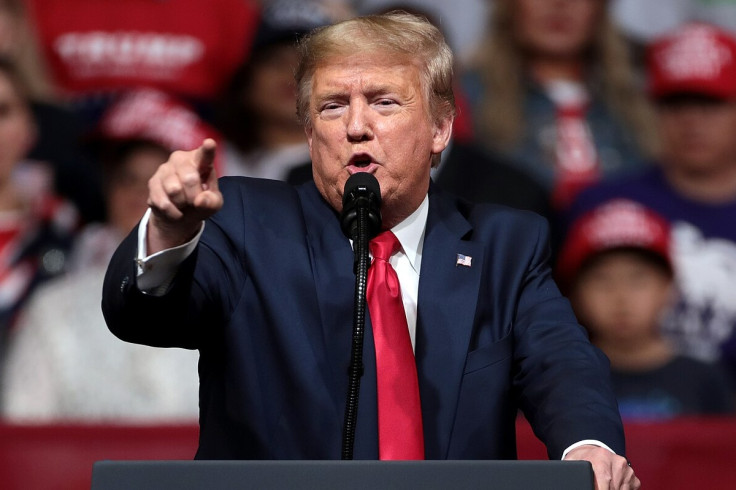
President Donald Trump blamed sweeping Republican losses in the US midterm elections on his absence from the ballot, even after weeks spent urging voters to treat the contests as a personal referendum on his presidency.
Democrats secured control of both chambers of Congress on Tuesday, 3 November 2026, leaving Republicans to confront the scale of their defeat and the role of the president's influence.
As results emerged, Trump claimed on Truth Social: 'I wasn't on the Ballot and if I was, we would have won IN A LANDSLIDE!' The statement, reported by Axios, followed Democratic victories across several traditionally Republican states.
The results mean Democrats will control both the House and Senate when the new Congress convenes in January 2027.
Republicans now face questions over whether Trump's political brand helped or harmed their candidates.
Trump Put Himself at the Heart of the Campaign
Trump had repeatedly urged supporters to imagine his name appearing on their ballots, believing his personal following could boost Republican turnout.
During a virtual campaign rally for South Carolina candidates on 2 November, he told voters, 'Get out and vote tomorrow and pretend I'm on the ballot.' His remarks appear in a Roll Call transcript.
President Trump says, "I wasn’t on the Ballot and if I was, we would have won IN A LANDSLIDE!"
— Donald J Trump Posts TruthSocial (@TruthTrumpPost) November 4, 2026
It is worth remembering what Trump actually delivered before this election: nine months of consecutive manufacturing expansion, 72,000 new factory jobs, half a trillion dollars in…
A Washington Post review found that Trump had made similar appeals more than 41 times before polling day. His campaign appearances and endorsements placed his presidency at the centre of Republican messaging.
The party also organised a September midterm convention in Dallas. Republican National Committee chairman Joe Gruters described the gathering as 'Trumpapalooza', reflecting the campaign's emphasis on the president.
That approach carried risks. Although Trump had won the presidency in 2024, his personal popularity did not necessarily translate into support for Republican candidates two years later.
Democratic Gains Across Republican Strongholds
According to The Washington Post, Democrats had flipped seven Senate seats and at least 25 House seats by Wednesday, 4 November. Those figures remained provisional, with several contests still awaiting final results.
In Texas, Democrat James Talarico defeated Trump-backed Republican Ken Paxton, ending a lengthy Democratic losing streak in statewide elections. The Associated Press confirmed the victory in a state Trump carried comfortably in 2024.
Former North Carolina Governor Roy Cooper also defeated Republican Michael Whatley, flipping another Senate seat. Democrats secured victories in South Carolina and Kansas, further demonstrating the scale of their electoral gains.
Iowa produced another setback for Republicans. Democrat Josh Turek defeated Trump-endorsed Ashley Hinson, despite her efforts to distinguish herself from certain administration decisions.
Hinson had criticised Trump's move to lower tariffs on imported beef while supporting other tariffs. She also called for an immediate end to the Iran war, according to Iowa Public Radio.
Her defeat suggested that distancing themselves from selected White House policies did not necessarily protect Republican candidates from broader dissatisfaction.
Republican consultant Mike Murphy described the election as 'a complete repudiation of the party as defined by Donald Trump', according to The Washington Post. His assessment reflected criticism from within Republican circles rather than a definitive explanation of every voter's decision.
Trump Rejects Blame as Party Picks Through Defeat
Trump rejected the suggestion that the outcome represented a personal defeat. Speaking to Fox News, he argued that Republican candidates struggled because he had not appeared on the ballot.
White House advisers similarly defended the president, suggesting he had worked harder to promote certain candidates than the candidates themselves.
House Speaker Mike Johnson acknowledged the historical difficulties confronting a president's party during midterm elections. Senate Majority Leader John Thune defended Republicans' legislative achievements, even as Democrats prepared to take control.
However, polling conducted before election day had already revealed significant dissatisfaction with Trump's leadership.
An ABC News-Washington Post-Ipsos survey, published on 20 October, found that 33 per cent of Americans approved of Trump's performance. Another 66 per cent disapproved.
Only 28 per cent approved of his handling of the economy, while 27 per cent supported his approach to Iran. The survey also found that 59 per cent preferred Democratic control of Congress as a check on Trump's presidency.
Those findings did not establish why every voter supported a particular candidate. Nevertheless, they showed widespread dissatisfaction with the administration before Republicans suffered their electoral losses.
According to Reuters, concerns about living costs, tariffs and the Iran war featured prominently in the election. Exit polling also indicated that many voters wanted stronger congressional checks on presidential power.
Democrats Prepare To Challenge the White House
The consequences extend beyond the Republican defeat. Democrats will gain greater authority to investigate the administration, scrutinise government decisions and challenge presidential appointments when Congress reconvenes.
Trump will retain his veto power, potentially complicating Democratic legislative ambitions during his final two years in office.
For Republicans, the immediate question remains whether the president's endorsement can still deliver victories without his name appearing on the ballot. The midterms have provided a difficult answer, even as Trump maintains that his personal presence would have changed the result.
© Copyright IBTimes 2026. All rights reserved.