

China Threatens Retaliation as Trump's AI Chip Crackdown Puts NVIDIA and Southeast Asia Tech Boom in Jeopardy
Washington's new export-licensing rules target advanced chip shipments and overseas data centres linked to Chinese companies
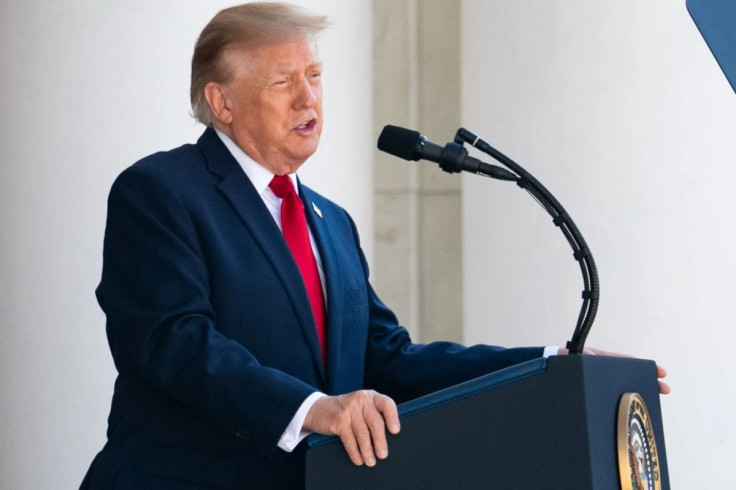
China has warned that it will take action to defend its interests after US President Donald Trump's administration introduced tougher restrictions on advanced artificial intelligence (AI) chips, escalating tensions over technology access just as the two countries prepare for high-level talks.
The measures could also disrupt Southeast Asia's rapidly expanding technology industry, where billions of dollars are being invested in data centres powered by American-made processors.
On Monday, 16 November, Washington announced that it would tighten controls on advanced semiconductors and overseas computing facilities that could give Chinese businesses access to restricted American technology, Reuters reported.
On Tuesday, 17 November, Chinese Foreign Ministry spokesman Guo Jiakun condemned the restrictions as economic coercion, accusing Washington of interfering in normal trade and technological cooperation. He said Beijing would take necessary measures to safeguard its legitimate and lawful rights and interests.
Washington Targets Overseas Access to NVIDIA Chips
The new regulations are intended to close a route through which Chinese companies have obtained access to powerful American processors without purchasing the hardware directly. Although Washington already restricts sales of its most advanced AI chips to China, businesses there have been able to rent computing capacity from overseas data centres equipped with the technology.
The latest restrictions require US export licences for covered advanced semiconductor shipments to Singapore, Malaysia, Thailand, Indonesia and Brazil, countries Washington considers at higher risk of technology diversion. The rule includes an exemption for shipments destined for US-headquartered companies, or businesses whose ultimate parent is based in the United States, provided specified reporting requirements are met.
NVIDIA is particularly exposed because its processors are widely used to develop and train advanced AI systems. The restrictions could complicate sales and infrastructure partnerships across the region, although the rules do not amount to a blanket prohibition on every shipment or data centre operation in the affected countries.
Southeast Asia's $100 Billion AI Industry Faces Uncertainty
The market reaction was already apparent on Tuesday, 17 November, when investors sold shares in companies exposed to the region's data centre expansion. Malaysia's MN Holdings and Critical Holdings each fell nearly 20 per cent, while YTL Power, an NVIDIA partner in AI infrastructure, dropped almost 10 per cent.
The sell-off also spread to semiconductor suppliers and other technology-related companies across Asia, reflecting concerns about the potential impact of the new licensing requirements.
The potential disruption is significant for a region that has attracted enormous investment in digital infrastructure. Malaysia has recorded 385.7 billion ringgit (£71.5 billion) in data centre-related investments since 2021.
Thailand, meanwhile, had attracted around $22.6 billion (£17.2 billion) in data centre investment by February 2026. Restrictions that delay equipment deliveries or make it harder to secure customers could undermine expansion plans and affect businesses supplying these facilities.
Singapore Seeks Clarity From Washington
Singapore is among the countries facing the new licensing requirements and has begun discussions with American officials about how the restrictions will be applied. Its government said it was examining the regulations and assessing their implications for domestic businesses, while seeking arrangements that would allow legitimate companies to maintain access to advanced technology.
Officials also stressed that Singapore would not tolerate businesses exploiting their presence in the country to evade foreign export restrictions. The response reflects the challenge facing regional governments: protecting their growing technology industries while maintaining their relationships with Washington and complying with international trade requirements.
© Copyright IBTimes 2026. All rights reserved.