

Donald Trump, 80, Sparks Dementia Speculation After 'Broken Windows' Remark to Journalist
A controversial exchange with a White House correspondent renews questions about presidential behaviour, accountability and the limits of medical speculation
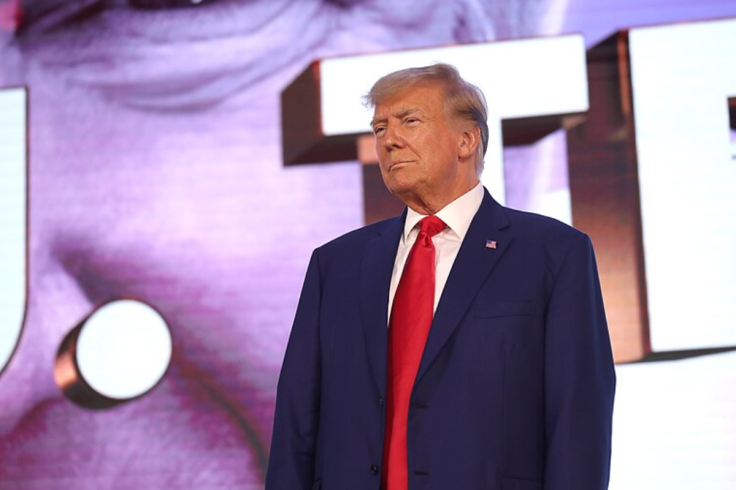
President Donald Trump, 80, prompted fresh speculation about his cognitive health on Monday, 16 November, after rebuking NBC News White House correspondent Yamiche Alcindor.
During an exchange in Washington about airline disruption and White House renovations, he suggested she would not notice broken windows 'from where you come'.
The confrontation unfolded during a press gaggle before Trump departed for the Philippines and China. He said he expected to meet Chinese President Xi Jinping and Russian President Vladimir Putin. He also raised the possibility of meeting North Korean leader Kim Jong Un.
Alcindor questioned his focus on construction projects while US airline systems faced widespread disruption. She also asked why the problem persisted when Republicans controlled the government.
Trump defended his renovation work, claiming the White House had suffered from 18 broken windows and damaged plaster.
Donald Trump's 'Broken Windows' Remark Draws Criticism
According to the 16 November press gaggle transcript, Trump told Alcindor, 'I know you don't see dirt.' He then said, 'You never noticed broken windows, obviously, from where you come.'
His answer continued for nearly two minutes, covering the building's stonework, columns, helipad and proposed ballroom. He claimed he spent little time supervising renovations. When Alcindor pressed him, Trump responded, 'Oh, you're so pathetic.'
Alcindor was born in Miami to Haitian immigrant parents. Some critics interpreted Trump's remark as racially charged, although the exchange does not establish his intention.
Richard Signorelli, a former assistant US attorney for the Southern District of New York, criticised Trump on X. He claimed the president had always been racist and that dementia had removed his 'remaining filters'. Signorelli's allegation is not medical evidence.
Author Jennifer Erin Valent also compared Trump's behaviour with that of dementia patients. She acknowledged her limitations, writing, 'I'm no physician. I can't diagnose him.' She subsequently warned that someone needed to intervene.
CNN political analyst Brian Karem focused instead on presidential priorities. He argued that Trump's responsibility lay with the public rather than the White House as a national symbol. 'But he takes NO responsibility for that,' Karem wrote.
What the Donald Trump Dementia Speculation Does Not Prove
The criticism follows earlier remarks by clinical psychologist John Gartner, a former professor at Johns Hopkins University.
On The Daily Beast Podcast, Gartner said he believed Trump had shown signs of frontotemporal dementia since 2019. He cited overnight social media activity as part of his reasoning.
Those claims do not establish a diagnosis. Neither public remarks nor the frequency of social media posts can independently determine whether someone has dementia.
Trump has repeatedly highlighted his performance on the Montreal Cognitive Assessment, or MoCA.
A memorandum released by his White House physician on 29 May recorded a score of 30 out of 30. The physician described his cognitive function as within normal limits.
The MoCA screens for possible cognitive impairment but does not provide a comprehensive diagnosis.
Dr Henry David Abraham, identified by The Daily Beast as a Tufts University professor emeritus, compared the assessment with taking someone's temperature. He said an abnormal reading, rather than a normal result, would prompt further checks.
The Daily Beast reported that the White House did not respond to its request for comment on the latest claims.
© Copyright IBTimes 2026. All rights reserved.