

Mysterious American Spy Satellite Explodes in Space as Officials Claim 'Further Analysis Is Ongoing'
Space Force says tracked fragments are being added to routine collision-risk assessments, while the cause of the satellite's breakup remains unknown
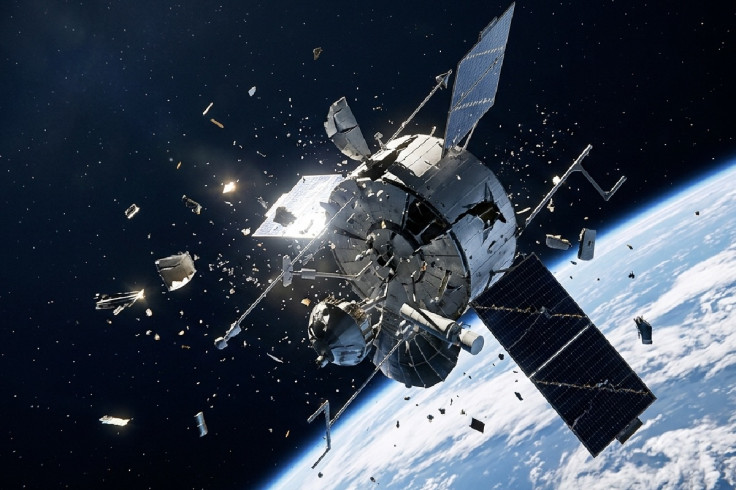
A Cold War-era US spy satellite has broken apart in one of the busiest regions of low Earth orbit, scattering debris that military officials are now tracking for potential collision risks to hundreds of other spacecraft.
US Space Forces–Space confirmed that the USA 32 satellite fragmented on 13 September at approximately 21:13 UTC and said all tracked debris was being added to routine conjunction-assessment screenings to support spaceflight safety. No immediate threats had been identified, the agency said, adding that 'further analysis is ongoing'.
USA 32, identified in declassified records as FARRAH III, was launched on 5 September 1988 as part of a National Reconnaissance Office (NRO) signals-intelligence programme.
Declassified records and subsequent historical research indicate that FARRAH III was designed to collect electronic signals, including radar emissions from the Soviet Union during the final years of the Cold War.
It was apparently designed with a nominal three-year lifetime, but remained in orbit for about 38 years. Its operational status in the later part of that period is not publicly established, and public sources say it is unclear whether the satellite was still functioning in recent decades.
What Happened and Where
The breakup occurred at an altitude of roughly 775 kilometres (480 miles) above Earth, in a heavily populated region of low Earth orbit.
More than 200 active satellites are reported to operate within about 50 kilometres of that altitude, including Iridium's 66-satellite operational constellation, which operates at roughly 780 kilometres and provides voice and data coverage across oceans and polar regions where terrestrial infrastructure does not reach.
A news outlet reported that modelling showed the debris spreading along much of the satellite's orbital path within 24 hours. Dr Tony Phillips, who runs the site, warned that the collision threat is real, noting that other satellites may be in danger because USA 32 broke up in a crowded shell of low Earth orbit.
US Space Forces–Space said all tracked debris was being incorporated into routine conjunction-assessment screenings, a process that compares the predicted paths of objects in orbit to identify potential close approaches. Satellite operators can then manoeuvre their spacecraft if a collision risk is deemed sufficiently high.
What Is Known About the Cause
Space Force has not publicly identified a cause. There is no public evidence that the breakup was caused by an anti-satellite weapon.
Possible explanations discussed by outside observers include the failure of an ageing battery or a pressurised component after nearly four decades of thermal cycling in space, or a high-speed impact with a tiny piece of space debris or micrometeoroid.
No collision has been publicly identified as the cause, and tracking networks have not announced any such event in connection with USA 32. The official notice simply does not state a cause, and it is safer not to infer that officials are keeping every possible explanation open.
Wider US Space Moves and ASAT Background
After the breakup, SpaceX launched classified missions for the US Space Force on 16 and 26 September. These launches occurred days after the 13 September fragmentation event, correcting earlier reports that had placed them before the breakup.
On 14 September, Air Force Secretary Troy Meink said the US had 'on-orbit space control weapons capable of defending the Joint Force against hostile adversary action', without detailing the systems.
News reports indicated that US officials linked the deployment to Russian and Chinese space activities over the past two decades. There is no public evidence linking those systems to the USA 32 breakup.
Russia's 15 November 2021 direct-ascent anti-satellite test remains the most recent publicly acknowledged destructive ASAT test. That event destroyed the defunct Cosmos 1408 satellite, which had been launched in 1982, and generated at least 1,500 trackable debris fragments, along with smaller debris.
The test drew global condemnation and added thousands of new debris fragments to an already hazardous orbital environment. No destructive ASAT attack has been publicly confirmed in connection with USA 32.
Why This Break-Up Matters for Other Satellites
Satellites in different orbits support services including navigation, weather forecasting, communications, shipping and military operations. If fragments later collide with other spacecraft, the resulting damage could disrupt satellite services.
A sufficiently energetic collision could damage or disable a satellite, and a chain of secondary collisions is a recognised concern in discussions of orbital debris.
Iridium's satellites operate at a similar altitude, making the constellation relevant to assessments of the debris environment. The event adds to the debris environment that satellite operators already monitor for collision risks.
© Copyright IBTimes 2026. All rights reserved.