

Who Is Ted Bundy? Inside the Serial Killer's Chilling Criminal History as DNA Links Him to Teenager's Murder After 52 Years
DNA links Ted Bundy to a 1974 murder as Utah investigators revisit other cold cases
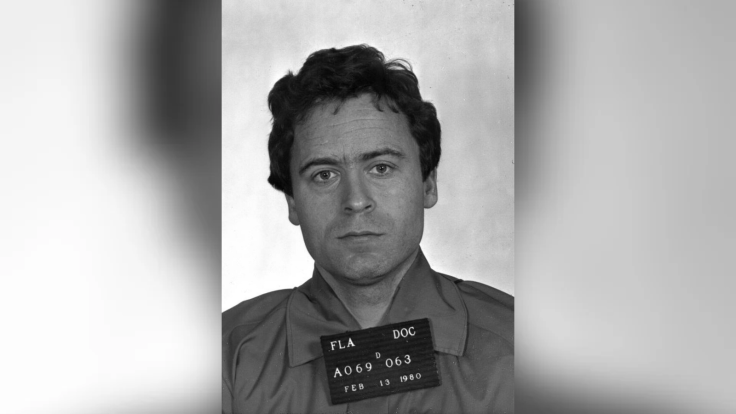
Ted Bundy, one of America's most notorious serial killers, has been linked to the murder of a 17-year-old girl more than five decades after her body was discovered in Utah, as advances in DNA technology help investigators revisit long-unsolved crimes. Melissa Ann Smith, the daughter of a local police chief, was found dead on 27 October 1974, with evidence of sexual assault and torture reported in accounts of the case.
The breakthrough has renewed attention on Bundy's violent criminal history, including his prison escapes and the murders he committed before his capture and execution in 1989. Utah authorities have also indicated that other cases potentially connected to the killer remain under examination.
DNA Breakthrough Solves 52-Year-Old Murder Case
Investigators used advanced forensic technology to link Bundy to Smith's killing, drawing on evidence gathered during the investigation into another of his victims, Laura Ann Aime. Utah officials identified Aime as a Bundy victim in April, and evidence from that case subsequently helped resolve Smith's murder.
At a press conference on Tuesday, Utah County Sheriff's Office Sergeant Mike Reynolds said more Bundy cases were still being examined in the state.
'With every case closure may we stomp the memory of Ted Bundy out,' Reynolds said.
Salt Lake County Sheriff Rosie Rivera said the development offered hope to families whose loved ones' cases had remained unsolved for decades. She also praised investigators for preserving evidence, highlighting its importance when new forensic methods become available.
Who Was Ted Bundy? Inside His Criminal History
Bundy became notorious for targeting women across the United States during the 1970s. He often approached victims in public places, using charm or pretending to be injured to gain their trust before luring them to secluded locations.
He has been linked to at least 30 murders across several states, including Utah, Washington, Oregon, Colorado, Idaho and Florida. The exact number of his victims remains uncertain, and not every crime he confessed to has been independently confirmed.
His crimes attracted widespread attention, partly because accounts of his behaviour described him as charming, in stark contrast to the violence associated with his attacks.
How Ted Bundy Escaped Prison Twice
Bundy's criminal history also included two escapes from custody. He was first arrested in Utah in 1975 for kidnapping a woman and sentenced to between one and 15 years in prison.
In 1977, while being held in Colorado, he escaped through a window in a courthouse library. After being recaptured, he escaped again from custody and eventually made his way to Florida, where he continued killing.
His crimes included the murders of two women at a Florida State University sorority house and a 12-year-old girl in Lake City. He was arrested in Pensacola, Florida, on 15 February 1978 and later convicted of three murders.
Investigations Continued Even After Bundy Execution
Bundy was executed by electric chair in Florida on 24 January 1989. However, his death did not end investigations into killings potentially connected to him.
Authorities have continued examining evidence from other Utah cold cases, including the disappearance of 16-year-old Nancy Wilcox in 1974. Investigators have said information points towards Bundy in her case, but they have not confirmed his responsibility.
Utah's forensic advances have helped detectives revisit evidence that could not be fully analysed using older methods. The latest breakthrough in Melissa Ann Smith's murder demonstrates how preserved DNA evidence can help investigators establish links in cases that remained unresolved for decades.
© Copyright IBTimes 2026. All rights reserved.