

Donald Trump's Frontal Lobe Decline Means POTUS 'Can't Shut His Mouth,' Health Expert Warns
A viral 'four months' claim about Donald Trump's health collides with Davos gaffes and a defensive White House — raising fresh questions about evidence, transparency and hype.
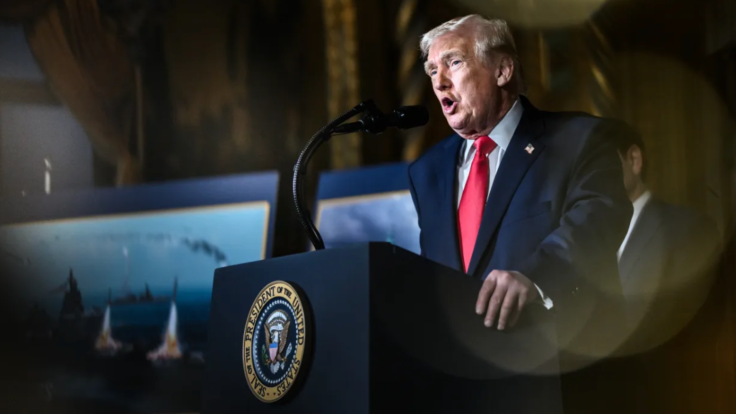
A bruise, half-covered by make-up, is the sort of detail Washington usually swallows whole. But lately, every mark on Donald Trump's hands, every stray detour in a speech, has been treated like a clue in a thriller the public insists on writing in real time.
Into that atmosphere has stepped Adam James, a licensed physical therapist who, in a conversation with political commentator David Pakman, has made the kind of claim that ricochets because it is so stark: that Trump may have 'four months to live.' It is a sentence that sounds less like medicine than a provocation — one that turns a sitting president into a speculative diagnosis, and everyone else into an amateur neurologist.

Donald Trump and the Four-Month Claim
James' theory, as reported, hinges on cognition and impulse control. He argues Trump's 'meandering' public remarks and moments of apparent confusion point to a decline, and he claims this is 'tied together' with changes in how the president organises thoughts and filters what should remain unsaid.
He goes further, asserting that 'the frontal lobe alerts us to when we're doing something we shouldn't be doing,' then alleging: 'His frontal lobe is shrinking inside his skull, and the MRIs will show this.' In the same breath, he suggests a deliberate effort to obscure that alleged shrinkage, claiming the administration has 'pivoted' to CT scans 'because they don't want you to see that his brain is shrinking.'
The problem is not that voters are curious about a president's health; that is entirely reasonable. The problem is that this is presented as near-certainty without the public having access to diagnostic evidence, and with the loudest voice in the room being a commentator on a show — confident, vivid and unburdened by clinical records.
James frames his argument around frontotemporal dementia, stating that if it is FTD 'the life expectancy after diagnosis is roughly seven to 12 years,' and he claims Trump has displayed symptoms since before he was elected in 2016.
Then there's the bruising. James dismisses the explanation that hand marks could be from extensive handshaking, calling that 'nonsense' and claiming: 'That's an IV injection site.' He speculates Trump may be receiving 'IV diuretic medication to pull excess fluid off his body.' That is the sort of detail that sounds persuasive precisely because it is specific; it is also, in the absence of corroboration, exactly the sort of specificity that can mislead.
Donald Trump, Davos and the Theatre of Health
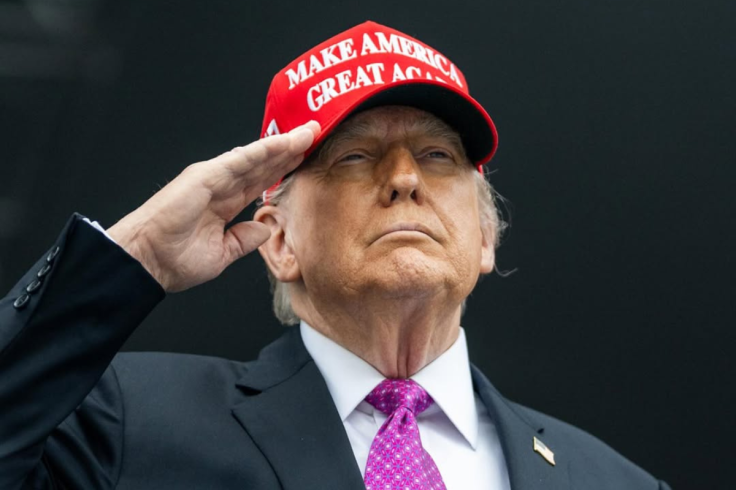
If you want to understand why this kind of claim finds oxygen, look at Davos. In January, Trump addressed the World Economic Forum and, at points, appeared to confuse Greenland with Iceland — an apparent slip that lit up coverage and prompted a defensive response from the White House.
Time noted that Trump 'appeared to confuse Greenland with Iceland' during the address. CBS News reported the White House attempted to explain Trump's references to 'Iceland,' with press secretary Karoline Leavitt pushing back sharply when questioned.
Other outlets covered the moment with the same mix of fascination and alarm. The Philippine Daily Inquirer described Trump repeatedly referring to 'Iceland' instead of Greenland during remarks in Davos, adding that the White House rejected any suggestion of confusion. These are not medical findings; they are political moments, and political moments are now routinely treated as symptoms by an audience primed for a diagnosis.
That is what makes this whole episode feel so grimly contemporary. In a normal world, health questions about a president would be addressed with transparent medical reporting, proper context, and a reluctance to turn conjecture into certainty. Here, the pipeline runs the other way: a viral claim first, the caveats later, if at all.
James, for his part, even reaches for a celebrity parallel, invoking Bruce Willis — who retired after an aphasia diagnosis and whose family later said he had been diagnosed with frontotemporal dementia — using him as a reference point for how symptoms can progress. It's emotionally potent, and arguably unfair: a real person's illness repurposed as a rhetorical device in someone else's political argument.
Donald Trump's critics will hear James and think, finally, someone is saying the quiet part out loud. His supporters will hear the same clip and file it under smear. What can't be ignored is how quickly the country has normalised diagnosing leadership as entertainment — one more way of avoiding the harder question underneath: what does America do when it cannot agree on reality, even when it's staring at the same set of hands on the same lectern?
© Copyright IBTimes 2026. All rights reserved.