

Deb Haaland Was Once Homeless and Had $0 Net Worth—Now She's the First Native American Woman Elected Governor
Haaland's victory comes amid a growing nationwide push for Indigenous political representation
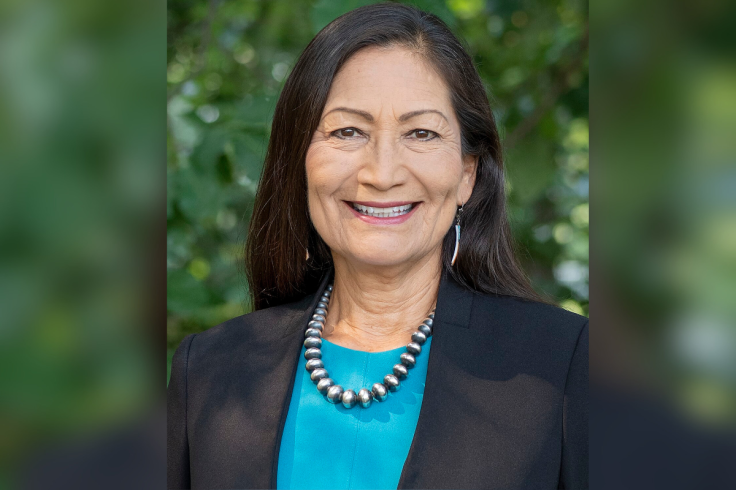
Deb Haaland once experienced homelessness and relied on food stamps. In 2021, Forbes estimated her net worth at $0. Now, the 65-year-old Democrat has made history as the first Native American woman elected governor of a US state after winning New Mexico's gubernatorial race.
The former interior secretary under President Joe Biden defeated Republican Gregg Hull, a businessman and former long-time mayor of Rio Rancho. Her victory marks another milestone in a political career that has taken her from financial hardship to Congress, the US Cabinet, and now the governor's office.
From Financial Hardship to National Politics
Long before entering national politics, Haaland struggled to make ends meet while raising her daughter. Despite financial pressures, she continued her education, earning a law degree from the University of New Mexico in 2006.
Forbes estimated Haaland's net worth at $0 in June 2021, based on financial disclosures and public records. The estimate was made while she served as interior secretary, years after her experience of homelessness, and does not reflect her financial position in 2026.
Her December 2020 disclosure listed student loans totalling no more than $50,000 and an annual tribal payment of $175. At the time, Forbes found no property registered in her name, although she lived with her partner in a New Mexico home assessed at more than $1 million. The property did not belong to her.
Forbes noted that federal disclosure rules do not require officials to report certain assets, including cash accounts holding $5,000 or less and federal Thrift Savings Plan balances, meaning its estimate could not capture every aspect of her finances.
In a 2019 interview with NBC's Today show, Haaland offered a candid glimpse into her circumstances. 'I don't have a savings account, right? I mean that is—that's real,' she said. 'I know what it's like to be on food stamps. I know what it's like to find every free programme to put my kid through so that she has opportunities.'
Breaking Barriers
A member of Laguna Pueblo, Haaland built her political career through tribal leadership and grassroots organising. She served as a tribal administrator at San Felipe Pueblo and became the first woman elected to the Laguna Development Corporation's board of directors. In 2012, she was the Native American vote director in New Mexico for Barack Obama's presidential campaign.
After losing the 2014 lieutenant governor's race as the Democratic nominee, she became the first Native American woman to chair a state Democratic Party in 2015. Her breakthrough came in 2018, when she and Kansas Democrat Sharice Davids became the first Native American women elected to Congress. Biden subsequently appointed Haaland interior secretary in 2021, making her the first Native American Cabinet secretary in US history.
A Historic Win for Native American Voters
Haaland's election comes as Indigenous political representation reaches new heights. According to figures cited by The Guardian, a record 358 Indigenous candidates had run or were running for local, state, and federal offices across the US during the 2026 election cycle.
The milestone carries particular significance in New Mexico, where Native Americans account for roughly 12% of the population. Their political influence follows decades of battles over voting rights. In 1948, Isleta Pueblo veteran Miguel Trujillo successfully challenged New Mexico's restrictions on Native American voting. In 2023, New Mexico became the first US state to enact a Native American Voting Rights Act, giving tribes greater input on polling locations and redistricting.
For Haaland, the victory is both personal and historic. 'Whether you voted for me or not, I will always be your governor, too,' she told New Mexicans after her win. 'Because this campaign was about all of us and the future we deserve,' she said.
© Copyright IBTimes 2026. All rights reserved.