

Emma Heming Fires Back at Critics With Vulgar Word Over Bruce Willis Care Decision
Bruce Willis' wife Emma Heming shocks critics with a fiery, vulgar word defence of her care decision

Emma Heming Willis has delivered a fierce and unapologetic response to critics who questioned her decision to place her husband, Bruce Willis, in a separate home with full-time professional care as his dementia worsens.
Speaking publicly amid growing online scrutiny, the 46-year-old model and mental health advocate made it clear she has no patience for armchair judgement about deeply personal medical decisions, insisting her priority remains Bruce's safety, dignity and the well-being of their daughters.
Her remarks have reignited debate around caregiving, spousal duty and the brutal realities faced by families dealing with degenerative illness.
A Sweary Response to Critics
In an appearance at the End Well 2025 conference, Emma Heming Willis responded to criticism surrounding Bruce's care arrangements. She replied with a swear phrase: 'F* em! As Bruce would say,' which drew applause from the audience.
Her observation was made after weeks of questioning her decision to transfer Bruce to a separate apartment with professional carers. Others had criticised her for dumping her husband, yet Emma argued that the arrangement was essential to secure the safety of her daughters and to provide Bruce with the specialised care he needed.
The Care Decision Explained

Earlier this year, Emma disclosed that Bruce, who developed frontotemporal dementia (FTD) in 2023, is now in a dedicated home with sustained care. She mentioned that it was 'one of the hardest decisions I have ever had to make,' but that it was the right one for her family.
She informed audiences that the setup enabled her to resume being Bruce's wife rather than a full-time carer, and to afford her daughters a sense of stability. She added that she had to make impossible decisions to provide the best and safest surroundings for her family.
Facing Public Scrutiny
Her decision has been viewed as controversial and was televised in an interview with Diane Sawyer. While some viewers criticised Emma for not sharing the same roof with her husband, others criticised her for prioritising her own well-being over her husband.
On addressing critics' comments, she said: 'What I say is, if you are not on the front lines of this, in that person's house day in and day out 24/7/365 days a year, you don't get a say, and you don't get a vote.'
Her candid response has brought to light the emotional aftermath of taking care of a loved one with dementia, but also made it clear how a person needs to be resilient enough to make tough decisions, knowing they are being watched.
Family Resilience
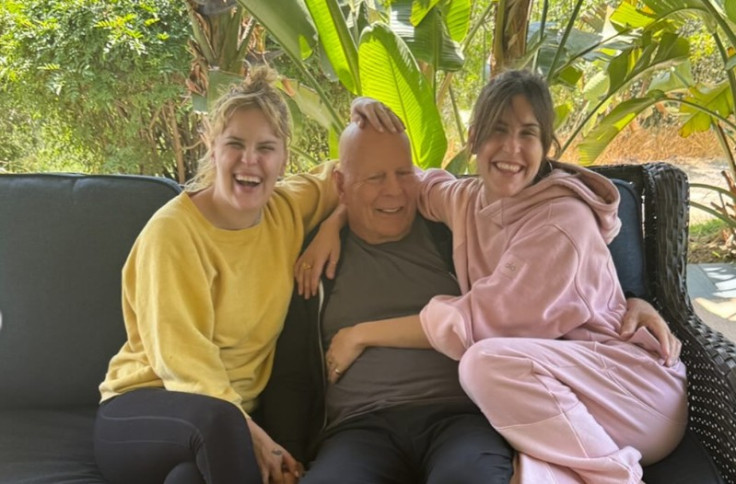
Emma has openly discussed how their daughters are dealing with the fall of Bruce. She has confessed that they are doing well, all things considered, and that it is hard.
She has said: 'They grieve, they miss their dad so much. He's missing important milestones, that's tough for them, but kids are resilient, [although] I used to hate hearing that because people didn't understand what we were walking through'
Her openness is indicative of the greater issues affecting families who have dementia in general, in which children tend to find it hard to adjust to the fact that a parent is no longer fully present.
Increasing Dementia Awareness
By speaking out, Emma has contributed to raising awareness of frontotemporal dementia, a degenerative disease that impairs behaviour, personality and language.
According to the Alzheimer's Society, FTD tends to develop over several years, whilst patients can live between eight and ten years after the symptoms have manifested.
Dementia advocates have commended Emma because she allowed her family to share their journey, which has contributed to destigmatising the condition, and there is a need to support carers.
The way Emma Heming Willis reacts to critics reflects her frustration and her desire to justify her family's decisions. Her move to take Bruce to another house may have been controversial; however, she claims that she did it out of love and necessity.
Since Bruce is not getting better, and his condition is progressively deteriorating, Emma's openness provides a potent reminder of the emotional and practical difficulties of families living with dementia. Her message, as crude as it may be, still emphasises the value of compassion, sympathy and respect to the people who make impossible choices when faced with a devastating illness.
© Copyright IBTimes 2026. All rights reserved.