

Learjet Expert Reveals 'Get-There-Itis' as Possible Pilot Mistake Behind Fatal Florida Crash That Killed 9
Investigators have not determined the cause of the accident, which killed all nine people aboard after the aircraft encountered icing, turbulence and heavy precipitation
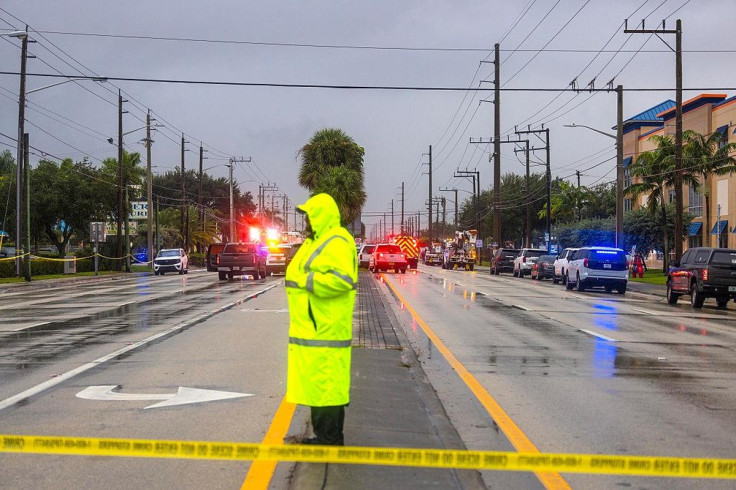
An aviation expert has suggested that 'get-there-itis', a decision-making bias that can affect pilots, may have influenced the crew of a Learjet 60 that crashed in Palm Beach County, Florida, on Sunday, 1 November 2026, killing all nine people aboard. Justin Crabbe, chief executive of Jettly, questioned the decision to continue through severe weather. However, federal investigators have not determined what caused the crash.
For context, the private jet departed Austin, Texas, bound for North Eleuthera in the Bahamas. It encountered icing, turbulence and heavy precipitation before crashing near Greenacres, southwest of West Palm Beach. Both pilots and all seven passengers died.
The accident has raised questions about the crew's route through the storm and its subsequent attempt to climb. Investigators are also examining evidence that parts of the aircraft separated before impact.
Learjet Expert Explains How 'Get-There-Itis' Could Affect Pilot Decisions
In an interview published by the New York Post on Tuesday, 3 November, Crabbe, a veteran pilot and chief executive of charter-flight booking platform Jettly, questioned why the crew continued through dangerous weather.
'They certainly should have gone around [the storm],' Crabbe said.
Crabbe suggested that air traffic controllers had given the pilots flexibility to change course. He believed a diversion around the storm might have been a safer option, although investigators have not established whether another route would have prevented the accident.
One possibility, according to Crabbe, was a phenomenon known in aviation as 'get-there-itis'.
'It's a theory called "get-there-itis," and flight schools teach you this very early on,' he told the newspaper.
The term describes the pressure pilots may experience to complete a planned journey despite worsening conditions. It can affect decision-making when reaching a destination becomes a stronger consideration than reassessing the risks of continuing.
Crabbe suggested that the pilots may have been focused on reaching the Bahamas. However, he acknowledged that he did not know what motivated their decisions.
That distinction is important. The crew's final radio communications provide evidence of the conditions they encountered, but they do not establish whether pressure to complete the journey influenced their judgement.
Crabbe also recognised the difficulty of assessing the crew's actions in hindsight, particularly when the pilots were confronting deteriorating weather at high altitude.
Florida Learjet Crash Investigation Examines Icing and Aircraft Breakup
According to the NTSB, the aircraft was flying at approximately 35,000 feet when the crew reported icing, moderate turbulence and precipitation.
Co-pilot Nathalia Gadelha Filgueiras, 20, subsequently requested clearance to climb to 37,000 feet. Air traffic controllers approved the request, but the situation deteriorated shortly afterwards.
Crabbe suggested that attempting to climb through icing conditions could have increased the risk of an aerodynamic stall.
Ice accumulation can interfere with airflow over an aircraft's wings, reducing lift and increasing drag. A climb can also introduce additional aerodynamic challenges, particularly when an aircraft's performance has already deteriorated.
However, investigators have not confirmed that the Learjet stalled or that the attempted climb caused the emergency.
Aviation lawyer Zachary S. Gorwitz, of Podhurst Orseck, also highlighted the combination of weather conditions confronting the aircraft.
'This was kind of the perfect storm of trouble,' Gorwitz told the New York Post.
The aircraft subsequently entered a rapid descent. NTSB board member Tom Chapman said the crew reported an overspeed condition shortly before the crash.
Investigators have since uncovered evidence that raises further questions about what happened during the aircraft's final moments.
During a briefing on Tuesday, 3 November, Chapman said three pieces of the Learjet's left elevator had been discovered between approximately 1.3 and 3.8 miles from the crash site.
The elevator helps control an aircraft's pitch, allowing its nose to move upwards or downwards. Its separation before impact is significant, although investigators have not determined whether it contributed to the loss of control or resulted from forces during the descent.
Among those killed were technology entrepreneur Adam Robinson, 44, his wife Helen Sharp and their children, Emma, 4, and Charlie, 2.
The other victims included family friends Rachael Reed and Charmi Fehr, the family's nanny and pilots Jeffrey Gregory, 55, and Filgueiras. Reports have differed over the nanny's full name.
Gorwitz cautioned against assuming that Filgueiras' age explained the accident. He suggested that her handling of radio communications did not necessarily mean she was controlling the aircraft during the emergency.
The NTSB is examining the wreckage, weather conditions, maintenance records and crew communications to determine what happened. Investigators expect to issue a preliminary report in approximately one month, while establishing the probable cause could take more than a year.
© Copyright IBTimes 2026. All rights reserved.