

US Air Traffic Control Outage Explained: Sean Duffy $50B Request and NYC Traveller Delays
The nationwide restriction was lifted after more than four hours, but delays continued as airlines worked to reposition aircraft and crews
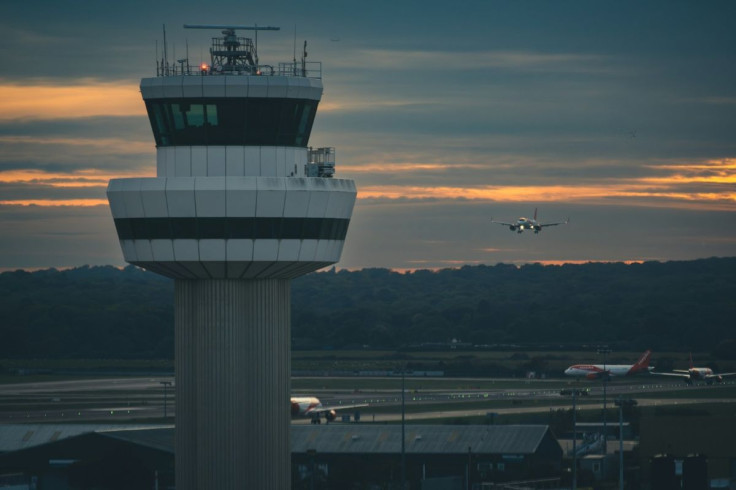
Thousands of travellers faced disruption at New York's LaGuardia and JFK airports on Friday, 13 November, after a nationwide Federal Aviation Administration (FAA) ground stop halted US departures. The order was lifted at 8.15pm Eastern, more than four hours after the disruption began, but delays continued as aircraft and crews remained out of position.
Transportation Secretary Sean Duffy said instability began at 3.36pm, affecting radar and communications at air traffic control centres. He blamed overloaded switches and routers for producing inconsistent data. The FAA said the ground stop was imposed as a safety precaution.
Duffy Seeks $50 Billion for Air Traffic Overhaul
Duffy called for $50 billion (£38 billion) to modernise the ageing air traffic control system. Earlier on Friday, the administration had requested a broader $30.1 billion (£23 billion) aviation infrastructure package, including $10.1 billion (£7.64 billion) for air traffic control upgrades.
Congress had already approved $12.5 billion (£9.5 billion) over five years for modernisation and controller recruitment. Duffy said a complete overhaul was needed to prevent further outages.
Homeland Security Secretary Markwayne Mullin said officials had found no evidence of a cyberattack, but the investigation was continuing.
FAA Says SMART System Was Not Involved
The disruption came three days after the FAA announced the expansion of its Strategic Management of Airspace, Routes and Trajectories (SMART) system to all 22 air route traffic control centres.
The cloud-based tool combines weather, flight-path, traffic and staffing information to help officials anticipate congestion. Duffy said SMART was separate from the legacy equipment involved. Air Space Intelligence, the company behind the system, also said the ground stop was not caused by SMART or its integration with the FAA and air traffic control. The rollout's timing does not establish a connection.
Thousands of Flights Disrupted Across US
About 11,000 flights carrying more than 1.5 million passengers were scheduled to depart after 4pm Eastern, according to Cirium figures reported by the Associated Press. At least 827 flights had been diverted by 7.05pm. Duffy said about 3,500 aircraft were airborne when the ground stop began, with fewer than 400 still in the air by his update.
The disruption was not confined to New York: the nationwide restriction affected departures across the United States, while the knock-on effects continued as airlines worked to reposition aircraft and crews.
At LaGuardia, a US Navy member identified as Hannah told the New York Post she had been travelling for 30 hours and was trying to get home to Florida after deployment when her flight was cancelled.
Airlines Offer Rebooking Options and Refunds
Airlines offered different waivers. Delta Air Lines allowed eligible passengers to rebook through 21 November; United Airlines waived fees and fare differences for qualifying same-city, same-cabin flights through 20 November. American Airlines covered eligible tickets bought by 12 November for travel on 13–14 November, with new travel through 17 November; changes had to be made by 14 November.
Southwest Airlines allowed qualifying passengers to rebook within five days of their original travel date. Frontier Airlines waived change fees for eligible travel from 13–15 November, while Alaska Airlines extended eligible travel through 17 November. JetBlue's rebooking window ran through 18 November. Eligibility varied.
These waivers are separate from federal refund rights. US Department of Transportation rules generally require refunds when flights are cancelled or significantly changed and passengers reject alternative travel or credits. The outage does not automatically entitle passengers to extra compensation.
© Copyright IBTimes 2026. All rights reserved.