

Home Depot Stock: Wall Street Says 'Buy,' But This Brutal Math Suggests It is a Value Trap
Home Depot's earnings show resilience, but housing market challenges persist.
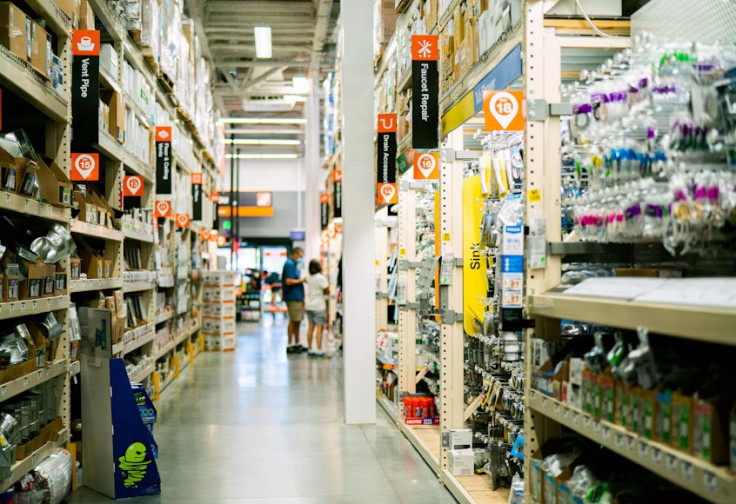
Home Depot stock has had a shaky 2026, but the latest earnings report has not really changed the main debate around the company. Wall Street still mostly says the shares are worth buying, although the current valuation makes the upside harder to justify unless the housing market improves more meaningfully.
The Home Depot (NYSE: HD) stock is down about 10% this year, reflecting investor worries about inflation, elevated interest rates and a sluggish housing market. The backdrop matters because Home Depot tends to perform best when homeowners feel confident enough to move, renovate or spend on larger home projects.
📊 HOME DEPOT SAYS ITS SALES ARE HEALTHY, BUT HERE’S WHERE CUSTOMERS ARE HOLDING BACK
— Algofinix Inc (@algofinixai) May 20, 2026
💡 Shares of Home Depot crept higher on Tuesday after the home- improvement giant kept its full-year#Markets #Stocks #algofinixai
Follow @algofinixai for daily real-time sentiment
Latest Quarter Was Fine, Not Amazing
Home Depot's first-quarter fiscal 2026 results on 19 May came in better than expected. Revenue rose nearly 5% year over year to $41.77bn, while adjusted earnings were $3.43 per share, also ahead of forecasts.
Still, it was not exactly a booming quarter. Comparable sales rose just 0.6%, comparable transactions fell 1.3% and gross margin came in below expectations at 33%, according to CNBC.
I’ve been yelling into the void about Home Depot $HD for months now, I wasn't buying the post-Q2 hype back in August.
— Hataf Capital (@hataf_capital) February 25, 2026
While the S&P 500 has been busy minting 7% gains, Home Depot has been stuck in the mud, trailing my last update by about 5%.
They just dropped its Q4 earnings… pic.twitter.com/wTzfi742RU
The company said demand was broadly similar to what it had seen through fiscal 2025, despite consumer caution and continuing pressure from housing affordability. So while the results were decent, they looked more like a sign of resilience than the beginning of a major growth rebound.
That distinction matters for investors trying to decide whether the recent weakness in the stock has created a buying opportunity or simply exposed a company facing a slower operating environment.
The Outlook Still Looks Modest
Home Depot also maintained its full-year outlook, and that is one reason the stock has struggled to regain momentum. The company still expects sales growth of 2.5% to 4.5%, comparable sales growth of 0% to 2% and adjusted earnings per share growth of 0% to 4%.
That is not a weak forecast, but it also does not point to the kind of expansion that usually supports a premium valuation. Reuters noted late last year that Home Depot's fiscal 2026 targets were already below what many analysts had expected.
The company is aiming for an operating margin of 12.4% to 12.6%, up from 11.9% in the first quarter. That helps support profitability, but it still does not change the broader issue that sales growth remains fairly muted.
The challenge for Home Depot is that investors are still waiting for a stronger recovery in housing activity. Mortgage rates have eased somewhat from their peaks, but they remain high enough to keep many homeowners cautious about moving or taking on major renovation projects.
Why Analysts Remain Positive
Even with those limitations, Wall Street has not turned against the stock. The median analyst price target remains around $380 a share, implying roughly 23% upside from current levels, while about 60% of analysts still rate Home Depot a buy.
That optimism largely comes from the company's scale, brand strength and ability to keep generating substantial cash flow even when the broader market softens. Investors also continue to view Home Depot as one of the strongest long-term operators in the home-improvement sector.
Some analysts believe the company could benefit significantly if mortgage rates decline further and housing turnover eventually improves. A healthier housing market would likely support demand for renovation projects, appliances, outdoor upgrades and larger discretionary spending tied to homeownership.
The key question, however, is how much of that future recovery is already reflected in the stock price. If the housing rebound continues getting delayed, the bullish case becomes more difficult to defend.
Why Valuation Still Feels Heavy
This is where the argument that Home Depot may be a little overextended starts to gain traction. The company's forward price-to-earnings ratio remains around 20, while its five-year PEG ratio sits near 2.8, suggesting the shares are not especially cheap relative to the growth expected ahead.
For a company likely to produce only low single-digit sales growth, that remains a demanding valuation. In practical terms, investors are paying a premium for consistency and stability rather than for rapid expansion.
The broader housing market also does not yet look like a quick fix. Fannie Mae's latest forecast says the 30-year fixed mortgage rate should end 2026 at around 5.9%, which would still leave borrowing costs elevated compared with the low-rate environment that previously fuelled housing activity.
That backdrop helps explain why Home Depot may continue facing slower demand conditions. The company typically benefits when consumers are moving, refinancing or investing heavily in home upgrades. With borrowing costs still relatively high and housing turnover subdued, growth may remain gradual rather than explosive.
The Main Takeaway
Home Depot remains a high-quality business, and the latest quarter showed the company can still outperform expectations even when conditions are difficult. But a decent earnings beat is not the same thing as a major growth story, and the stock already appears priced for a better environment than investors are currently getting.
That is why some investors may increasingly see Home Depot as less of a bargain and more as a stock that still needs a stronger housing recovery before the current valuation fully makes sense.
© Copyright IBTimes 2026. All rights reserved.