

Why Is Dubai International Airport Shutting Down in 2032? Historic Move to Accomodate More Passengers in the Future
Dubai International Airport plans to consolidate its aviation operations at Al Maktoum International Airport by 2032, citing capacity limits and operational efficiency.
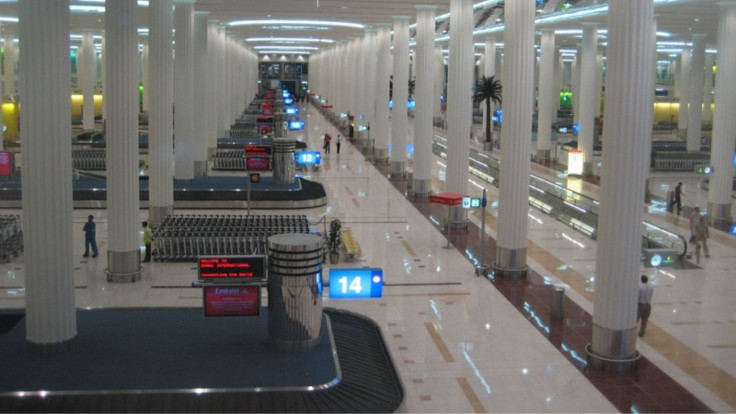
Dubai International Airport is set to close in Dubai in 2032 as part of a major aviation shift to Al Maktoum International Airport, according to chief executive Paul Griffiths, in a report by The Mirror. The announcement does not mean an immediate closure.
Dubai International Airport will continue operating at full capacity for years, but officials say it is already approaching its physical limits. The move is part of an expansion strategy that has been in development for more than a decade, designed to keep Dubai at the centre of global air travel as passenger numbers continue to rise.
Capacity Limits Drive Shutdown
At the core of the decision is simple pressure: passenger volume. Dubai International Airport is already one of the busiest airports in the world, handling more than 90 million passengers in 2024 and continuing to push toward even higher figures. Airport leadership has previously warned that traffic could exceed 100 million passengers annually in the near term, with projections climbing further by the end of the decade.
Officials say Dubai International Airport was never designed to grow indefinitely. While it has expanded repeatedly since opening in 1960, its urban location has become a limiting factor. Runways, terminals and surrounding infrastructure leave little room for further large-scale expansion without major disruption.
Griffiths has explained that by the early 2030s, demand is expected to exceed what Dubai International Airport can realistically handle. That tipping point is what makes a full transition necessary rather than continued patchwork expansion.
Why a Single Mega Airport Makes More Sense
Another major factor behind the shutdown plan is operational efficiency.
Dubai currently runs two major airports: Dubai International Airport and Al Maktoum International Airport, located roughly 70 kilometres apart. Officials argue that maintaining two large international hubs so close together is inefficient, especially as global aviation consolidates into fewer, larger mega-airports.
The long-term plan is to transfer all services from Dubai International Airport to Al Maktoum International Airport once it is ready to absorb full traffic. That airport is being designed to eventually handle up to 260 million passengers per year, making it one of the largest aviation hubs in the world when fully complete.
According to planning documents and statements from Dubai Airports, the idea is not just expansion but consolidation. Rather than splitting resources between two major airports, Dubai intends to build a single central hub capable of handling future demand, cargo growth and long-haul connectivity in one place.
Ageing Infrastructure and Economics Behind the Decision
Infrastructure lifespan is also playing a quiet but important role in the decision. Dubai International Airport's core facilities, including terminals and support systems, are approaching the later stages of their planned operational life. Officials have indicated that maintaining and upgrading these systems indefinitely would require significant ongoing investment.
There is also a financial argument behind the shift. Running two major hubs in parallel, both requiring constant upgrades and staffing, is increasingly seen as less efficient than concentrating operations into one purpose-built facility.
That economic calculation becomes even more relevant as Dubai continues to scale its aviation sector. With passenger demand rising and international transit traffic forming a major part of the city's economy, planners are prioritising long-term sustainability over incremental expansion.
What Happens Next
Under current plans, Dubai International Airport will continue operating normally until around 2032, when the transition to Al Maktoum International Airport is expected to take place. The process will not be an overnight shutdown but a gradual shift of operations once capacity at the new airport is fully ready.
A final decision on the future use of the Dubai International Airport site has not yet been confirmed, including whether it will be repurposed for aviation support, commercial development or other urban projects. For now, Dubai International Airport remains fully active and continues to serve tens of millions of passengers each year.
In recent years, Dubai International Airport has continued breaking records, handling 95.2 million passengers in 2025, the highest international traffic ever recorded for a single airport. In early 2026, it was still projected to approach 100 million passengers annually, even as regional airspace disruptions briefly slowed operations due to geopolitical tensions. Authorities have since worked to restore full capacity, with flight operations gradually normalising and demand remaining strong.
© Copyright IBTimes 2026. All rights reserved.