

Interstellar Object 3I/ATLAS Forces Scientists to Confront Flaws in Defence Plans
3I/ATLAS is challenging Earth's defence
The familiar script of planetary defence has been torn up. For decades, the globe's foremost space agencies operated under the assumption that the greatest threat to Earth came from within its own boundaries: asteroids and comets born in our solar system, following predictable, well-charted orbital paths.
That framework, however, is being dramatically tested by a terrifyingly fast and utterly unpredictable class of object: the interstellar visitor. These celestial tourists arrive from beyond our stellar neighbourhood, and they are forcing scientists and defence planners to confront a profound question: are Earth's protective systems truly prepared for a threat that doesn't play by our rules?
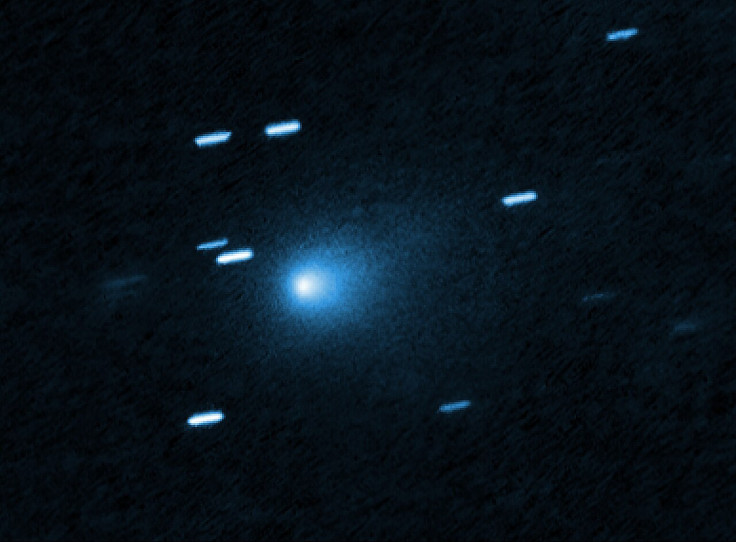
The current object of fascination — and concern — is 3I/ATLAS, an interstellar interloper currently sweeping through the inner solar system. While it is certainly not an imminent hazard — its closest approach on Dec. 19 will occur at a reassuring distance of roughly 270 million kilometers — its very existence highlights a critical vulnerability. The safety of today's fly-by is irrelevant; the issue lies in the unexpected physical behaviour of the object, combined with its origin outside the sun's gravitational domain.
Planetary defence is a complex, multi-layered process. It doesn't begin with a missile launch, as many wrongly assume, but with quiet, persistent vigilance. The process starts with early detection, moves to precise tracking and detailed characterisation, and only then, if absolutely necessary, proceeds to mitigation strategies like kinetic deflection. Each phase demands time, and time is exactly what interstellar objects strip away.
Unlike asteroids that loop around the sun for millennia, allowing astronomers years, even decades, to catalogue them, interstellar visitors arrive once on high-speed, hyperbolic trajectories. By the time they are detected, they may already be deep inside the solar system, drastically compressing the timeline for humanity to react. This reality makes early discovery the most critical element of planetary defence in the coming years.
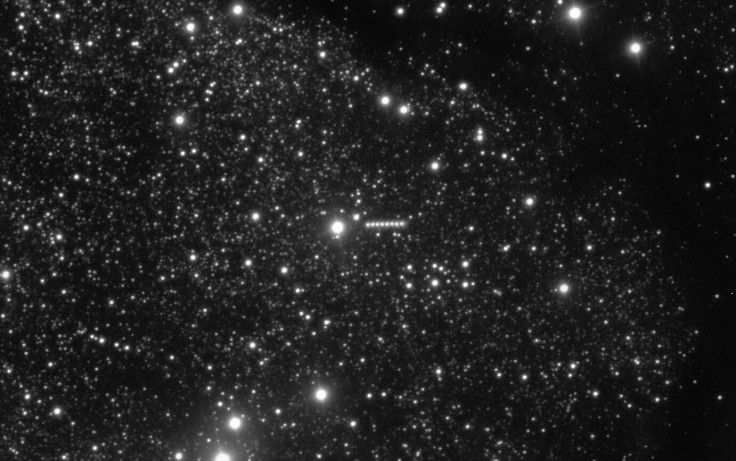
The Cosmic Speed Challenge: Why Interstellar Objects Like 3I/ATLAS Compress the Timeline
The challenge is being met by the colossal Vera C. Rubin Observatory in Chile. Already operational, the observatory is a game-changer. It is designed to relentlessly scan the entire visible sky every few nights, creating the most comprehensive time-domain survey ever attempted. This monumental undertaking, known as the Legacy Survey of Space and Time, is expected to spot millions of near-Earth asteroids, comets, and, crucially, a torrent of interstellar visitors just like 3I/ATLAS.
The consensus among the scientific community is simple: once the Rubin facility is fully online, the discovery of interstellar objects will shift from a rare, once-a-decade headline to a routine occurrence. In essence, humanity is about to learn that objects from other star systems are passing through our cosmic backyard far more frequently than was previously believed. This realisation carries implications that go well beyond mere impact risk, extending into the realms of physics and global security.
Objects like 3I/ATLAS are not just fast; they are physically unfamiliar. The persistent sunward emission observed from the object, for example, challenges standard comet models. This uncertainty complicates efforts to quickly determine its mass, composition, and — most importantly — how it will react to the sun's powerful forces. For defence planners, this uncertainty is not a footnote; it is the absolute enemy of preparedness.
Beyond Gravity: How 3I/ATLAS Reveals a Flaw in Planetary Defence
NASA's Planetary Defense Coordination Office and its international partners have already made significant progress. The spectacular success of the DART mission, which successfully altered the orbit of the asteroid moonlet Dimorphos in 2022, demonstrated that kinetic deflection is a viable possibility. Following this, the European Space Agency's Hera mission, scheduled to rendezvous with the Didymos system in 2026, will turn that experiment into a well-characterised, repeatable defence technique.
However, the rapid nature of interstellar objects raises entirely new and complex questions. A deflection strategy designed for a slow-moving, loosely-packed 'rubble-pile' asteroid may not apply at all to a compact, fast-moving object that is entering the solar system for the first and only time. Even deciding if a deflection is feasible requires rapid characterisation — a split-second need to know what the object is made of and how it reacts to solar heating.
In the case of 3I/ATLAS, astronomers have already detected signs of non-gravitational acceleration, meaning the object's motion cannot be fully explained by gravity alone. This detail is paramount for planetary defence. Any future mitigation effort must account for forces that could unpredictably alter an object's trajectory.
Crucially, none of this is cause for alarm. Objects like 3I/ATLAS pose no known threat to our planet. Planetary defence has never been about panic; it has always been about preparation. Every unexpected visitor offers an invaluable opportunity to stress-test our detection systems, refine our models, and identify the gaps in our knowledge before a truly hazardous object appears. The lesson is clear.
The future of planetary defence will depend less on a dramatic, last-minute intervention and more on quiet, persistent vigilance. Early detection, rapid characterisation, and flexible response strategies will determine whether humanity can adapt to a universe that is far more dynamic — and far less predictable — than we ever imagined.
The future of planetary defence is no longer a sci-fi fantasy of a last-second, dramatic interception; it is a clear, immediate demand for sustained, quiet diligence. As the Vera C. Rubin Observatory prepares to open the floodgates to countless interstellar data points, the real challenge will be ensuring global commitment and funding for the systems — from early-warning telescopes to rapid-response missions — that turn this data into absolute safety.
© Copyright IBTimes 2026. All rights reserved.