Interstellar Invader 3I/ATLAS Blasting Two Tons of Water Into Space Every Second — Baffling Scientists Again
ESA's JUICE mission uncovers surprising activity from interstellar comet 3I/ATLAS, offering insights into ancient planetary materials


The interstellar visitor 3I/ATLAS is currently discharging a volume of water into the void that could top up 70 Olympic-sized pools every 24 hours.
This finding provides researchers with an incredible opening to analyse the components that built planets in distant solar systems, which may predate our own sun by billions of years.
A Rare Encounter in Deep Space
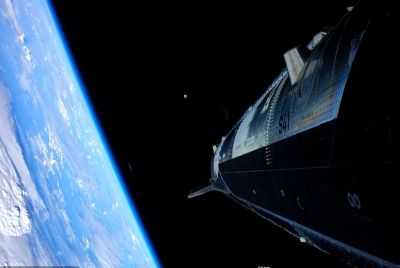
The European Space Agency's Jupiter Icy Moons Explorer discovered this while it was busy trekking toward Jupiter and its frozen moons. Back in November 2025, the craft used its MAJIS (Moons And Jupiter Imaging Spectrometer) and JANUS (Jovis, Amorum ac Natorum Undique Scrutator) sensors to track 3I/ATLAS, which is only the third object ever caught crossing into our neck of the woods from another part of the galaxy.
🌌☄️ Interstellar comet 3I/ATLAS is spraying water across the solar system 💦🚀😱
— 3I/ATLAS updates (@Defence12543) February 11, 2026
⚠️For millions of years, this frozen alien visitor drifted between the stars 🌠 — and now it’s rewriting what we know about planetary systems beyond our own. Using NASA’s Swift Observatory 🛰️,… pic.twitter.com/h1LND5RiKm
Much like the comets in our own solar system, 3I/ATLAS began shedding material as it neared the Sun, where solar heat warmed its frozen core. This caused the solid ice to turn straight into gas through sublimation, a violent shift that created the glowing shroud and long tail typical of these objects. While this transition usually makes a comet shine, 3I/ATLAS flared up with a level of intensity that took experts by surprise.
Violent Release of Ancient Gases
While tracking the object, the MAJIS sensor picked up infrared signals from carbon dioxide and water vapour. Experts refer to these substances as 'volatiles' because they readily turn into gas.
Giuseppe Piccioni, a team member from the National Institute for Astrophysics (INAF), explained in a statement that frequent sightings of water vapour and carbon dioxide by MAJIS show that frozen 'volatiles' hidden under the surface were being cast off into the void just after the object rounded the sun.
Piccioni noted, 'From the data collected, we estimated an outflow from the comet's nucleus of about two tons per second, equivalent to approximately 70 Olympic swimming pools of water vapor ejected into space every day.'
According to Piccioni, these readings will help experts grasp how the comet behaves after its closest approach to the sun, while shedding light on the traits of 'materials formed around another star billions of years ago.'
A Challenging Unplanned Mission
What makes the JUICE findings even more remarkable is that they were never actually part of the original plan, with the team only pivoting after 3I/ATLAS was first spotted on 1 July 2025. Capturing these details was no easy feat, as the crew had to work with incredibly brief windows to glimpse the interstellar visitor while its signals remained exceptionally weak.
A lengthy delay followed these sightings, as the information didn't actually arrive back on Earth until February 2026.
Successful Test for Future Exploration
'We waited a long time, but it was truly worth it,' said Pasquale Palumbo, an INAF researcher and the lead investigator for JANUS. He explained that the stunning pictures captured the visitor's fierce activity as it made its closest pass to the sun.
According to Palumbo, 3I/ATLAS displayed a massive shroud, a tail, and complex features like jets and rays. He noted that this information will let the team examine the 'light intensity, and evolution of the comet's coma and tail' over different periods.
The team expressed great satisfaction with how JANUS performed, viewing it as a perfect trial run for when the craft reaches its ultimate goal: Jupiter and its frozen moons.
© Copyright IBTimes 2026. All rights reserved.
- Recommended For You