JD Vance's Catholic Faith Could Become a 'Huge Threat' to His 2028 Presidential Ambitions, Analyst Warns
Vance's evangelical roots, Catholic conversion and clashes with church leaders could complicate his Republican appeal
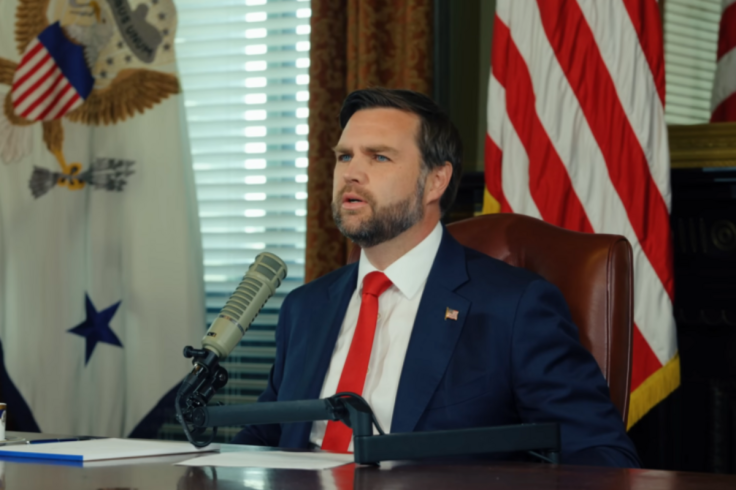
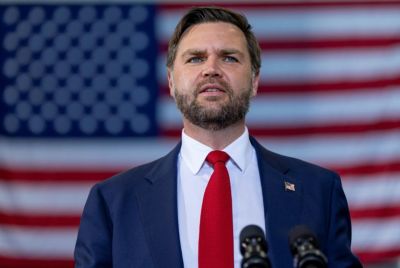
JD Vance's Catholic faith could become a 'huge threat' to his ambitions for the White House in 2028, according to a Christian analyst, as the US vice-president attempts to build support among evangelical and Catholic voters. His conversion to Catholicism, combined with the evangelical influences of his upbringing, could leave him navigating competing expectations within Donald Trump's Republican coalition.
Vance converted to Catholicism in 2019 and has made his religious journey increasingly central to his public identity.
He recently published Communion: Finding My Way Back to Faith and met Pope Francis at the Vatican on Easter Sunday in 2025, one day before the pontiff died. If elected president in 2028, Vance would become only the third Catholic president in US history, after John F Kennedy and Joe Biden.
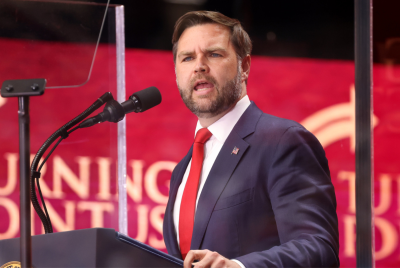
His political ambitions were also on display at the Republicans' midterm convention in Dallas on Thursday. In a keynote address, Vance invoked scripture and the Apostle Paul while paying tribute to right-wing activist Charlie Kirk, who was assassinated last year.
'We live in the city of man, not the city of God,' Vance said. 'But I believe that our founders built this nation on a promise that echoes our creator.'
Larry Jacobs, a political scientist at the University of Minnesota, described the speech as 'the beginning of 2028 Republican primary competition'.
'Vance has thrown his hat in the ring,' Jacobs said. He argued that white Christian nationalism was one of the forces Vance was seeking to incorporate into his political coalition, while also appealing to other Republican voters.
Catholic Faith Faces Questions From Evangelical Roots
Religious analysts argue that Vance's conversion could create difficulties as he seeks support from both evangelical and Catholic constituencies.
Vance has described an evangelical upbringing before moving away from Christianity and becoming an atheist as a young adult. He later returned to Christianity and converted to Catholicism, leaving him with a religious history that does not fit neatly into one political or theological camp.
That tension was examined in a recent interview with Christian podcaster Bryce Crawford, where Vance was asked about the 'end times', referring to beliefs surrounding the second coming of Christ. The subject is particularly prominent in some evangelical traditions and is approached differently in Catholic theology.
Vance acknowledged his longstanding interest in end-times beliefs and recalled owning a Bible associated with evangelical pastor John Hagee. But he declined to take a firm position on when such events might occur, instead saying he wanted to concentrate on 'doing as much of God's work as possible right now'.
'I just think you've got to kind of try to have an attitude of the end times may be coming,' Vance said.
'In fact, they are coming. It's just a question of whether they're coming thousands of years down the road, or a few months down the road.'
Robert Jones, president and founder of the Public Religion Research Institute, said Vance appeared to be trying to 'have things both ways'.
'Anyone schooled inside that evangelical debate would find that position either dismissive of deep theological concerns, or deeply uninformed about them,' Jones said.
Vance has also experienced tensions with Catholic leaders.
In February 2025, he invoked the medieval Christian concept of 'ordo amoris', or order of love, while defending the Trump administration's hardline immigration policies. Pope Francis later rejected Vance's interpretation in an open letter, citing the parable of the Good Samaritan.
After Pope Leo XIV criticised the US approach to the Iran war this year, Vance told the pontiff to be 'careful' if he was 'going to opine on matters of theology'. His remarks risked opening another point of tension with Catholic voters, particularly those who regard the pope's authority differently from evangelical Christian leaders.
JD Vance's Religious Identity Could Shape His 2028 Bid
Daniel Hummel, director of the Lumen Center, a Christian research group in Madison, Wisconsin, said Vance's public statements exposed potential pitfalls.
'Vance is a recent Catholic convert, and he still talks a lot like an evangelical,' Hummel said.
He noted that conservative Catholics may disagree with the pope on political questions while still maintaining respect for the office. That, he argued, contrasts with an evangelical tradition in which publicly challenging Christian leaders can be more acceptable.
Hummel also questioned the political and theological content of Vance's Christianity.
'It's pretty clear to me that he understands himself to be a Christian, who is being driven into politics in part because of his Christian faith,' he said. 'But it's unclear to me – even as someone who observes him regularly – what exactly is the content of that Christianity.'
'I think that's a huge threat to him,' Hummel added, arguing that Vance could alienate one constituency by committing too strongly to the expectations of another.
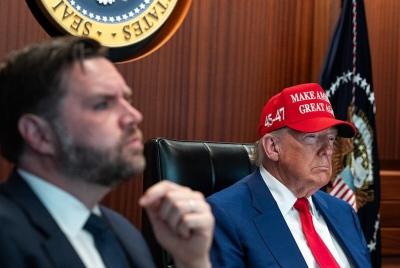
Jacobs identified a different potential weakness, saying Vance's biggest challenge could be authenticity. Vance was once a fierce critic of Trump and privately compared him to 'America's Hitler' in 2016. He is now Trump's vice-president and is widely being discussed as a potential Republican presidential contender.
'The challenge with Vance is authenticity,' Jacobs said. 'JD Vance too often comes off as someone who is playing the political game.'
Jones also criticised Vance's comments about divine providence and the failed assassination attempt against Trump in Butler, Pennsylvania, in July 2024.
Vance suggested that Trump's decision to lower his head and look at an immigration chart at the moment the bullet passed could have prevented a much wider political crisis.
Jones called that interpretation 'deeply troubling'.
'A view like that, un-interrogated – especially from a leader as high up as he is – is quite dangerous,' he said.
© Copyright IBTimes 2026. All rights reserved.
- Recommended For You