

Trump DOJ Admitted Pam Bondi Directed Epstein Prosecutor Maurene Comey's Firing Before Court Defeat
The Justice Department acknowledged that then-Attorney General Pam Bondi directed the dismissal, which was not based on misconduct or poor performance
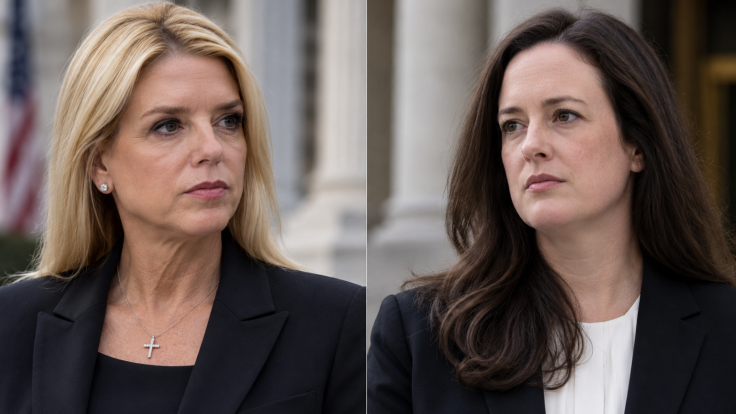
President Donald Trump's Justice Department acknowledged in a May 2026 court filing that then-Attorney General Pam Bondi directed the firing of Maurene Comey. Comey had handled cases involving Jeffrey Epstein and Ghislaine Maxwell.
On Monday, 26 October 2026, US District Judge Jesse Furman ruled her July 2025 dismissal unlawful. The department also admitted that Comey was not removed for cause or poor performance.
Furman ordered retroactive reinstatement and back pay, without deciding whether political retaliation was involved.
Comey challenged her removal in a lawsuit filed in September 2025, arguing that her family ties and perceived political beliefs contributed to the decision. Trump dismissed her father, former FBI director James Comey, in 2017.
The court's ruling addressed the legal authority used to remove her, rather than whether those allegations were true.
DOJ's Account of Bondi's Role in Maurene Comey's Firing
The department identified Bondi as the official who authorised and directed Comey's dismissal in a written response filed on 26 May 2026. It came more than 10 months after her dismissal.
However, Furman said the actual decision-maker remained partly disputed and accepted the government's version only for his legal analysis.
The dismissal memorandum was signed by Francey Hakes, then director of the Executive Office for United States Attorneys.
It invoked Article II of the US Constitution and federal law, without specifying misconduct or another ground for removal. Comey was given neither advance notice nor an opportunity to respond.
The department acknowledged that the firing was not for cause and was unrelated to Comey's performance. The court reviewed favourable assessments from her nearly decade-long prosecutorial career.
She also worked on Sean 'Diddy' Combs's prosecution. The ruling did not link her dismissal to any of those cases. Nor did it establish that Trump personally ordered her removal.
Judge Rejects Legal Defence of Maurene Comey's Firing
Government lawyers argued that the attorney general's authority to remove federal prosecutors allowed Comey's dismissal without cause. They also said constitutional executive powers outweighed statutory employment protections. Furman rejected both positions.
Under the Civil Service Reform Act, covered prosecutors can be removed only for a legally sufficient reason and with procedural safeguards. These include written notice and a chance to respond. The judge found that the department had provided neither.
The government alternatively argued that the act of dismissal itself implied there was sufficient cause. Furman said that reasoning 'borders on frivolous'.
He pointed to the lack of any identified misconduct and the department's admission that Comey's performance was not the issue.
A second attempt to defend the dismissal came in May 2026. Todd Blanche, then acting attorney general, issued a memorandum seeking to ratify the earlier decision.
Furman ruled that the attorney general's removal power remained subject to civil service law, so the later memorandum could not validate the original firing.
His decision found violations of the constitutional separation of powers, the Administrative Procedure Act and Comey's Fifth Amendment due process and statutory rights. It rejected the department's claim that executive power displaced statutory protections.
What Comes Next After Maurene Comey's Firing Ruling
Furman ordered Comey's retroactive reinstatement from 16 July to 20 December 2025, when he inferred she had taken another job.
The order provides for back pay and corrections to her employment and retirement records, without requiring her to leave her current position. The sum remains undecided.
After her dismissal, Comey had warned colleagues about the consequences of removing career prosecutors without explanation. 'If a career prosecutor can be fired without reason, fear may seep into the decisions of those who remain,' she wrote.
The Justice Department has rejected the ruling and signalled that it will challenge it. 'The Department disagrees with this decision and will appeal in due course,' a spokesperson said.
Comey's lawyers described the outcome as a victory for civil servants and the rule of law.
The question of motive remains separate. Comey alleges that she was targeted because of her father's disputes with Trump, or because of her perceived political affiliations.
Furman did not determine whether those claims were true and has reserved judgment on her outstanding First Amendment claim.
He gave Comey until 9 November 2026 to explain why that claim should not be dismissed in light of the relief already granted. The Justice Department will have one week after her submission to respond. The court could dispose of the remaining claim without deciding whether the dismissal was retaliatory.
© Copyright IBTimes 2026. All rights reserved.