Hungary Asked King Charles To Return Two Horses Gifted by Orbán, Then Admitted It Did Not Want Them Back
Budapest says Nelson and Iveco remain in Britain after an incorrectly worded ministry letter raised questions about their legal ownership

King Charles III's two Hungarian Lipizzaner horses have become the centre of a political row after Hungary's agriculture ministry sent a July letter concerning their loan agreement, apparently seeking to end the arrangement before quickly correcting the request.
The ministry has since said it does not want the horses returned and that Nelson and Iveco will remain in Britain.
The episode has raised an unusual legal question over animals that were publicly presented as a gift to the King in 2024. Hungary now says the horses were transferred to the Royal Mews under a loan agreement and remain state property, despite the original handover being described as a coronation gift by Hungarian officials.
King Charles' Horses Were Presented as a Gift
The two Lipizzaners were selected in early 2024 after Toby Browne, then the Crown Equerry, and Matthew Powers, the King's head coachman, visited the Szilvásvárad state stud farm in northern Hungary.
They chose Neapolitano XXVII-44, known as Nelson, and Incitato XVIII-3, known as Iveco. The horses were then aged eight and six, respectively, and had been bred and trained at the Hungarian state stud.
They were formally handed over at the Royal Mews in Windsor on 21 June 2024. Kristóf Szalay-Bobrovniczky, Hungary's then-defence minister, presented the horses and described them at the time as a coronation gift.
Szalay-Bobrovniczky also posted photographs of the ceremony on Facebook with the caption, 'Hungarian horses at the service of the British Royal family!'
The Hungarian state stud had also described the animals as a gift. That makes the latest explanation from Budapest particularly significant.
Hungary's Agriculture Ministry now says the horses were transferred under a loan agreement and technically remain the property of the Hungarian state. The ministry nevertheless continues to regard them as a gift and says it wants the animals to stay in Britain.
That distinction is at the heart of the dispute. There is no suggestion that Charles ultimately refused a lawful demand to return the horses. Instead, a ministry letter concerning the loan arrangement was later described by the Hungarian government as inaccurately worded.
Why the Horses Stayed Despite the Letter
The ministry acknowledged that the letter was sent to Buckingham Palace in July but said it immediately corrected the wording and made clear to the British side that Hungary did not want the horses brought home.
The Hungarian Embassy subsequently said the horses would remain in Britain 'as originally intended'. Buckingham Palace has not added to the statement.
The affair has nevertheless attracted considerable attention in Hungary, where opposition politicians have called for the original letter to be published. The Christian Democratic People's Party described the episode as the 'Hungarian-British Horse War' and questioned who was responsible for what it regarded as an embarrassing episode.
The timing has also fuelled speculation about whether the change of government in Hungary played a role.
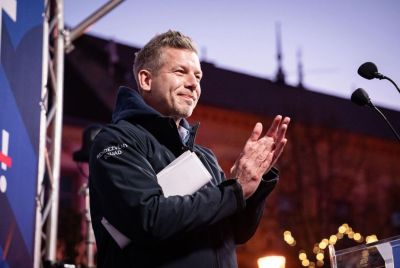
Viktor Orbán's Fidesz party had been in power when the horses were presented to Charles. Péter Magyar's Tisza Party subsequently replaced Orbán's government this year, ending his 16-year rule.
Martyn Rady, professor emeritus of Central European history at University College London, believes the horse episode may be connected to the new government reviewing arrangements made during the Orbán era. He suggested that an official examining previous transfers of state assets could have discovered the horses and triggered the letter.
Hungarian political commentator András Hont offered another explanation, describing the episode as 'amateurism'. He suggested a clerk may have been given a list of previous gifts and sent correspondence to the relevant recipients.
Neither explanation has been confirmed by the Hungarian government. The Agriculture Ministry has instead characterised the matter as an error in the wording of its communication.
There is also no indication in the reported dispute that Hungary raised concerns about the horses' welfare or living conditions in Britain.
Nelson and Iveco were bred at Szilvásvárad, Hungary's principal state centre for Lipizzaner breeding and training. Before their move to Britain, Iveco had been used by carriage driver Marcell Dani in competition.
For now, the legal status of the horses is being addressed between the Hungarian and British sides. Hungary's Agriculture Ministry said it was working to ensure that the gift was 'truly a gift' and that the two Lipizzaners could become the permanent property of the British King 'with a settled legal background'.
The ministry said it did not want the horses returned. The Hungarian Embassy considers the matter settled, leaving Nelson and Iveco at Windsor while officials work to resolve the paperwork behind the said gift.
© Copyright IBTimes 2026. All rights reserved.
- Recommended For You