

Logan Paul Publicly Distances Himself From Brother Jake Over Bad Bunny Super Bowl Comment
Jake Paul attacked Bad Bunny as a 'fake American' during Super Bowl LX, prompting Logan Paul to publicly push back.

Some family rows happen in private, behind kitchen doors and closed curtains. The Paul brothers, being the Paul brothers, chose a different stage: X, in the middle of the Super Bowl noise, with millions already yelling into the same digital void.
On Sunday night (Feb. 8), as Bad Bunny's Super Bowl LX halftime show dominated timelines, Jake Paul lit the fuse with a call for viewers to switch off. 'Purposefully turning off the halftime show,' he wrote, framing it as a show of consumer power against 'big corporations.'
ALL THE LATIN AMERICAN COUNTRIES BEING MENTIONED BY BAD BUNNY IN THE HALFTIME SHOW. #SuperBowl pic.twitter.com/sYySsOmTE8
— Access Bad Bunny (@AccessBadBunny) February 9, 2026
Jake pushed the message further, turning a protest about ratings into a far uglier jab at identity. 'Turn off this halftime. A fake American citizen performing who publicly hates America. I cannot support that.'
Purposefully turning off the halftime show
— Jake Paul (@jakepaul) February 8, 2026
Let’s rally together and show big corporations they can’t just do whatever they want without consequences
(which equals viewership for them)
You are their benefit. Realize you have power.
Turn off this halftime. A fake American…
It was the kind of line that travels fast because it is combustible, not because it is coherent. Bad Bunny is Puerto Rican, and Puerto Ricans are American citizens, which makes Jake's 'fake American' phrasing land less like commentary and more like a dog-whistle with the volume turned up.
Bad Bunny's performance itself — held at Levi's Stadium in Santa Clara, California — leaned hard into Puerto Rican pride and a pop spectacle built for a global audience. Billboard noted surprise appearances from Ricky Martin, Lady Gaga, Karol G and Cardi B, and much of the reaction online skewed celebratory.
Logan Paul and the Bad Bunny Backlash Turns Personal
Logan Paul did not wait for the storm to pass before stepping in. 'I love my brother but I don't agree with this,' he posted, in a rare moment of public contradiction between siblings who usually understand the value of a united front.
"I disagree with my brother" meanwhile hours ago pic.twitter.com/aDUPfMBCRq
— Jose Gonzalez (@JoseOnTheAir) February 9, 2026
Then he went straight to the heart of it. 'Puerto Ricans are Americans & I'm happy they were given the opportunity to showcase the talent that comes from the island.'
I love my brother but I don’t agree with this
— Logan Paul (@LoganPaul) February 9, 2026
Puerto Ricans are Americans & I’m happy they were given the opportunity to showcase the talent that comes from the island https://t.co/yCsuwa79gk
That last clause does something Jake's posts refused to do: it treats Puerto Rico as a place with culture, history and people, rather than as a prop in someone else's grievance. It is also a reminder that online outrage does not just 'spark debate;' it can harden into permission, especially when it comes wrapped in patriotism and is aimed at a Latino artist on the biggest TV night of the year.
Jake's original framing — 'Realize you have power' — is familiar influencer rhetoric: the audience as a lever, corporations as the enemy, the poster as the fearless truth-teller. But the bait-and-switch is what makes this episode worth lingering on: the moment a consumer boycott pitch becomes an accusation that a Puerto Rican performer is somehow less American.
Donald Trump Jumps In, Because of Course He Does
As if the internet needed more accelerant, President Donald Trump also weighed in with criticism of the halftime show.
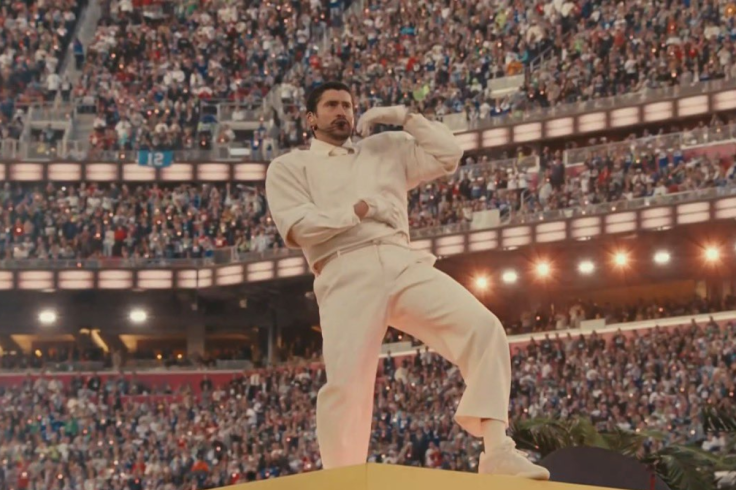
In a lengthy social media post, he called the star-studded performance 'absolutely terrible,' amplifying the conversation far beyond fandom and into the now-standard culture-war churn that trails major live events. At that point, the halftime show stops being a performance and becomes a test.
Trump just WENT OFF on the Bad Bunny Super Bowl Halftime Show, calling it "TERRIBLE" and “THE WORST"
— Eye on Palestine (@EyeonPalestine) February 9, 2026
"Nobody understands a word this guy is saying, and the dancing is disgusting, especially for young children that are watching from throughout the U.S.A., and all over the World pic.twitter.com/4u25b9cngI
Not of Bad Bunny's choreography or vocals, but of what Americans are prepared to label 'acceptable' on prime-time television when the artist does not sing in English, does not flatter the flag in the expected way, or simply does not feel like 'theirs.'
Bad Bunny, for his part, has not publicly responded to the Paul brothers' comments, Billboard reported. A representative for the artist did not immediately return Billboard's request for comment.
Maybe he won't respond at all, and frankly, why should he? The more uncomfortable truth is that this was not really about him — he was the trigger, not the target, and the target was the idea of who gets to stand at the centre of America's biggest stage.
© Copyright IBTimes 2026. All rights reserved.