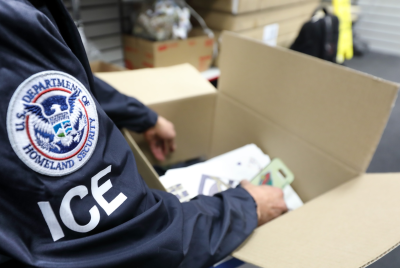
Mamdani Says Trump's Green Card Rule Could Drive Immigrant Families off Medicaid
The legal challenges argue that expanding the rule to include Medicaid, food stamps and housing aid could deter eligible families from seeking support

New York City Mayor Zohran Mamdani has warned that President Donald Trump's new 'public charge' green card rule could prompt immigrant families to withdraw from Medicaid and other benefits when it takes effect on Friday, as he joins a multi-city lawsuit in the Southern District of New York seeking to block the policy.
'The new public charge rule seeks to push immigrant families away from the programmes that have kept people fed and healthy for decades. New Yorkers will be afraid to see a doctor or ask for help they are legally entitled to,' Mamdani said in a statement.
'Families who remain fully eligible for benefits will feel a chilling effect, and all New Yorkers will pay for it.' Mamdani has suggested that as many as four million people nationwide could be frightened into unenrolling from healthcare for fear it would jeopardise their immigration status, though that figure has not been independently verified.
Cities Join Forces To Fight Benefits Crackdown
The lawsuit is part of a wider legal challenge led by New York Attorney General Letitia James and 21 other states, along with the District of Columbia, all seeking to halt the Department of Homeland Security rule before it comes into force.
New York City is fronting a separate coalition of local authorities including Chicago, San Francisco, Seattle, California's Santa Clara County and Washington's King County.
Both complaints argue the rule unlawfully expands the traditional definition of a 'public charge', the test used to determine whether someone can be refused a green card, visa or entry to the US on the grounds that they rely, or are likely to rely, on government support.
Under the challenged rule, the complaints argue, a wider range of public benefits could be considered when assessing whether an applicant is likely to become a public charge.
Under the new DHS rule, officials could weigh non-cash benefits such as Medicaid, food stamps and housing vouchers, including those used by family members such as US citizen children.
Previously, specific cash benefits, such as Temporary Assistance for Needy Families or Supplemental Security Income, were taken into account, while most non-cash benefits were excluded.
Chicago Mayor Brandon Johnson backed the legal action, saying the rule 'forces immigrant families to choose between putting food on the table, taking their children to the doctor, or protecting their ability to remain in this country'. He added that it was 'not only cruel, it is unlawful'.
States Warn of Billions in Lost Federal Aid
The state-led lawsuit, filed separately by James's office, centres on the financial impact should immigrant and mixed-status families withdraw from programmes such as Medicaid and the Supplemental Nutrition Assistance Programme (SNAP).
According to court filings, DHS's own estimates suggest states could lose roughly $4.05bn a year in federal funding for Medicaid and the Children's Health Insurance Programme, of which the plaintiff states calculate they would lose about $2.2bn.
New York argues it is especially exposed given its large immigrant population and extensive public benefit and school meal programmes.
James said the administration was exploiting fear among vulnerable families, adding, 'Hardworking families should not be forced to go without the support they need because they fear asking for assistance will get them deported.'
'This rule preys on that fear and counts on families forfeiting the food assistance, healthcare coverage, and other public benefits to which they are legally entitled.'
Neither lawsuit seeks damages, but both ask the court to invalidate the rule, block DHS from enforcing it, and restore the narrower Biden-era standard that excluded non-cash benefits from consideration.
The complaints also argue the rule change is 'arbitrary and capricious', claiming DHS disregarded warnings from public health experts that families would avoid preventive care and instead seek emergency treatment once conditions had worsened, driving up costs.
The Trump administration has maintained that the United States should be more selective in granting green cards or visas to those reliant on public assistance, while DHS has been contacted for comment on the latest legal challenge.
© Copyright IBTimes 2026. All rights reserved.
- Recommended For You