

Trump DOJ Threatening to 'Starve Poor Kids' to Force Mass Deportation Crackdown, Ex-Official Claims
A fight over immigration reporting now puts billions in welfare funding at the centre of a dispute over federal power and aid for vulnerable families

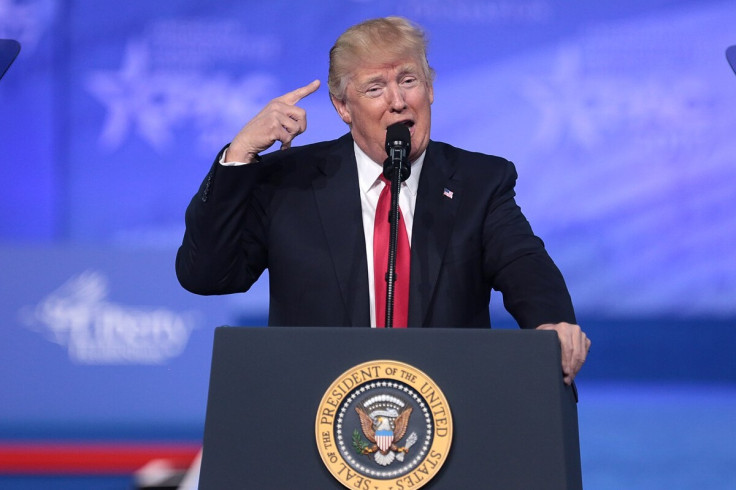
Former Department of Homeland Security chief of staff Miles Taylor on Thursday accused the Trump administration of putting assistance for low-income families at risk to pressure states into expanding immigration reporting, after the Justice Department issued a legal opinion covering state participation in two federal welfare programmes.
The Justice Department's Office of Legal Counsel issued the opinion on 1 September and announced it publicly the following day. It says that when a state participates in Temporary Assistance for Needy Families, or TANF, and Supplemental Security Income, or SSI, all agencies within that state must report to the Department of Homeland Security people the state knows are not lawfully present in the United States.
The interpretation is broader than a 1998 OLC opinion, which limited the reporting duty to the particular state agencies administering TANF or SSI. DOJ withdrew that earlier opinion and said its new position restores what it considers the original meaning of the 1996 welfare-reform law.
Taylor Says Families Could Face the Consequences
Writing on his Defiance Substack on 3 September, Taylor accused the administration of using welfare funding as leverage in support of President Donald Trump's immigration agenda. His article described the policy as a threat to 'starve poor kids' if states refuse to assist with what he characterised as a mass-deportation campaign.
That language is Taylor's characterisation, not wording used by Trump or the Justice Department. The OLC position does not direct states to cut food assistance or state that children should lose benefits.
DOJ has, however, confirmed that programme funding could be affected by non-compliance. Deputy Assistant Attorney General Joshua Craddock, who authored the opinion, said states accepting TANF funding must comply with federal law and warned that failure to do so could lead to consequences, including loss of programme funding.
Federal TANF grants exceed $16.4 billion (£12.13 billion) annually, according to DOJ. The figure represents nationwide TANF funding rather than an amount that the department has ordered withheld from any state.
Taylor argued that such a funding threat could ultimately fall on people who are legally eligible for assistance, including children in low-income families. He also argued that people unlawfully present are not eligible for the TANF and SSI benefits at issue.
Federal rules restrict access to those programmes based on immigration status. SSI, for example, is available to U.S. citizens and nationals as well as certain noncitizens who fall within qualifying immigration categories and meet the programme's other requirements. Federal TANF rules likewise restrict federally funded assistance to citizens and eligible or qualified noncitizens.
DOJ Says Reporting Requirement Is Not New
The central dispute is over how broadly the reporting requirement should apply. DOJ says the new opinion does not create a new obligation. Instead, it argues that the term 'state' in the relevant federal law binds the entire state government, including component agencies, when the state accepts TANF or SSI funding.
Under the department's interpretation, the duty concerns people whom a state knows to be unlawfully present. The DOJ statement does not describe the standard as merely reporting anyone suspected of lacking lawful status.
DOJ also said the interpretation will apply prospectively. States will not face retroactive penalties for relying on the narrower 1998 opinion, while federal agencies may update TANF and SSI grant agreements and compliance procedures going forward.
Taylor rejected DOJ's explanation and argued that expanding the requirement across state agencies would effectively turn public bodies into sources of information for federal immigration enforcement. He pointed to Craddock's statement that the change would ensure DHS receives information to which DOJ says it is legally entitled.
That link to immigration enforcement is explicit in the reporting requirement, but Taylor's broader claim that the administration is using children as leverage for a mass-deportation drive remains his interpretation of the policy.
The OLC opinion and DOJ statement establish that the federal government has broadened its interpretation of state reporting duties and that funding consequences are possible. They do not establish that any state has lost TANF or SSI funding under the new interpretation or that any individual recipient has lost benefits as a result.
© Copyright IBTimes 2026. All rights reserved.