Megyn Kelly Claims Miriam Adelson Paid Trump Hundreds of Millions to Push Iran War, Linking Neocons Shapiro & Graham
Claims ignite debate over donor influence in US foreign policy
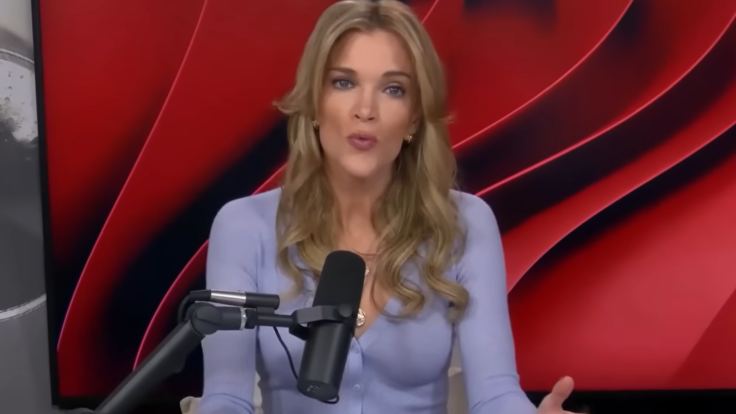
Megyn Kelly has drawn widespread attention after making controversial claims suggesting that billionaire donor Miriam Adelson paid Donald Trump hundreds of millions of dollars in an effort to influence US policy towards Iran.
Speaking during a recent media appearance, Kelly also linked conservative commentator Ben Shapiro and Republican Senator Lindsey Graham to what she described as pro-war or interventionist positions on Iran.
The remarks have quickly circulated across political media, fuelling debate about political donations, foreign policy decision-making, and the role of high-profile commentators in shaping public opinion. As of now, there is no verified evidence supporting the specific financial claims made by Kelly.
Claims About Political Donations and Influence
In her comments, Kelly suggested that Miriam Adelson, a prominent political donor and philanthropist, played a significant role in shaping Trump's stance on Iran through large financial contributions. Adelson is widely known for her support of Republican candidates and causes, including substantial donations in previous US elections.
However, the specific allegation that she paid hundreds of millions of dollars to influence Trump's policy decisions has not been substantiated by credible reporting or official records.
Political donations in the United States are heavily regulated, and while wealthy donors often support candidates and causes, direct payments to influence specific foreign policy actions would raise serious legal and ethical concerns.
References to Ben Shapiro and Lindsey Graham
Kelly also referenced Ben Shapiro, a well-known conservative commentator, and Lindsey Graham, a Republican senator, as figures she believes advocate for a more aggressive approach towards Iran.
Both Shapiro and Graham have publicly expressed support for strong US positions against Iran in various contexts, particularly regarding nuclear policy and regional security.
Lindsey Graham has long been identified as a supporter of a robust US foreign policy, often aligning with interventionist approaches. Ben Shapiro, meanwhile, frequently voices opinions on international security issues through his media platform and public commentary.
Kelly's remarks appeared to group these figures together as part of a broader critique of interventionist foreign policy perspectives within conservative and neoconservative circles.
OMG Megyn Kelly drops a massive bombshell, exposing how mega donor Miriam Adelson paid Trump hundreds of millions of dollars to push America into war with Iran, alongside neocons like Ben Shapiro and Lindsey Graham. The establishment is panicking! pic.twitter.com/ViaFYo1RwZ
— Furkan Gözükara (@FurkanGozukara) March 16, 2026
Reaction to the Allegations
The claims have sparked significant discussion online, with critics questioning the accuracy and credibility of Kelly's statements.
Some commentators have raised concerns about the spread of unverified claims involving sensitive geopolitical issues, particularly those relating to Iran and US foreign policy.
Others have pointed out that political discourse in the United States has become increasingly polarised, with media figures often playing a central role in shaping narratives. The rapid spread of such claims highlights the influence of digital platforms in amplifying controversial statements.
Nick Fuentes has said this for years. Now she gets on board. Weird isn't it?
— Scott Ellis (@scotte0507) March 16, 2026
US Foreign Policy and Iran in Context
Tensions between the United States and Iran have been a longstanding feature of international relations, spanning decades of political, military, and diplomatic conflict. US policy towards Iran has varied across administrations, with differing approaches ranging from negotiation to sanctions and strategic military positioning.
Public debate over how the United States should engage with Iran continues to divide policymakers and commentators. Figures such as Graham have historically advocated for a stronger stance, while others argue for restraint and diplomatic solutions.
Kelly's remarks have added another layer to this ongoing debate, particularly by raising questions about the influence of private donors and media personalities on foreign policy discussions.
Scrutiny Over Claims and Media Responsibility
The controversy surrounding Kelly's statements underscores the importance of verifying claims, especially when they involve allegations of financial influence over government decisions. Journalists and commentators are often scrutinised for the accuracy of their statements, particularly when discussing politically sensitive topics.
As discussions around US foreign policy, political funding, and media influence continue, the need for fact-based reporting remains central to public understanding of complex geopolitical issues.
© Copyright IBTimes 2026. All rights reserved.
- MOST POPULAR IN Trending