Unusually Fast 75,000 MPH Meteor Blasts Into Atmosphere, Triggering Sonic Boom Across Massachusetts
Some local authorities received numerous calls from people worried that seismic activity had occurred.
Thousands of people across parts of New England were left confused after a massive boom rattled homes, shook windows, and sent residents searching for answers. Many initially believed an earthquake had struck after feeling vibrations beneath their feet and hearing what witnesses described as a powerful explosion.
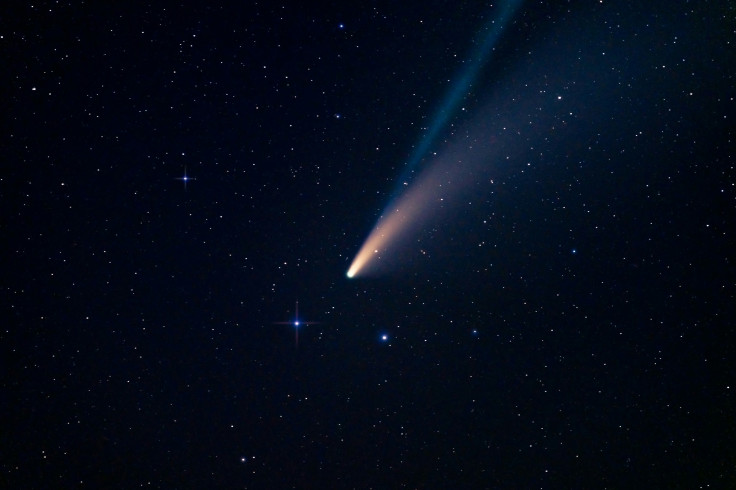
The incident, which occurred on 30 May, was eventually traced to a meteor that entered Earth's atmosphere at extraordinary speed before breaking apart high above northeastern Massachusetts. According to NASA, the object was travelling at roughly 75,000 miles per hour and released energy comparable to around 300 tons of TNT when it fragmented about 40 miles above the ground, per CT Insider.
Why People Mistook It for an Earthquake
Residents from Massachusetts to neighbouring states reported hearing a loud double boom and feeling buildings vibrate. Some local authorities received numerous calls from people worried that seismic activity had occurred.
'It was definitely bigger than a normal fireball, about a yard wide,' said Robert Lunsford, the American Meteor Society program monitor. However, according to Lunsford, the meteor could not have possibly hit the ground.
'We would need more information about the trajectory the speed and other aspects to know for sure if it hit the ground, but if it didn't burn up, then it would have landed in the ocean. Most of them do burn up before they hit the ground,' he stated.
When a meteor enters the atmosphere at extremely high speed, it generates shockwaves that can travel long distances. If the object explodes in the atmosphere, an event known as an airburst, those shockwaves can reach the ground and create vibrations strong enough to rattle homes and startle communities.
In this case, according to AP News, the pressure wave produced by the meteor's breakup was powerful enough to be felt across a wide region. Reports stretched from Delaware to Montreal, demonstrating how far-reaching the effects of the explosion were.
What Scientists Found
According to the American Meteor Society, the meteor was roughly 3 metres in width and entered Earth's atmosphere close to New Hampshire's border north of Boston at approximately 2:06 p.m. on Saturday, 30 May.
Although the event felt similar to an earthquake, scientists quickly determined that the source was entirely different.
ALERT: Random ‘sonic boom' shocks thousands across multiple East Coast US states.
— E X X ➠A L E R T S (@ExxAlerts) May 29, 2026
The random sonic boom, a loud explosion noise caused by an object breaking the sound barrier, was captured by Ring doorbells and surveillance footage in South Carolina.
There have also been… pic.twitter.com/JnrPUjtt5C
NASA and the American Meteor Society identified the cause as a natural meteor, not a satellite or space debris. The object reportedly broke apart while still high above Earth, producing the bright daytime fireball and the sonic boom heard by thousands of locals.
Seismic Instruments Detecting Meteors
In past events, atmospheric shockwaves generated by meteors have been shown to be capable of producing signals that seismometers can detect. During a 2018 meteor event over Michigan, researchers explained that instruments recorded the sound waves striking the ground. However, scientists have stressed that this did not mean the meteor caused a true earthquake, according to a Scientific American report.
The New England meteor was significantly small, but its combination of daylight visibility, explosive breakup and sonic boom created an event that many people will remember for years. Ultimately, researchers say the evidence points clearly to an atmospheric explosion rather than tectonic activity beneath the ground.
Social Media Flooded With Shaking Reports
NASA said the meteor was travelling at roughly 75,000 mph before breaking apart around 40 miles above the ground. The event prompted reports on social media from people who felt buildings shake, while videos captured what sounded like two rapid explosions without any visible signs of fire or smoke.
Footage from Stoneham, Massachusetts appears to capture the massive boom heard across the state around 2:11 PM this afternoon
— Surajit (@surajit_ghosh2) May 30, 2026
A meteor/fireball entering Earth's atmosphere and generating a powerful sonic boom
Many residents reported hearing explosive booms, while others claimed… pic.twitter.com/LXq0n18MZp
The shaking also led numerous residents to submit reports to the US Geological Survey's 'Did You Feel It?' system, but officials said no seismic activity was detected by monitoring instruments, confirming that the vibrations were caused by the meteor's atmospheric explosion.
© Copyright IBTimes 2026. All rights reserved.
- Recommended For You