NASA Finds Massive New Moon Crater From Rare 225-Meter Meteor, Threatening Manned Lunar Missions
Scientists warn the discovery show potential risks to future moon missions from high-speed debris.

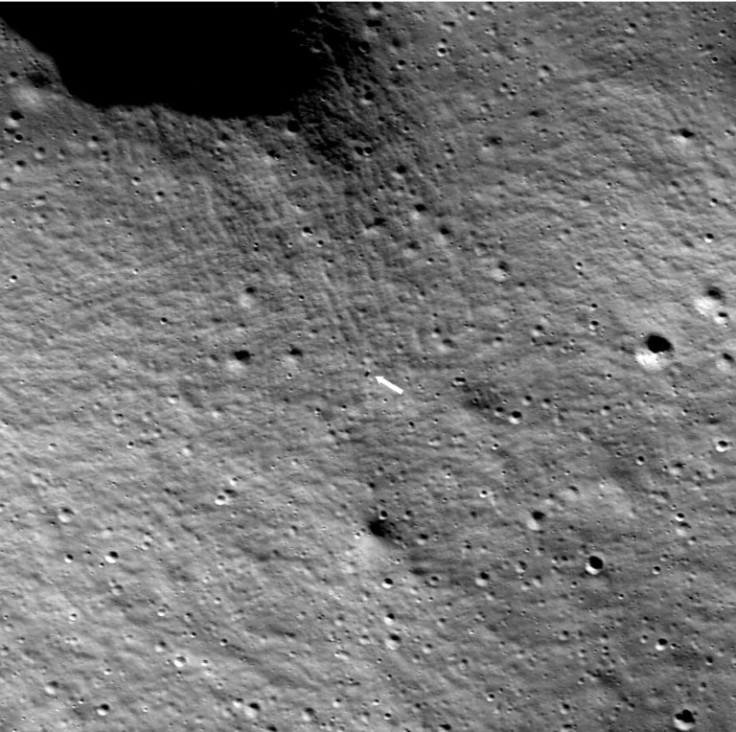
A massive new crater has formed on the Moon, measuring 225 metres across—about the length of two American football fields.
NASA planetary scientist Mark Robinson revealed the discovery on 17 March at the Lunar and Planetary Sciences Meeting in The Woodlands, Texas, after analysing images from the agency's Lunar Reconnaissance Orbiter (LRO).
According to Science News, the impact, which occurred in April or May 2024, is so rare that predictions suggest a crater of this size appears only once every 139 years.
The news comes after more than a decade of continuous LRO observations, which have tracked the Moon's surface in unprecedented detail. Robinson, who is affiliated with Houston-based spaceflight company Intuitive Machines, said the crater's size sets a new benchmark for lunar impacts in the modern era.
A Once-in-a-Century Event on the Moon
For context, one of the first significant craters the LRO captured after its 2009 launch was just 70 metres wide. 'I used to joke with folks ... that now the bar has been set, you have to find a 100‑metre crater,' Robinson explained. 'Now, lo and behold, we have 225 metres.'
The new crater appeared where the Moon's rough, cratered highlands meet a smooth, flat area formed by old lava flows. It's about 43 metres deep, and its steep sides show the impact hit solid rock, not soft dust. The crater is slightly stretched, which means the ground underneath isn't all the same.
Around the crater, there's a bright layer of rock and dust called ejecta that was thrown out during the collision, stretching hundreds of metres from the rim.
Scientists also spotted small changes in the Moon's surface as far as 120 kilometres away. These distant effects show just how much energy a single meteor strike can release, even on a body as small as the Moon.
Implications for Future Moon Missions
While the crater is a remarkable discovery for planetary scientists, it also highlights a hazard for future astronauts. Debris from impacts can travel large distances at high speeds, posing a real threat to lunar bases, rovers, and equipment. 'You've got to protect your assets to withstand small particles hitting you at order of magnitude a kilometre per second,' Robinson warned.
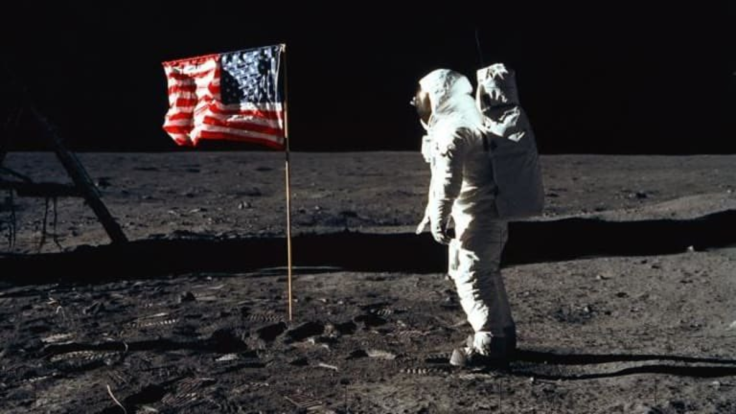
The discovery of the new crater shows that the Moon is still changing, even without an atmosphere. Meteoroid impacts constantly reshape its surface, and each new crater helps scientists understand how often these collisions happen, how much energy they release, and what risks they pose for future human missions.
Robinson and his team used images from NASA's Lunar Reconnaissance Orbiter taken before and after April 2024 to confirm the crater was new. These observations allow scientists to refine models of lunar impacts, which are essential for planning safe habitats and operations on the Moon.
Studying the crater also teaches us about planetary impacts more. Its steep walls, stretched shape, and scattered ejecta offer a clear example of how meteors behave when they hit solid rock.
Insights from the Moon can help scientists understand similar impacts on Earth and other planets, guiding both research and the design of structures to survive future strikes.
Explaining Moon Craters
The Moon is covered in craters because it lacks an atmosphere to protect it from meteoroids, asteroids, and comets.
On Earth, most small space rocks burn up in the atmosphere before reaching the surface, but on the Moon, there is no air to slow them down. When these objects collide with the lunar surface, they release enormous energy, forming craters of various sizes.
Over billions of years, this constant bombardment has left the Moon's surface heavily scarred, with craters ranging from tiny pits to massive basins.
Scientists can predict when craters are likely to form by studying the orbits and populations of near-Earth objects (NEOs), including asteroids and meteoroids that cross the paths of planets and moons. By combining telescope observations with statistical models, researchers can estimate how often objects of different sizes strike the Moon. Large impacts are rarer than small ones, so scientists can calculate probabilities over decades or centuries.
In this case, the 225-metre-wide crater is expected roughly once every 139 years. These predictions rely on understanding both the Moon's history of impacts and the number of potential space rocks in nearby space.
© Copyright IBTimes 2026. All rights reserved.
- MOST POPULAR IN Trending