Zohran Mamdani Closed New York's $12 Billion Deficit — But Not the Way He Promised
The Mayor calls it a breakthrough, but critics say the real fiscal problem may have only been postponed, not solved
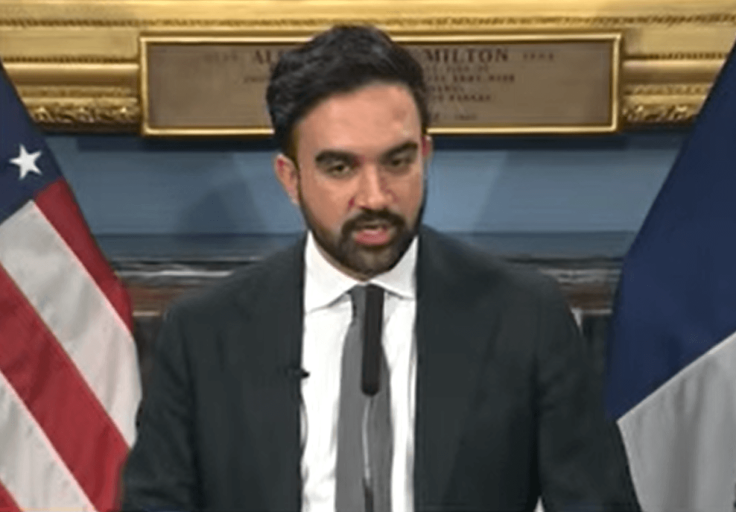
Zohran Mamdani's $12 billion deficit has officially been closed in New York City's latest budget deal. Still, the headline victory is already colliding with a more complicated reality behind the scenes, one that involves state intervention, dropped tax threats, and growing warnings about fiscal smoke and mirrors.
Mayor Mamdani is declaring a win, but critics are asking a sharper question: did he actually fix the problem, or simply reshuffle it into next year's headache?
A 'Zero Gap' Announcement, But Not the Clean Victory It Sounds Like
For Zohran Mamdani, the message was simple and confident. At a press conference, he announced the city had 'closed the gap entirely, down to zero', framing the budget as proof that New York could balance ambition with fiscal discipline without punishing working families.
On paper, the numbers support the claim. The budget addresses a combined shortfall of roughly $12 billion over two fiscal years, including a $5.6 billion gap this year and an estimated $7 billion gap next year.
But the way that gap was closed is where the story starts to shift.
Instead of the clean tax-the-wealthy approach Mamdani originally pushed, the final deal leans heavily on outside help, especially from Kathy Hochul, who stepped in with additional state support after resisting the mayor's proposed tax increases.
There was never a $12 billion hole in the budget. That fairy tale was cooked up to justify reckless spending and political theater.
— Eric Adams (@ericadamsfornyc) May 14, 2026
I left the incoming administration with $8 billion in reserves, not a financial apocalypse.
Albany election-year bailouts are not a long-term… https://t.co/DfDnyk9oEB
Hochul's Intervention Changed Everything
The turning point in the negotiations came when Mamdani dropped his push for higher corporate and wealthy New Yorker income taxes, a proposal that had already faced strong resistance in Albany.
In its place came a layered package of state assistance and fiscal workarounds that ultimately made the math work.
The state package includes roughly $4 billion in additional support, bringing total assistance to nearly $8 billion over two years. That funding is built from multiple streams, including $352 million in direct aid, $3.2 billion tied to state-authorised programs, and $500 million in new revenue adjustments.
Key political figures, including Andrea Stewart-Cousins, Carl Heastie, and Julie Menin, were also part of the broader negotiation ecosystem that helped push the budget across the finish line.
Mamdani isn't kidding when he said Albany is lending a helping hand.
— Christiaan Hetzner 🇺🇸🇩🇪🇺🇦 (@christiaanhtznr) May 12, 2026
To close the $12 billion deficit, he cites $500 million in new revenue from his pied-à-terre tax and $1.8 billion in city savings.
The lion's share of <$10 billion, must then come out of Hochul's state budget. https://t.co/4ub8K5NmZo
From Tax Threats to Technical Fixes
Earlier in the process, Mamdani had floated a property tax increase as a last-resort option to plug the gap. That idea is now off the table.
Instead, the budget leans on alternative revenue and accounting shifts that technically close the deficit but raise questions about durability.
These include a pied-à-terre tax on luxury second homes expected to generate around $500 million, and changes to the Unincorporated Business Tax credit, projected to bring in about $68 million by reducing benefits that largely flow to higher-income earners.
There are also major structural moves buried in the fine print, including pension amortisation that could save more than $2 billion, and cost shifts from the state that relieve pressure on city finances in the short term.
Even some spending decisions are framed as savings, including delays tied to class size mandates that reduce immediate hiring needs, even as the city still plans to add 1,000 teachers and expand education infrastructure funding.
Watchdogs Say the Real Problem Wasn't Solved
This is where the tone around the budget begins to change.
City Comptroller Mark Levine praised the effort as 'pretty modest' in terms of new spending, but warned that the city is leaning too heavily on temporary fixes. He pointed directly to 'one-shot measures', describing them as tools that will disappear next year, potentially reopening a large fiscal gap.
Those concerns are echoed across budget circles, especially as analysts project a new shortfall of around $7 billion in the following fiscal year once temporary measures expire.
Even Public Advocate Jumaane Williams struck a cautious tone, noting that the state aid commitments still need to be fully locked in before they can be treated as guaranteed.
A Win, But Not the Kind That Ends the Story
For Mamdani, the budget is being framed as a political and fiscal turning point, a moment that shows New York can avoid tax hikes while still closing major gaps. He also emphasised that working New Yorkers should not bear the burden of closing structural deficits in one of the world's wealthiest cities.
But underneath the celebration sits a more uneasy reality. The deficit may be closed today, but much of the solution depends on timing shifts, state cooperation, and one-time measures that do not permanently repair the underlying imbalance.
That is why the real debate now isn't whether the $12 billion gap is closed. It is whether it has been solved or simply postponed. And in New York politics, that difference is where the next budget battle always begins.
© Copyright IBTimes 2026. All rights reserved.
- Recommended For You