White House to Host 9-Hour Prayer Festival: Rededicate 250, National Jubilee of Prayer, Praise & Thanksgiving
Event blurs lines between politics and religion, raising concerns over Christian nationalism.

A nine-hour prayer rally backed by figures inside Donald Trump's administration is set to unfold in Washington this weekend, blurring the line between political spectacle and religious revivalism. Organisers say the event will 'rededicate' America to God.
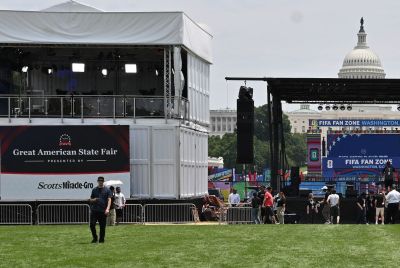
The gathering, titled 'Rededicate 250: National Jubilee of Prayer, Praise & Thanksgiving,' is expected to fill parts of the National Mall with evangelical pastors, worship leaders and senior Republican officials promoting the idea that the US was founded explicitly as a Christian nation. Critics see something more hard-edged taking shape inside Trump's second presidency.
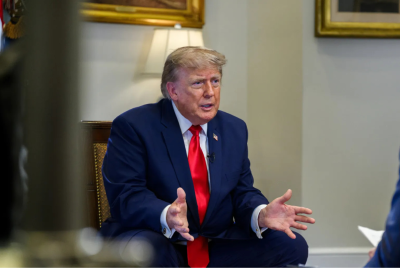
President Donald Trump has formally declared 2026 a national 'Year of Celebration and Rededication' as the United States marks 250 years since the signing of the Declaration of Independence.
In a sweeping proclamation issued on 29 January, Trump framed America's founding as 'the most seminal political event in all of human history' and repeatedly tied the country's identity to Christianity and divine providence. The proclamation urges Americans, churches, schools, businesses and the military to hold ceremonies and celebrations throughout the year.
Faith And Power Are Becoming Increasingly Intertwined
The event is being championed by Paula White-Cain, one of Trump's closest religious allies and now a senior faith adviser to the White House.
'It's about the history and the foundations of our nation, which was built on Christian values, on the Bible,' White-Cain said ahead of the event. 'This is really truly rededicating the country to God.'
The language matters. What once sat largely on the fringes of conservative politics is increasingly being voiced openly from within government circles.
Senior officials expected to appear include Pete Hegseth, Marco Rubio and House Speaker Mike Johnson, all figures closely aligned with the administration's religious messaging. Trump himself is not expected to attend in person, according to reports from The Washington Post, though organisers say a recorded video message from the president will be played during the event.
What makes the rally politically significant is not simply the prayer itself. American presidents have long wrapped themselves in religious imagery. Trump's White House, however, has moved beyond symbolic gestures into something far more ideological.
The administration's allies increasingly frame Christianity not as a private faith tradition but as the defining foundation of state authority and national identity. That shift has become difficult to separate from broader nationalist rhetoric surrounding immigration, education and federal power.
Concerns Inside The Military Have Intensified
Defence Secretary Hegseth has for years promoted what critics describe as Christian nationalist themes, arguing that Western civilisation and American leadership are inseparable from Christian identity.
That debate escalated sharply during the recent conflict involving Iran.
Complaints submitted to the Military Religious Freedom Foundation alleged that some US service personnel were subjected to religiously charged messaging linked to military readiness briefings. The organisation said it received more than 200 complaints from personnel across multiple branches of the armed forces.
One complaint described a commander urging troops not to fear possible conflict because events unfolding in the Middle East were 'all part of God's divine plan.'
According to the complaint, the commander referenced passages from the Book of Revelation connected to Armageddon and the return of Jesus Christ. The individual further alleged the officer claimed Trump had been 'anointed by Jesus to light the signal fire in Iran.'
The email, first reported by journalist Jonathan Larsen, described the commander delivering the remarks with 'a big grin on his face.'
The Pentagon has not publicly endorsed those statements, but the controversy exposed growing unease over the fusion of evangelical rhetoric and military culture inside parts of the administration's orbit.
What cannot be ignored is how quickly apocalyptic religious language is moving from fringe online spaces into conversations surrounding state power and national security.
Trump's Religious Messaging Continues To Court Controversy
Trump's relationship with conservative Christian voters has always relied more on political alignment than theological consistency. Yet during his second term, the religious imagery surrounding his presidency has become noticeably more aggressive.
That tension resurfaced recently after Trump shared an AI-generated image portraying himself as Jesus Christ, provoking backlash even among some of his most loyal supporters. Critics accused the president of indulging messianic imagery at a moment when his administration was already facing accusations of encouraging personality cult politics.
Trump later attempted to dismiss criticism by claiming the image depicted him as a 'doctor,' though the explanation did little to quiet the reaction online.
One response to the now-deleted post captured the discomfort spreading even among parts of the MAGA movement.
'The book of Revelations speaks of this,' the commenter wrote. 'Are you literally depicting yourself as a saviour or messiah?'
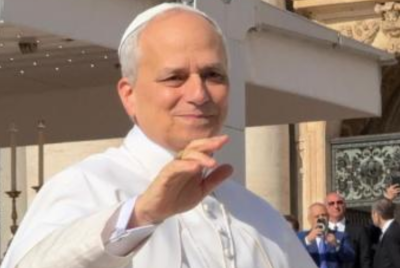
The White House prayer event arrives amid a separate clash between Trump and Pope Leo XIV, who has criticised hardline immigration policies and warned against politicising Christianity for nationalist purposes.
© Copyright IBTimes 2026. All rights reserved.
- Recommended For You