WHO Chief Warns of Six to Eight-Week Hantavirus Time Bomb as New Cases Are Confirmed in France and the US
WHO warns of worsening hantavirus outbreak linked to a cruise ship, with confirmed cases in France and the US.

The hantavirus outbreak linked to a cruise ship traversing the South Atlantic is not over, and the world's leading health authority says it is almost certainly going to get worse before it gets better.
WHO Director-General Dr Tedros Adhanom Ghebreyesus told CNN in an exclusive interview at Tenerife's Grenadilla port on 11 May 2026 that the Andes virus carries an incubation window of 'six to eight weeks,' making further infections among the MV Hondius' 147-person contingent near-certain. The warning arrived as France confirmed its first case, a woman who developed symptoms during her return flight home and tested positive on arrival, and as 18 American passengers were placed under medical surveillance across facilities in Nebraska and Atlanta.
Three people have died, seven cases have been laboratory-confirmed, and public health teams across four continents are racing to trace hundreds of potential contacts from a ship that stopped at some of the most remote places on Earth.
WHO's Six-to-Eight-Week Incubation Warning and the Confirmed Cases in France and the US
Speaking exclusively to CNN at Tenerife, where the MV Hondius docked on 10 May 2026 to begin its evacuation, Tedros was direct about what health authorities should expect next. 'The incubation for hantavirus or Andes virus ranges from six to eight weeks,' he said. 'So we expect more cases to come actually, but I hope they will be as small as possible.' He added: 'We already have one confirmed, you know, the passenger from France, and I expect actually more because of the long incubation period.'

French Health Minister Stéphanie Rist confirmed the French case on 11 May 2026 via the French radio station France Inter. A woman who had been aboard the MV Hondius began exhibiting symptoms during her return flight and tested positive for the Andes virus on arrival. She was admitted to a specialist hospital. Her condition, Tedros noted, was 'deteriorating' as of his interview in Tenerife.
In the US, the CDC's Health Alert Network advisory CDCHAN-00528 confirmed that 16 American passengers had been transferred to a Nebraska facility with specialised medical capabilities, including one who tested positive. Two further passengers were being monitored in Atlanta, one of whom was symptomatic. The CDC classified the risk to the US public as 'extremely low at this time.'
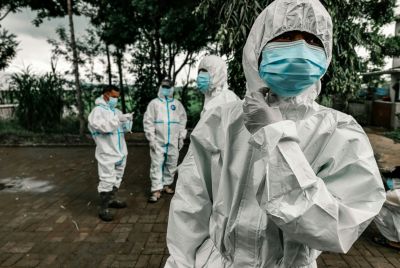
WHO's director for epidemic and pandemic management, Maria Van Kerkhove, recommended that all passengers and crew undergo monitoring for 42 days after exposure. 'Our recommendation is for active follow-up, which means daily monitoring, checking for fever or other symptoms,' she said at a press conference on 10 May 2026, reported by UN News. She also added that passengers should wear respirators when around others during that window. Both Tedros and Van Kerkhove stressed the same core message: 'This is not another Covid-19.'
Why Andes Virus Carries a 38% Fatality Rate and No Treatment
Most hantaviruses require direct rodent contact to reach a human host. Andes virus is the single documented exception. According to the CDC's HAN advisory, it 'is the only type of hantavirus that has been documented to spread from person-to-person,' typically through 'close, prolonged contact with a symptomatic person.' That contact includes direct physical proximity, shared enclosed spaces, and exposure to saliva or respiratory secretions. The enclosed environment of a cruise ship was almost purpose-built for transmission once a single infection went undetected.
World Health Organization chief Tedros says he expects 'more cases' of Hantavirus to be announced
— RT (@RT_com) May 12, 2026
'I hope countries will protect their citizens. That's what we expect' pic.twitter.com/HoV6QEsss5
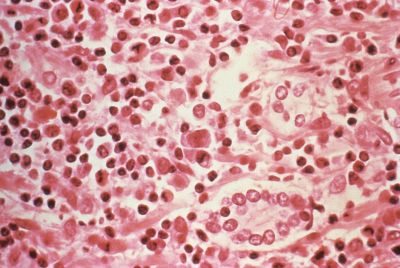
The disease it causes in the Americas is hantavirus pulmonary syndrome (HPS). Among patients who develop severe respiratory symptoms, the CDC places the case fatality rate at approximately 38%.
There is no vaccine and no specific antiviral treatment. Early intensive supportive care is the primary clinical tool, and the CDC advises that in severe cases, extracorporeal membrane oxygenation (ECMO) can improve survival rates to approximately 80% when started early. From 1993 through 2023, the CDC recorded a total of 890 laboratory-confirmed hantavirus cases in the United States, illustrating how rare the disease is outside of contained exposures.
One of the largest previously documented Andes virus events occurred in 2018 in Patagonia, Argentina, resulting in 34 cases and 11 deaths, according to historical data cited by infectious disease specialists. Dr Ashish Jha, a senior fellow at Harvard University's Kennedy School, said on the TODAY programme that there was 'no reason to believe that the Andes virus has mutated into a more transmissible variant' in the current cluster.
The Contact Tracing Effort Spanning Four Continents
The scale of the tracking operation reflects an early and serious failure in containment. On 24 April 2026, more than two dozen people from at least 12 countries left the MV Hondius without contact tracing in place, according to the ship's operator and Dutch officials. A Dutch woman whose husband died on board was too unwell to fly directly to Europe; she was taken off the plane in Johannesburg, where she later died. Authorities subsequently traced passengers from the flight on which she had collapsed.
Cases have now been identified or suspected across multiple countries. A Swiss man who disembarked at Saint Helena on 22 April, returned via South Africa and Qatar, self-isolated on 1 May after noticing symptoms, and tested positive on 5 May. He is in isolation at a Swiss hospital. A Spanish passenger at Madrid's military hospital Gomez Ulla tested positive after arriving from Tenerife, and is asymptomatic. A third British national on the remote South Atlantic territory of Tristan da Cunha, where the ship had stopped, is suspected of carrying the virus; six British army medics parachuted onto the island on 10 May 2026 to deliver medical personnel, supplies, and oxygen.
Dr Gustavo Palacios, a virologist advising officials on the outbreak, told CNN: 'If we do the job right, there is not going to be a third wave.' The WHO's epidemiological recommendation for 42 days of active monitoring now applies to all 147 passengers and crew, as well as anyone identified as a contact since disembarkation. Given Tedros's own framing of the incubation window, that surveillance clock will not expire until late June 2026.
The next six weeks will be the true measure of whether health authorities moved fast enough across a ship route that spanned three oceans and two dozen nationalities.
© Copyright IBTimes 2026. All rights reserved.
- Recommended For You