US Coast Guard Struggles Under $300 Million Debt Burden as Military Bases Worldwide Prepare for Potential Service Cuts
The Coast Guard grapples with unpaid obligations and operational challenges during the longest government shutdown in US history.

America's Coast Guard is fighting two wars simultaneously, one at sea, and one against its own government's failure to keep the lights on.
The Coast Guard now owes over $300 million in unpaid obligations, 75 days into what officials confirm is the longest government shutdown in American history. Thousands of utility bills totalling $5.2 million are overdue, leaving duty stations and military housing worldwide facing service shutdowns. Commandant Admiral Kevin Lunday described the situation plainly in an exclusive CBS News interview: 'It seems like a horror movie, but it's actually happening. It's almost unbelievable.'
The crisis stems from a congressional deadlock over Department of Homeland Security appropriations that began 14 February 2026. The Coast Guard's nearly 45,000 active-duty members are uniquely vulnerable because the branch is the only one of the six armed services that falls under DHS, a bureaucratic distinction with devastating real-world consequences.
Lights Out Across American Bases
The damage is no longer abstract. In the past week alone, water outages struck duty stations in Port Huron, Michigan, and Station Channel Islands, California. Air Station Barbers Point in Hawaii had its natural gas lines temporarily locked, and a power outage at a recruiting station in St. Louis forced officers to work by torchlight.
Electricity was also cut off to the residence of a Coast Guard rear admiral in New Orleans, forcing his family to check into a hotel. That home is one of nearly 1,000 Coast Guard housing units at risk of shutoffs. Across the service, 43 per cent of housing units carry invoices more than 30 days past due.
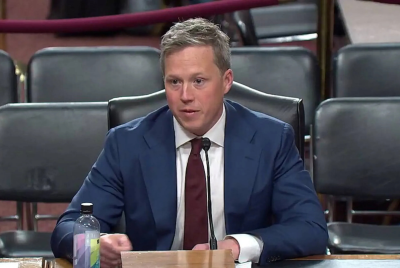
'We also have over 5,000 unpaid utility bills, over a hundred providers that have threatened to cut off electricity and water to our Coast Guard stations and air stations,' Lunday told the House Appropriations Homeland Security subcommittee. Providers have largely shown leniency, but Lunday is not confident that will last. 'In most cases, those providers are turning it back on, even though they're not being paid,' he said. 'I don't know how long that's going to last.'
Jessica Manfre, an 18-year Coast Guard spouse, said the pattern is widespread. 'When I heard that water is getting shut off at my friends' stations and they're having to call city officials to beg to have it turned back on because bills aren't getting paid, I knew this shutdown was different.'
The U.S. Coast Guard cannot pay its bills. The military branch – now 75 days into the longest shutdown in U.S. history – owes over $300 million in unpaid obligations. And with thousands of utility bills overdue, totaling $5.2 million, duty stations and military housing worldwide… pic.twitter.com/kQnVlluzsW
— CBS News (@CBSNews) April 30, 2026
Deployed in Conflict Zones, Uncertain of Pay
The financial emergency extends far beyond American soil. Roughly 300 Coast Guard personnel are currently stationed in the Middle East amid the war with Iran, while others in the Indo-Pacific are boarding 'ghost fleet' oil tankers in high-stakes missions. The service has maintained a permanent presence in Bahrain since the Iraq War in 2003, with approximately 300 personnel supporting maritime operations for US Naval Forces Central Command.
Lunday did not soften his testimony before Congress. 'We have people in harm's way at this hour, conducting military operations along with other military services. And it is hard to imagine that part of our armed forces would not be funded,' he said.
The Coast Guard will run out of funding to pay personnel on 1 May 2026, with the first missed paycheques expected 15 May. Manfre, whose husband is a senior chief petty officer, captured what that date means for families already at their limit. 'It feels like it doesn't matter. Like we don't matter because we are not DOD. We're somehow lesser, that's how it feels.'
Families Going Into Debt to Follow Orders
The financial haemorrhage has cut deep into the personal lives of service members, many of whom are now borrowing simply to comply with military orders.
Thousands of personnel moving duty stations this summer are not receiving advance allowances, forcing them to take on debt, take out loans, or deplete personal savings. When pressed directly on whether members are going into personal debt to follow orders, Lunday was unambiguous. 'Yes, that's exactly right,' he said.
Master Chief Phillip Waldron, senior enlisted adviser to the commandant, noted that one civilian at an Alaska station repairing ships sold his car to pay rent. Manfre described a broader collapse of household stability. 'So many of our spouses work on base. So they miss three and a half paychecks in a world where you need two paychecks. That means skimping, that means utilising food pantries just to get by.'
According to testimony submitted to the House Committee on Homeland Security, Vice Commandant Adm. Thomas Allan noted this marks the third shutdown of the current fiscal year. 'In total, for 85 of the last 176 days, for nearly half the year, our service has been without the funding necessary to operate and pay our people,' Allan wrote.
“It seems like a horror movie, but it's actually happening. It's almost unbelievable”: The U.S. Coast Guard is running out of money, Commandant Admiral Kevin Lunday, told @nicolesganga, and he said this is forcing some service members to go into personal debt in order to report… pic.twitter.com/EHKLziWaBU
— CBS Mornings (@CBSMornings) April 30, 2026
National Security Readiness Eroding by the Day
The operational damage is now measurable. The Coast Guard has cancelled 30 national security exercises and halted training ahead of major events, including the FIFA World Cup and America 250. 'It's hollowing out our operational readiness,' Lunday said.
A backlog of 18,000 merchant mariner credentials remains unprocessed 'at a time when the US is trying to rebuild its maritime might,' Lunday told lawmakers. Recovery is slow by design: it takes the Coast Guard two and a half days to catch up for every single day it operates in a shutdown.
Dave Benjamin, co-founder of the Great Lakes Surf Rescue Project, stated the human stakes starkly: 'Americans will die if we're not going to be funding this properly. We shouldn't have Coast Guard members stressed about rent and electricity having to get into a helicopter to save a boater in distress.'
On Day 75, Commandant Lunday delivered his verdict without equivocation: 'The reality today is the Coast Guard is operating in a crisis.'
© Copyright IBTimes 2026. All rights reserved.
- Recommended For You