Personal Phones Left Behind: Trump Arrives In China Under Strict Digital Lockdown Protocols
Heightened surveillance concerns lead to restricted communication systems for US delegation in China

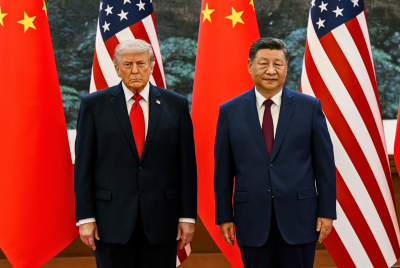
The arrival of US President Donald Trump in China has been accompanied by unusually tight digital security measures, with US officials and advisers reportedly required to leave behind their personal phones and rely on restricted communication systems.
The precautions reflect heightened concerns in Washington about surveillance risks and cyber intrusions during high-level diplomatic visits, especially in environments considered sensitive for electronic monitoring, per Fox News
Personal Devices Left Behind for Security Reasons
As part of the delegation's travel protocol, officials are said to have swapped everyday smartphones for 'clean' or stripped-down devices before entering China. These temporary tools are designed to reduce exposure to potential hacking, data extraction, or monitoring attempts.
The approach reflects longstanding US government guidance warning that foreign networks and devices in certain countries may not be secure for sensitive communications.
According to Fox News, he restrictions also extend to laptops and digital services, with limited cloud access and controlled messaging channels replacing the instant connectivity officials typically rely on. Even routine coordination between staff members is expected to shift away from encrypted apps toward more tightly managed systems.
Heightened Surveillance Concerns Shape Protocols
US officials view China as a high-risk cyber environment where both state-linked and opportunistic actors may attempt to access sensitive data. Briefings given to travelling personnel reportedly emphasise that all communications, digital or in-person, should be treated as potentially observable.
Former Secret Service special agent Bill Gage told Fox News, 'China is a mass surveillance state. Briefings for US officials begin well before the president arrives, and they make clear that everything is monitored.' Gage is now Safehaven Security Group's director of executive protection.
Cybersecurity firm Fortalice Solutions CEO Theresa Payton, who used to be the chief information officer for the White House, said officials advised travellers to behave as though all conversations and digital activity could be subject to monitoring, urging them to exercise caution in both online and face-to-face interactions.
'We always tell people to assume everything you say and do — both in person and digitally — could be monitored. And to conduct themselves accordingly,' she stated.
Controlled Communication Systems Replace Everyday Connectivity
Inside the delegation, communication is expected to rely on pre-approved devices and controlled networks managed by government technical teams. This setup allows officials to maintain necessary coordination while reducing exposure to external interception.
Messages that would normally pass through personal devices are instead routed through secure channels or relayed through staff in person. The result is a slower, more structured communication flow that contrasts sharply with the real-time connectivity of standard diplomatic travel.
Cyber Espionage Fears and Political Tensions
The tightened protocols come amid ongoing US concerns about cyber espionage campaigns attributed to China-linked actors targeting government systems, infrastructure, and private-sector networks. American officials have repeatedly warned that foreign intelligence efforts increasingly focus on both senior policymakers and visiting delegations.
These concerns have become a defining feature of modern US-China relations, where cybersecurity now sits alongside trade, military posture, and geopolitical competition as a core issue in bilateral talks.
For Trump's delegation, the result is a highly controlled digital environment that limits the use of personal technology throughout the visit. Paper documents, secured communication hubs, and monitored channels replace the constant digital access that typically defines modern government operations.
© Copyright IBTimes 2026. All rights reserved.
- Recommended For You