Donald Trump Says Iran War Blocks Medicare, Medicaid Focus
Trump says that federal funding for Medicare and Medicaid must be diverted to the Iran war

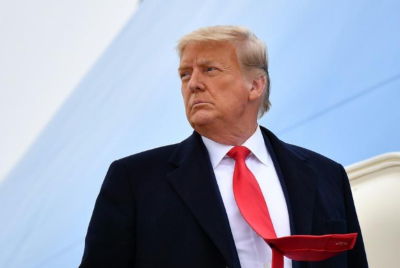
President Donald Trump has ignited a domestic firestorm by declaring that federal funding for Medicare, Medicaid, and childcare must be sacrificed to win the ongoing war against Iran.
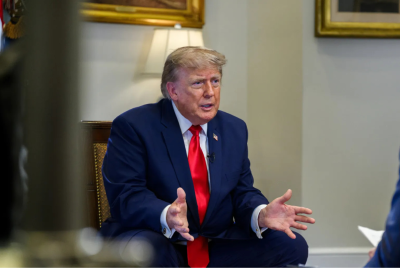
Speaking at an Easter Lunch reception at the White House on Wednesday, 1 April 2026, the Commander-in-Chief argued that the skyrocketing costs of the Middle East conflict, which topped $11.3 billion (£8.47bn) in its first six days alone, leave the Treasury unable to support national social programmes.
'It's not possible for us to take care of daycare, Medicaid, Medicare, all these individual things. They can do it on a state basis. You can't do it on a federal level. We have to take care of one thing: military protection. We have to guard the country. But all these little things, all these little scams that have taken place, all you have to do is let states take care of them,' Trump said.
Trump categorised federal healthcare and daycare initiatives as 'little scams,' insisting that the 50 states must now bear the full financial burden of these services. This pivot to a 'military-first' economy marks a radical departure from traditional federal obligations, as the Pentagon simultaneously seeks an additional $200 billion (£151bn) to secure a total victory over Tehran.
The 'States-First' Directive for Healthcare and Daycare
In a direct command to Office of Management and Budget Director Russell Vought, Trump ordered an immediate halt to federal disbursements for specific social agencies. The President's logic rests on the premise that a 'big country' fighting a major war cannot be expected to manage local childcare or individual health insurance.
- The State Burden: Trump suggested that individual states should raise their own taxes to fund Medicaid and Medicare, proposing a slight federal tax cut as a theoretical offset.
- The Military Priority: Trump asserted that federal focus must remain exclusively on 'guarding the country.'
- Daycare Deficit: The President was blunt regarding early childhood education.
Trump: We can't take care of daycare. We're a big country. We're fighting wars. It's not possible for us to take care of daycare, Medicaid, Medicare, all these things. pic.twitter.com/vLGpp7KJnm
— FactPost (@factpostnews) April 1, 2026
'Don't send any money for daycare, because the United States can't take care of daycare. That has to be up to a state. We can't take care of daycare. We're a big country,' Trump said. 'We have 50 states. We're fighting wars. We can't take care of daycare. You got to let a state take care of daycare, and they should pay for it too,' he added.
Trump went on to suggest that states should raise their taxes to fund child care costs. However, he also added that the federal government could lower taxes slightly to offset this.
'They can do it on a state basis. You can't do it on a federal. We have to take care of one thing: military protection. We have to guard the country,' the US Commander in Chief quipped.
These comments come not long after Trump justified the additional funds that the Pentagon was seeking to fund the country's efforts against Iran.
Trump's Bold War Forecast and the $200 Billion Price Tag
Despite the mounting economic strain at home, the President remains bullish on the conflict's outcome. He boldly claimed that the United States is on the 'cusp of ending Iran's sinister threat,' asserting that Washington holds 'all the cards' in the geopolitical standoff. However, critics note that this confidence is not yet backed by a transparent withdrawal plan or a clear diplomatic roadmap.
While the President predicts a swift conclusion, the Pentagon's request for an additional $200 billion suggests a much larger and more sustained military commitment than his 'two to three weeks' rhetoric implies. Trump dismissed these figures as a 'small price to pay' to maintain American global dominance, even as domestic fuel prices and inflation continue to squeeze the very constituents whose healthcare is now on the line.
Trump says we can pay for war in Iran but can't afford childcare.
— Ro Khanna (@RoKhanna) April 2, 2026
Mr. President, the billions you wasted in Iran could pay for $10 day childcare for every American family with childcare workers paid $25 an hour https://t.co/lE2XUo6dcZ
Political Backlash: Democrats Slam 'Incoherent' Budget Shift
The decision to offload federal responsibilities onto state governments has met with fierce resistance from Democratic lawmakers. Rep. Ro Khanna led the charge, pointing out the stark opportunity cost of the conflict.
He argued that the billions currently being spent on munitions in the Middle East could have permanently fixed the American childcare crisis and expanded healthcare access.
Senator Andy Kim echoed these sentiments, suggesting the administration has failed to consider the long-term impact on constituents who rely on the federal safety net. He believes Trump did not properly consider how the money spent on the war could have helped more constituents.
For the cost of 3 weeks of this war, we could provide vision, hearing, and dental coverage to every senior on Medicare for a year.
— Andy Kim (@AndyKimNJ) April 2, 2026
It is possible. Trump just doesn't care to do it. https://t.co/Nqae73ZjCa
As the President's focus remains locked on the battlefield, governors across the country are now scrambling to adjust their state budgets. Without federal matching funds, many states face the prospect of either massive service cuts or record-breaking tax hikes to keep Medicare and Medicaid solvent through the 2026 fiscal year.
© Copyright IBTimes 2026. All rights reserved.
- Recommended For You