

Belarus Warns Political Emigrants They Could Lose Citizenship as State Propaganda Campaign Intensifies
Belarus warns dissidents abroad they could lose citizenship as passport cancellations raise statelessness concerns
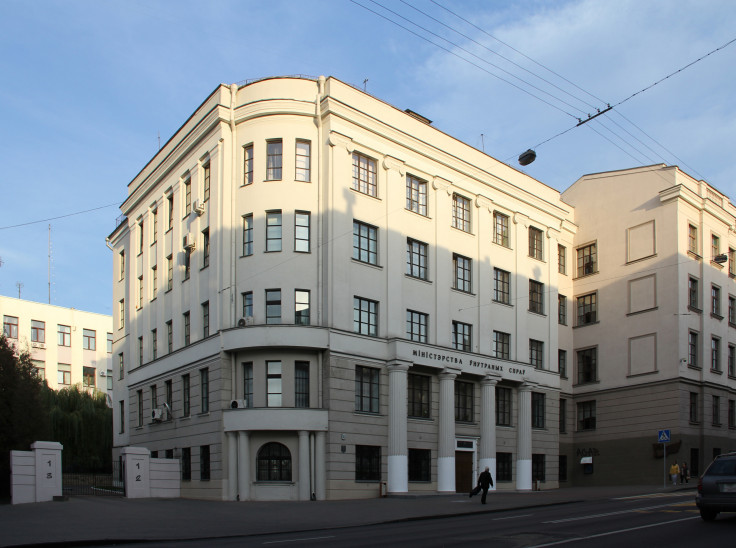
Belarusian state media have renewed warnings that political emigrants could lose their citizenship, drawing attention to legal powers introduced in 2023. The discussion concerns people living abroad whom authorities accuse of extremist activity or acting against the country's interests, rather than a newly enacted citizenship law.
A report published by a Belarus-focused broadcaster on 3 October described renewed coverage on state television and in regional newspapers. Lawyer Ales Mikhalevich said he believed the campaign was intended to intimidate political opponents overseas, but questioned its effectiveness.
Law Permits Citizenship Revocation
Amendments signed on 5 January 2023 and effective from 11 July that year extended citizenship-loss provisions to people who acquired Belarusian nationality by birth.
The relevant grounds include a final Belarusian court conviction establishing participation in extremist activity or causing grave harm to Belarus's interests, where the person is outside the country. A conviction and a subsequent citizenship decision are distinct steps; criticism of the government abroad does not, by itself, establish that citizenship has been revoked.
According to the broadcaster's report, state television presenter Kseniya Lebedzeva portrayed Belarus as an almost paradisiacal country and warned that deliberately breaking its rules could lead to permanent exclusion.
MP Mikalai Buzin described citizenship revocation as a last resort for people who persistently acted against the state and its citizens.
The warnings do not constitute individual revocation decisions. The reporting cited does not establish how many people have lost citizenship under the amended provisions.
Lawyer Questions Campaign's Effectiveness
Mikhalevich told the broadcaster that he believed the authorities were turning to citizenship threats because other methods of pressuring opponents had failed.
He questioned whether the campaign would significantly affect prominent dissidents who already held refugee status in countries where they were protected. He also argued that stripping people of their only nationality was unjustifiable, saying, in translation, that 'a person cannot be left without citizenship'.
His assessment concerned the campaign's likely impact, rather than a legal ruling on individual cases. The consequences for people abroad can differ according to their residence status, documentation and the jurisdiction in which they are located.
UN experts have separately warned that Belarus's measures against exiled citizens can undermine their rights and increase the risk of statelessness.
UN Documents Eight Passport Cases
The citizenship warnings follow documented concerns over a separate practice: invalidating the passports of former political prisoners expelled from Belarus.
On 20 April 2026, UN experts condemned the broader passport-invalidation practice. In a communication dated 3 June, four UN special rapporteurs raised allegations concerning eight former prisoners, before issuing a public statement on 6 July.
The eight were Ales Bialiatski, Uladzimir Labkovich, Maksim Senik, Pavel Nikitsenka, Hanna Kurys, Dzmitry Kazlou, Aliaksei Krasnahir and Ihar Satsiuk.
According to information received by the experts, they were forcibly expelled to Lithuania or Ukraine on 13 December 2025 after their release from detention. They subsequently discovered through the Belarusian Interior Ministry's online system that their passports had been declared invalid.
The experts said none had received a formal decision, justification or notification.
Palchys's Passport Invalidation Reported Separately
Human-rights group Viasna and the Belarusian Association of Journalists reported on 1 April that blogger Eduard Palchys's passport had been invalidated. He had been released and forcibly removed to Lithuania on 19 March 2026.
Those reports concern eight people named in one UN communication and a separately documented case. They do not establish the total number affected.
Passport Invalidation Differs From Citizenship Loss
Passport invalidation is not the same as citizenship revocation. The UN experts noted that people might formally retain Belarusian nationality while losing access to documents needed to exercise their rights.
They warned that losing valid identity documents could create obstacles to travel, residence procedures, employment, healthcare, banking and family reunification.
In their June communication, the experts urged Belarus to join the 1961 Convention on the Reduction of Statelessness. They also cited existing obligations under the International Covenant on Civil and Political Rights and the International Covenant on Economic, Social and Cultural Rights.
Citizenship Granted to 297 People
Separately, President Aleksandr Lukashenko signed a decree granting Belarusian citizenship to 297 people, including 20 minors, on 1 October, according to the presidential press service.
The new citizens came from 28 countries, including Azerbaijan, Armenia, Vietnam, Kazakhstan, Latvia, Lithuania, Moldova, Russia, Tajikistan, Uzbekistan and Ukraine. The announcement said they worked in sectors including agriculture, services, trade, healthcare and education.
The decree concerns the admission of new citizens. It does not identify people whose existing Belarusian citizenship has been revoked.
© Copyright IBTimes 2026. All rights reserved.