

SpaceX Launch March 2026: Starship V3 Set for First Orbital Attempt — Everything You Need to Know
FAA has cleared flight safety, but final regulatory approval hangs in the balance as Ship 39 begins critical tests at Starbase
SpaceX's biggest rocket is about to get bigger.
The company is targeting mid-March for Flight 12 of its Starship launch system, a mission that will debut the upgraded V3 configuration for the first time. This isn't just another test. It's the vehicle Elon Musk has said could make human settlement on Mars economically possible.
Ship 39, the first V3 upper stage, was transported to Massey's Outpost at SpaceX's Starbase facility on 26 February for prelaunch testing, according to a company announcement on X. The tests include cryogenic pressure-proofing and potentially a static fire.
The first Starship V3 has left the build site to begin prelaunch testing pic.twitter.com/DMZVMuRQVl
— SpaceX (@SpaceX) February 26, 2026
Here's what makes this flight different from the 11 that came before it.
The Numbers Tell the Story
Starship V3 stands 408.1 feet tall, slightly taller than its V2 predecessor at 403.9 feet. But height isn't the point. Power is.
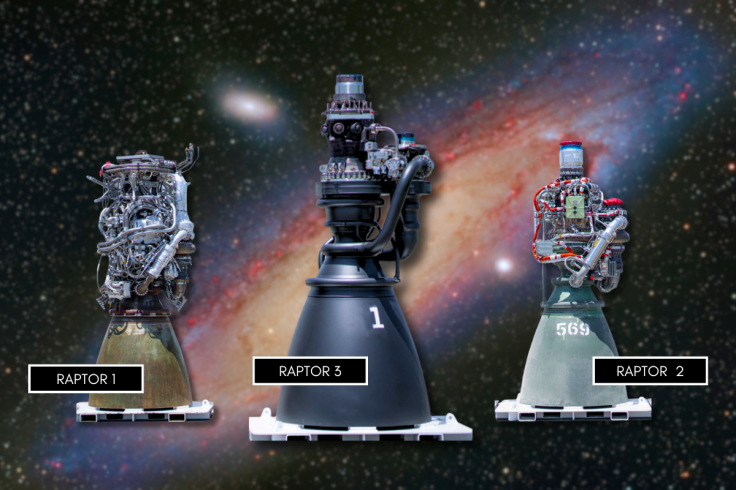
The V3 uses new Raptor 3 engines that produce nearly double the thrust of the original Raptor 1 while costing four times less to manufacture. Each engine weighs roughly 2,425 pounds less than previous versions. Across the Super Heavy booster's 33 engines, that adds up to a weight reduction of about 43 metric tons per launch.
The result? V3 can carry more than 100 metric tons to low Earth orbit. V2 managed around 35 tons. That gap matters because Mars missions require moving massive amounts of cargo, fuel, and eventually people.
Regulatory Clearance: Not Quite There
The Federal Aviation Administration has granted flight-safety approval for Flight 12, according to Tesla Oracle. But SpaceX still cannot launch until all regulatory requirements are complete.
Musk first signalled the timeline on 26 January, posting on X: 'Starship launch in 6 weeks.' He confirmed again on 21 February: 'Starship flies again next month.'
Starship flies again next month
— Elon Musk (@elonmusk) February 21, 2026
pic.twitter.com/I08L5oaRA4
That puts the launch window in early to mid-March, though exact dates remain fluid. Weather, testing progress, and regulatory sign-off will determine when the rocket actually leaves the pad.
The FAA cleared SpaceX for up to 25 Starship launches per year from Starbase in May 2025, a fivefold increase from previous limits. The agency also approved new flight trajectories over Florida, Texas, and California that would allow Starship to reach orbit for the first time. Previous flights followed suborbital paths.
What Went Wrong Before
Flight 8 in March 2025 ended badly. SpaceX reported an 'energetic event' in the upper stage's aft section during ascent. Several Raptor engines shut down. The vehicle lost altitude control and broke apart, scattering debris over the open Atlantic.
Similar problems hit Flight 7 in January 2025. Both failures pointed to heat shield vulnerabilities during re-entry.
V3 addresses this directly. SpaceX has redesigned the thermal protection system based on data from those flights. Flight 12 will test whether the new heat shield can keep all tiles intact during atmospheric entry and landing.
SpaceX's Relentless Launch Pace
The Starship programme exists within a company running at an extraordinary tempo. As of 27 February 2026, SpaceX had already launched 26 Falcon 9 missions this year. That's roughly one launch every two and a half days.
In 2025, the company completed 166 Falcon 9 flights. The current schedule shows no sign of slowing down.
This pace matters because Starship is not a standalone project. NASA selected the vehicle as the Human Landing System for Artemis III, the mission meant to return astronauts to the Moon. That contract requires SpaceX to demonstrate in-space refuelling using multiple tanker flights. V3 is the first version built to handle that task.
What Happens If It Works
Success in March would mark a turning point.
SpaceX has already begun shifting focus, with Musk confirming earlier this month that the company now prioritises building a Moon base before Mars. The logic is simple. The Moon is closer. A lunar outpost could happen within a decade. Mars would take 20 years or more.
But either destination requires a rocket that works. Flight 12 is the first real test of whether V3 is that rocket.
© Copyright IBTimes 2026. All rights reserved.