Artemis II Will Lose Contact for 40 Minutes On Monday: Inside NASA's Most Nerve-Wracking Mission Phase
Crew prepares for deep-space operations with no contact with NASA mission control

NASA's Artemis II astronauts are approaching one of the mission's most dramatic milestones: a historic flyby of the Moon's far side on Monday that will leave the crew completely out of contact with Earth for roughly 40 minutes. During this interval, the Orion spacecraft will operate autonomously while the Moon blocks all radio signals, testing both the spacecraft's systems and the astronauts' ability to manage deep-space operations without guidance from mission control. This marks the first time humans will travel beyond low Earth orbit in over 50 years, capturing attention worldwide.
NASA Artemis II Crew Prepares for Far Side Lunar Flyby and Orion Signal Blackout
The four-member team aboard NASA's Orion spacecraft includes Commander Reid Wiseman, pilot Victor Glover, mission specialist Christina Koch, and Canadian Space Agency astronaut Jeremy Hansen. Launched on 1 April 2026, the mission is a test flight designed to pave the way for future lunar landings. According to The Guardian, Artemis II is on track to reach the far side of the Moon on Monday, entering one of the mission's most critical and nerve-wracking phases.
Orion Spacecraft Will Lose Contact with NASA Mission Control for Forty Minutes Behind Moon
The communication blackout occurs because the Moon physically blocks all radio signals between Orion and Earth. For roughly 40 minutes, astronauts will have no real-time instructions or assistance from NASA mission control. Engineers emphasise this is standard in cislunar operations, drawing on lessons from the Apollo programme. Despite the isolation, the crew is fully trained to manage spacecraft operations independently during this tense interval.
Artemis II Lunar Flyby Will Travel Farther Than Apollo Missions and Observe Orientale Basin
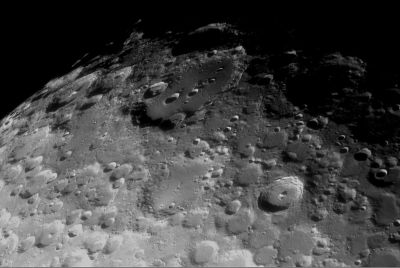
As Orion loops behind the Moon, Artemis II will travel farther from Earth than any human-crewed mission since 1972. The spacecraft will pass thousands of miles above the lunar surface, providing astronauts with unprecedented views of previously unseen terrain, including the vast Orientale Basin, sometimes called the Moon's 'Grand Canyon'. These observations will contribute valuable data for future missions and expand scientific understanding of the lunar surface.
As reported by BBC, Artemis II is a major step toward NASA's goal of returning humans to the Moon and eventually sending astronauts to Mars. The mission is an opportunity to evaluate deep-space operations, test Orion systems, and gather data for Artemis III, which aims to land astronauts on the lunar surface.
Astronauts Aboard Orion Continue Daily Routines While Managing NASA Equipment and Tasks
Life aboard Orion has remained structured, balancing operational duties, scientific observations, and personal routines. Astronauts continue to conduct system checks and document lunar features while communicating with Earth whenever possible. Minor technical issues, including a temporary toilet malfunction, have been managed with backup systems, highlighting the practical realities of deep-space living. Morale among the crew remains high as they approach the defining phase of their journey.
Artemis II Mission Provides Critical Insights for NASA Moon and Mars Exploration Programmes
The mission is a test of technology and crew endurance and a stepping stone toward sustainable lunar exploration. Artemis II provides vital insights into spacecraft performance and crew operations far from Earth, knowledge that will directly inform Artemis III and other long-term exploration goals. The 40-minute blackout behind the Moon underscores both the risks and historic significance of humanity's return to deep space, drawing global attention to NASA's ambitious lunar programme.
© Copyright IBTimes 2026. All rights reserved.
- Recommended For You