NASA Just Answered The Biggest Artemis II Questions — Here's What They Revealed
NASA provided continuous coverage including live broadcasts on its YouTube platform and real-time imagery from Orion

The Artemis II mission has concluded in triumph after the Orion Spacecraft surpassed the furthest distance travelled by humans in deep space, breaking a 56-year-old record.
The mission, which saw four astronauts venture 252,760 miles from Earth, will officially conclude with a splashdown off the coast of San Diego at 8:07 pm EDT on 10 April 2026. This landmark flight represented the first time humans had left low Earth orbit since the Apollo era, serving as the definitive proof-of-concept for NASA's return to the lunar surface.
NASA astronauts Reid Wiseman, Victor Glover, and Christina Koch, alongside the Canadian Space Agency's Jeremy Hansen, spent 10 days pushed to the edge of the human frontier. According to official Artemis II mission results, the crew travelled a total of 695,081 miles, testing critical life-support and navigation systems that will eventually carry the first woman and person of colour to the lunar South Pole.
It was launched at 6:35 pm EDT (11:35 pm BST) on 1 April from Launch Pad 39B at Kennedy Space Centre in Florida. According to NASA, Artemis II was designed to 'confirm the systems necessary to support astronauts in deep space exploration and prepare to establish a sustained presence on the Moon.'
How Did NASA Follow The Mission In Real Time?
NASA provided continuous coverage throughout the mission through multiple channels, including live broadcasts on its YouTube platform and real-time imagery from Orion when bandwidth allowed. Additional interior and exterior views were shared when available.
Daily mission status briefings were held from NASA's Johnson Space Centre in Houston, continuing through splashdown. The agency also published regular updates and imagery via the Artemis blog and multimedia platforms, allowing the public to follow the spacecraft's journey around the Moon.
NASA also provided tracking tools for Orion's position in space, enabling the public to monitor the mission as it unfolded.
What Did The Crew Do In Space?

NASA confirmed that the Artemis II astronauts actively tested Orion's capabilities throughout the mission. This included manual spacecraft operations, monitoring automated systems, and evaluating life-support, propulsion, power, thermal, and navigation systems.
The crew also conducted proximity operations, trajectory adjustments, and communication tests at lunar distances. These activities were designed to simulate future lunar landing missions.
NASA stated that astronauts also participated in science activities, including lunar surface observations and human health studies, to inform future exploration. The agency emphasised that these tasks were essential to 'verify subsystems and validate data' for deep space operations.
How Far Did Artemis II Travel And What Did It Achieve?
During the mission, the crew travelled approximately 695,081 miles, including launch, the lunar flyby, and the return to Earth. At its furthest point, Orion reached about 252,760 miles from Earth, surpassing the Apollo 13 record by about 4,105 miles.
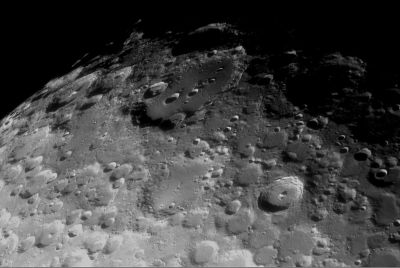
During the lunar flyby, astronauts observed both the near and far sides of the Moon during a seven-hour viewing period. NASA noted that lighting conditions varied due to the Moon's shifting angle relative to the Sun, so exact visual conditions were confirmed only after launch.
At closest approach, Orion passed roughly 4,070 miles from the lunar surface, offering astronauts one of the most detailed human views of the Moon in over half a century.
Why Did Communication Blackouts Occur During The Mission?

NASA confirmed that mission control temporarily lost communication with Orion when the spacecraft passed behind the Moon. This blackout period occurred as expected when the Moon blocked direct radio signals between Earth and the spacecraft.
During these intervals, Orion operated autonomously using onboard systems. NASA described this as a normal and essential part of deep space flight operations, validating spacecraft independence during lunar missions.
How Did Orion Return To Earth, And How Was The Crew Recovered?
The Artemis II mission concluded with a splashdown off the coast of San Diego at approximately 8:07 pm EDT on 10 April (1:07 am BST, 11 April). Following re-entry, Orion descended into the Pacific Ocean, where recovery teams immediately retrieved the crew.
According to NASA, recovery operations involved helicopters transporting astronauts to the USS John P. Murtha. Once aboard, the crew underwent medical evaluations before returning to shore and flying back to NASA's Johnson Space Centre in Houston.
NASA stated that recovery procedures began within minutes of splashdown, with coordinated naval teams securing the capsule and ensuring crew safety during transfer.
What Systems And Experiments Were Onboard Orion?
The astronauts had access to 189 menu items, including coffee and smoothies. Meals ranged from tortillas and nuts to barbecue beef brisket, cauliflower, macaroni and cheese, butternut squash, cookies, and chocolate, all designed to support nutrition and performance in space. NASA said the menu was carefully balanced to meet hydration, calorie, and individual dietary needs.
Orion was also equipped with 32 cameras and imaging devices, supporting engineering monitoring, navigation, crew operations, and science objectives. These included both fixed spacecraft cameras and handheld units used by astronauts.
NASA also highlighted the selection of a zero-gravity indicator named Rise, a small plush object designed to symbolise Earthrise from Apollo 8. It was chosen through an international design challenge with more than 2,600 submissions.
Why Does Artemis II Matter For Future Exploration?

NASA described Artemis II as a foundational test flight that confirmed the systems needed for sustained human exploration beyond Earth orbit. The mission was built directly on the uncrewed Artemis I flight, validating performance with astronauts on board in deep space conditions.
The agency's long-term goal remains the establishment of a sustained human presence on the Moon and the eventual launch of crewed missions to Mars. Artemis II therefore served as a critical bridge between experimental flight and future lunar landings.
© Copyright IBTimes 2026. All rights reserved.
- Recommended For You