Artemis II Warning: UFO Experts Fear Astronauts Could Bring Aliens Back From Moon
After smashing Apollo 13's distance record and orbiting the Moon's far side, four astronauts are set to hit the Pacific tonight amid wild warnings of extra-terrestrial stowaways

NASA's historic Artemis II mission is hurtling towards a high-stakes splashdown off the California coast tonight, bringing a record-setting Lunar odyssey to a fiery conclusion.
The Orion capsule, carrying astronauts Reid Wiseman, Victor Glover, Christina Koch, and Jeremy Hansen, is scheduled to hit the Pacific Ocean at approximately 5:07 p.m. PDT on Friday, 10 April 2026.
While the world celebrates the first human voyage to the far side of the Moon in over half a century, a shadow of controversy has emerged from the fringes of the scientific community. UFO enthusiasts and paranormal researchers are sounding an Artemis II warning, claiming the crew may not be returning to Earth alone.
The 10-day mission has already secured its place in the history books by reaching a maximum distance of 252,756 miles from Earth, officially shattering the long-standing human spaceflight record set by Apollo 13 in 1970. However, as the Orion capsule moon mission prepares for its final plunge, the technical brilliance of the flight is being rivalled by sensational claims of extraterrestrial interference.
Artemis II Warning Before The Splashdown
The immediate concern for the crew is not extraterrestrial life but physics. During the final leg home, Orion is due to undergo three trajectory correction burns before re-entering Earth's atmosphere at blistering speed, with the heat shield facing the harshest test of the mission.
NASA coverage and allied reports put that speed at up to 23,839 mph, which helps explain why Glover called the return a ride through a 'fireball' rather than treating it as a routine landing.
'I've actually been thinking about entry since 3 April, 2023, when we got assigned to this mission,' Glover said, adding that he was still processing the journey even with two more days to go.
NASA engineers have closely monitored the spacecraft's Avcoat thermal protection system following erosion issues noted during the uncrewed Artemis I flight. To mitigate risks, the NASA Orion capsule in 2026 is executing a modified re-entry trajectory to protect the four pioneers aboard. Despite the intense focus on engineering, the narrative surrounding the splashdown has been hijacked by those who believe the Moon's far side holds more than just craters.
UFO Hunter Robert Pulme Issues 'Alien DNA' Warning
Amidst the official updates, UFO hunter Robert Pulme has sparked a viral debate by suggesting that governments are hiding the true nature of what lies on the lunar surface. Pulme, who has spent decades investigating paranormal phenomena, claims that this mission could be a turning point for humanity. 'There are very real signs that world governments know more than they let the public know,' Pulme stated, suggesting that alien DNA space mission contamination is a genuine possibility.
He further alleged that extraterrestrial beings are already integrated into society, hiding in plain sight within ordinary roles such as postal workers or shop assistants. While Pulme offers no empirical evidence for these claims, his comments have tapped into a deep-seated public fascination with the NASA lunar far side flyby. Other researchers, including Jacques Vallée, have suggested that these entities may not be from another planet at all, but rather from parallel realities that intersect with our own.

Facts Behind The Apollo 13 Distance Record Smash
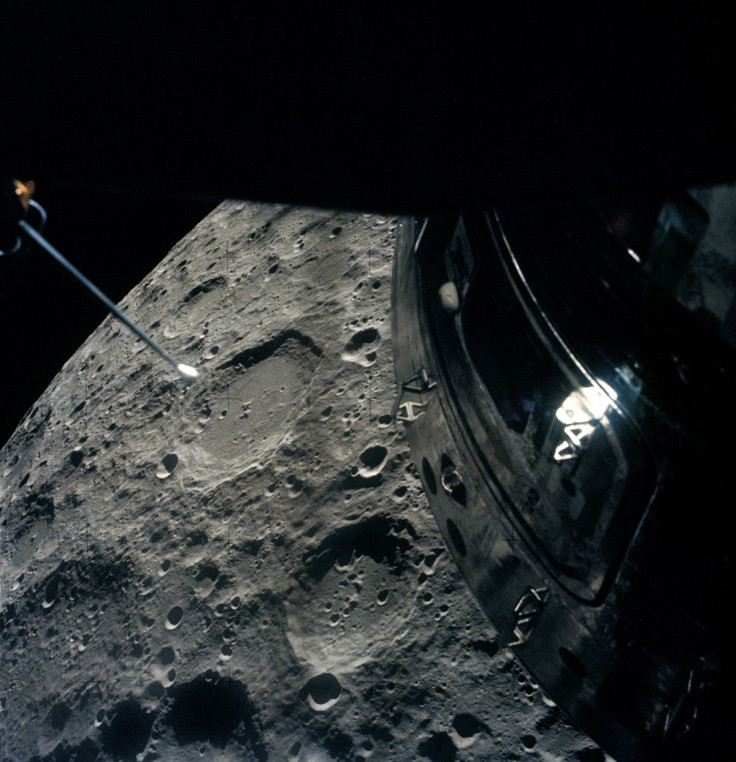
While the alien theories capture headlines, the verifiable data from the Moon mission's far side is equally staggering. On 6 April, the crew reached a point 4,101 miles farther into deep space than the Apollo 13 crew ever did. Canadian astronaut Jeremy Hansen reported that seeing the lunar surface with the naked eye was 'unbelievable', as the crew captured high-resolution imagery of impact craters never before seen in such detail.
The Artemis II splashdown in 2026 marks the first time a crewed vehicle has ventured this far, providing NASA with over 300GB of critical data. This information is vital for the planned 2028 crewed landing. Unlike the speculative claims of Robert Pulme, these distances and speeds are tracked in real-time by Deep Space Network stations around the globe, providing a solid foundation of fact for a mission that has otherwise inspired a wave of modern myth-making.
The Reality Of The Heat Shield And Alien Evidence Gap
Despite the noise from UFO experts and lunar base theorists, there is currently zero evidence from NASA or independent observers to suggest that any biological life was encountered during the flyby. Author Anna Whitty has argued that if 'aliens' do exist, they are more likely to be an advanced, ancient human species living in our oceans or caves rather than lunar stowaways. This perspective aligns with a growing trend of 'interdimensional' or 'terrestrial-origin' theories that move away from traditional space-travel tropes.

As the recovery teams aboard the USS John P. Murtha wait in the Pacific, the focus remains on the safe retrieval of the four astronauts. Christina Koch's role in the Moon mission, as the first woman to fly to the vicinity of the Moon, is a milestone that stands independently of any paranormal speculation. The splashdown will be a triumph of human ingenuity, proving that while we may dream of aliens, the real wonder is the ability to navigate the void and return home safely.
© Copyright IBTimes 2026. All rights reserved.
- Recommended For You