NASA Pushes Artemis II Closer to Home After Perfect Correction Burn
Orion completes its final major course correction as the crew tests anti-gravity suits and manual piloting before their 25,000mph re-entry

The Artemis II crew has begun the final leg of its historic mission after completing a critical engine burn on 7 April 2025, showcasing human deep‑space capability and setting the stage for future lunar exploration.
The Orion spacecraft, named Integrity, fired its thrusters for 15 seconds to fine-tune its path toward Earth. This manoeuvre adjusted the capsule's velocity by 0.5 metres per second.
The four-person crew exited the lunar sphere of influence on Tuesday and is now under Earth's dominant gravitational pull. A splashdown is expected in the Pacific Ocean on Friday, 10 April 2026, at approximately 8:06 pm ET.
Launched on 1 April 2026 aboard a Space Launch System rocket, Artemis II is the first crewed test flight around the Moon in more than half a century. The mission aims to validate spacecraft systems and demonstrate key operations, laying the groundwork for Artemis III and beyond.
A Short But Significant Burn
On Flight Day 7, at approximately 8:03 p.m. EDT, the Orion spacecraft fired its thrusters for a 15‑second correction burn that produced a modest change in velocity of about 1.6 feet per second. This carefully calibrated manoeuvre adjusted Orion's return trajectory toward Earth following its lunar flyby.
NASA astronaut Christina Koch and Canadian Space Agency astronaut Jeremy Hansen closely monitored the procedure and reviewed navigation data with mission control. The burn was planned as part of a series of small adjustments to ensure the spacecraft remains firmly on course for its scheduled splashdown in the Pacific Ocean.
From Moon's Edge to Earth's Gravitational Pull
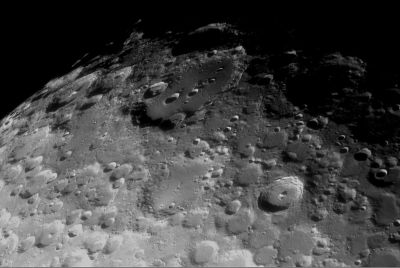
The correction burn follows the mission's successful lunar flyby, during which Artemis II reached its farthest point from Earth, surpassing the distance record set by Apollo 13, and captured stunning views of the Moon's far side.
NASA has designed Artemis II's trajectory as a 'free return' path: once Orion swings around the Moon, it uses gravity to carry it back toward Earth with minimal additional propulsion. This elegant trajectory, long discussed by space scientists, reduces fuel consumption and helps ensure mission safety.
As Orion continues its homeward trek, the spacecraft is now beginning a phase dominated by navigation precision and preparation for re‑entry procedures.
Crew Prepares for Final Tasks

After the burn, the crew was given a well‑deserved night of rest before resuming a busy schedule of flight test objectives and preparations. Over the next few days, the astronauts are expected to conduct a series of demonstrations to evaluate Orion's manual piloting capabilities and the suit systems designed to aid physiological adjustment upon return to Earth's gravity.
One such demonstration involves testing orthostatic intolerance garments, specialised apparel to help maintain stable blood pressure and circulation as bodies readapt after prolonged exposure to microgravity.
Human and Scientific Frontiers
Beyond testing hardware and procedures, Artemis II is yielding rich scientific and cultural returns.
The crew radioed observations back to Earth while out of direct communication, and earlier in the mission, they even made a historic long‑distance radio call with the International Space Station.
Other remarkable experiences reported by astronauts include witnessing an in‑space solar eclipse from above the Moon and capturing images of the far side of the Moon, sights no human has seen in person for over 50 years.
These moments underscore not only the mission's technical achievements but its emotional and observational impact on those aboard.
What Comes Next
With the first correction burn complete, Artemis II now faces the final stages of its roughly 10‑day mission. The spacecraft is expected to splash down in the Pacific Ocean near San Diego on or around 10 April, where recovery teams from NASA and partner agencies will await.
In the days ahead, further small burns and system checks will ensure Orion stays precisely on cloud‑cuing trajectory and that crew readiness for re‑entry is maintained. As the mission draws to a close, NASA scientists and engineers will begin analysing all collected data with an eye toward Artemis III, slated to be the first crewed lunar landing of the modern Artemis era.
Legacy of Artemis II
While no lunar landing is planned for this flight, Artemis II's success is already being viewed as a testament to NASA's new deep‑space systems and international cooperation in space exploration.
NASA's return to human lunar missions marks a continuity of exploration that stretches back to the Apollo era, blending bold discovery with rigorous testing to ensure the next generation of astronauts can safely journey to the Moon and beyond.
© Copyright IBTimes 2026. All rights reserved.
- Recommended For You