'We Saw Sights No Human Has Ever Seen'—Artemis II Crew Head Home After Historic Mission
NASA's Artemis II mission surpasses Apollo records, paving the way for future lunar and Mars exploration

The NASA Artemis II crew is hurtling toward Earth after completing a high-stakes lunar fly-by that redefined the boundaries of human spaceflight in 2026.
Following a successful orbit of the Moon, the four-member team is currently on a final four-day trajectory toward a scheduled splashdown in the Pacific Ocean.
The mission saw the Orion spacecraft travel 252,756 miles (406,771km) from our home planet, officially breaking the long-standing Apollo 13 distance record set in 1970. This milestone marks the furthest any human-rated vessel has ever ventured into the void.
Commander Reid Wiseman described the experience in striking terms, saying the crew 'saw sights that no human has ever seen,' while pilot Victor Glover admitted there were 'no adjectives' sufficient to capture the scale and beauty of what unfolded before them.
Record-Breaking Distance And A Journey Into The Unknown
The Orion spacecraft's trajectory took it farther from Earth than any human has ever travelled, eclipsing the Apollo 13 record. At its peak, the spacecraft reached more than 252,000 miles from the planet, a distance that underscores both the ambition and risk of deep space exploration.
As the spacecraft passed behind the Moon, communication with mission control was temporarily lost for around 40 minutes. When contact was restored, mission specialist Christina Koch broke the silence with a simple yet powerful message: 'It is so great to hear from Earth again.'
The blackout highlighted the isolation of deep space travel. With no possibility of immediate rescue, astronauts rely entirely on their training and onboard systems, underscoring the high-stakes nature of such missions.
A Rare View Of The Moon And A Surreal Eclipse

Beyond the record-breaking distance, the crew witnessed phenomena that few humans could ever imagine. Among the most remarkable was a total solar eclipse observed from the unique vantage point of deep space.
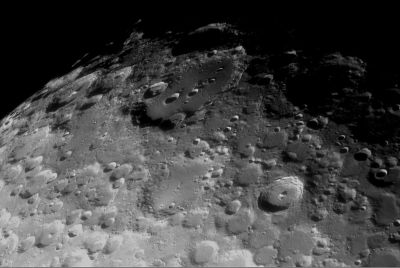
Describing the moment, astronauts called the experience 'surreal,' noting the dramatic contrast between light and shadow across the lunar surface. Observations of the Moon's far side revealed previously unseen details, including small craters appearing as bright patches and a jagged boundary between light and darkness shaped by the terrain.
According to Dr Nicola Fox, NASA's head of science, these features were visible even to the naked eye, offering a perspective that differs fundamentally from satellite imagery.
'We Will Always Choose Earth': A Message That Resonated
Perhaps the most striking moment came not from the visuals but from the words shared by the crew. In a reflective message sent during the mission, Koch addressed people across the globe:
'We will explore. We will build ships. We will visit again. We will construct science outposts. We will drive rovers, we will do radio astronomy, we will found companies. We will bolster industry, we will inspire.
'But ultimately, we will always choose Earth. We will always choose each other.'
The statement captured the dual nature of space exploration, pushing the boundaries of human capability while reinforcing the value of the planet left behind.
A Mission That Signals The Future Of Space Exploration
The Artemis II mission is widely seen as a critical step towards a sustained human presence on the Moon. It lays the groundwork for future missions, including planned lunar landings and longer-term habitation.
Experts say the mission is less about immediate scientific breakthroughs and more about proving that humans can once again operate safely in deep space. The technologies and procedures tested during this flight are expected to play a vital role in upcoming missions, including those aimed at Mars.
The astronauts are expected to splash down at approximately 8:07 pm Eastern Time on Friday (01:07 am British Summer Time on Saturday), where recovery teams will retrieve them from the Pacific Ocean. From there, they will undergo medical checks before returning to land.
A Historic Return With Global Significance
The mission has drawn global attention, with world leaders, including President Donald Trump, praising the crew for their achievement. During a call with the astronauts, Trump said they had 'made history and made all America really proud.'
Yet beyond national pride, Artemis II represents something broader: a renewed human push into deep space. More than five decades after the Apollo missions, humanity is once again extending its reach beyond Earth; this time with the aim of staying.
As the crew makes its way home, their journey stands as both a technological triumph and a reminder of the enduring human drive to explore the unknown.
© Copyright IBTimes 2026. All rights reserved.
- Recommended For You