What is Artemis II? Here's Everything We Know About its 10-Day Lunar Journey
NASA's landmark mission aims to prove vital technology and build confidence for the long-awaited return of humans to the Moon.

Artemis II stands as a pivotal moment in human space exploration, marking the first crewed flight around the Moon since 1972. This mission aims to test vital space systems in deep space conditions, paving the way for future lunar landings and beyond.
The mission represents not only a technical milestone but also a symbolic leap, reaffirming ambitions to establish sustained human presence on the Moon. Its success will determine the pace of future lunar missions and influence long-term plans for Mars.
What We Know of The Mission
Artemis II is NASA's first crewed mission within the Artemis programme, designed to orbit the Moon for approximately ten days. It carries four astronauts aboard the Orion spacecraft, launched atop the powerful Space Launch System (SLS) rocket. The crew includes NASA astronauts Reid Wiseman (commander), Victor Glover (pilot), Christina Koch (mission specialist), and Canadian Space Agency astronaut Jeremy Hansen (mission specialist).
The mission's primary goal is to evaluate Orion's systems in deep space. Systems such as life support, navigation, and communication will undergo extensive testing while the crew performs a lunar flyby on a free-return trajectory. This path uses the Moon's gravity to slingshot Orion back to Earth, avoiding the need for a lunar landing during this initial test.
Launch and Early Flight Phase
The launch took place from Kennedy Space Centre's Launch Complex 39B. After initial ascent, Orion will have been placed into a highly elliptical Earth orbit, reaching an apogee of roughly 1,200 nautical miles. During this phase, the crew begins testing essential life-support systems, such as water and hygiene systems, and conduct system checks. About 50 minutes after launch, the Interim Cryogenic Propulsion Stage (ICPS) ignites to improve Orion's orbit, raising the apogee to 38,000 nautical miles.
Lunar Flyby and Deep Space Testing
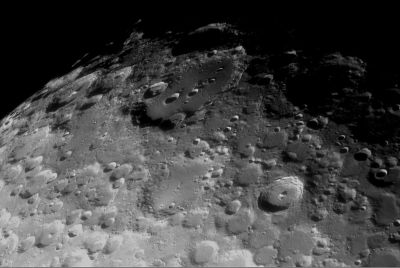
The lunar flyby will bring the spacecraft within approximately 6,500 km (about 4,000 miles) of the lunar surface. This part of the journey will last around four days, during which the crew will monitor systems and observe the Moon's far side: the first time humans have seen this area up close since Apollo.
While orbiting the Moon, Orion will test various systems, including trajectory correction burns, to ensure safe return. The spacecraft's closest approach provides a valuable opportunity to evaluate deep space environmental effects on the spacecraft and crew.
Re-entry, Splashdown, and Future Missions
The return journey begins with Orion re-entering Earth's atmosphere at about 40,000 km/h (roughly 25,000 miles per hour). Originally, a skip reentry was planned to manage heat and energy dissipation, but following observed issues with Artemis I's heat shield, the plan has been adjusted to a steeper reentry profile. Splashdown will occur in the Pacific Ocean, near San Diego, where Navy recovery teams will retrieve the crew and capsule.
The entire mission is expected to last approximately ten days, from launch to splashdown. Post-mission, astronauts will undergo medical examinations, including obstacle course tests to assess their recovery. The data collected during Artemis II will be vital for future missions.
Significance and Future Outlook
Artemis II marks a significant step forward in space exploration, testing the Orion spacecraft and SLS rocket in real deep space conditions. It will set new records for distance from Earth and velocity, demonstrating capabilities essential for future lunar habitation and exploration. The mission also includes testing new payloads like AVATAR and ARCHAR, which study astronaut health and the effects of space environment on the human body.
If Artemis II proceeds smoothly, NASA will move towards Artemis III, aiming to return humans to the Moon's surface. The mission's success could influence plans for crewed missions to Mars, a goal that remains distant but increasingly feasible. This journey around the Moon underscores a new era of space travel, grounded in rigorous testing and scientific advancement.
© Copyright IBTimes 2026. All rights reserved.
- Recommended For You