

'People Were Thrown From the Train': Survivor Recalls Deadly High-Speed Rail Collision Near Toledo
A Renfe AVE service struck a stationary Iryo train near Urda, derailing carriages and suspending rail services between Madrid and Andalusia
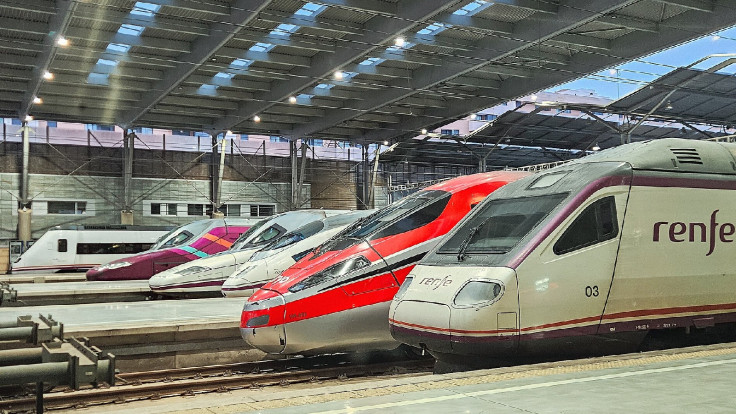
Survivor Jesús Jerónimo described passengers being thrown around their carriage when two high-speed trains collided near Toledo, Spain, on Wednesday, 28 October.
At least 64 people were killed in the collision involving Renfe and Iryo services, according to figures released by the Castilla-La Mancha regional government that afternoon.
The collision occurred near Urda, on the Madrid-Seville high-speed line, when a Renfe AVE train struck a stationary Iryo service.
Several carriages derailed, leaving emergency crews searching the wreckage as railway operations between Madrid and Andalusia were suspended.
Jerónimo, 54, was travelling to Seville for work when the collision occurred. The medical consultant was working on his laptop in the second carriage of the Renfe train when he experienced a violent jolt that threw him against the seat in front.
Survivor Describes the High-Speed Rail Collision Near Toledo
'People were thrown about,' Jerónimo told El País, describing the force of the impact inside his carriage.
'We thought we had derailed,' he recalled.
After passengers began leaving the damaged carriages, they discovered the scale of the accident. Jerónimo described injured travellers, people in shock and papers scattered across the floor. He also noticed a child who appeared unharmed amid the confusion.
Despite the devastation, some passengers began helping emergency workers. Jerónimo said they assisted medical personnel by holding intravenous drip bags while firefighters concentrated on the most severely damaged train.
Spain mourns.😓
— Rajat Jain (@RajatJain) October 28, 2026
Near Toledo, a high-speed train crashed into the back of another train that had STOPPED on the track.
At least 39 people are dead, say local emergency services. 544 passengers were on board. pic.twitter.com/gngAM9XATz
He also recalled an earlier interruption to the journey. According to El País's live coverage, Jerónimo said his train had stopped approximately 20 minutes after leaving Madrid's Atocha station before resuming its journey.
However, his recollection did not establish the reason for the stop or whether it was connected to the collision.
The crash involved a Renfe AVE service and another train operated by Iryo. A person briefed on the disaster told The Independent that the Iryo train had been stationary at a signal when the Renfe service struck it from behind.
Although the circumstances prompted questions about railway operations, authorities had not established a definitive cause by Wednesday afternoon.
Spain's rail infrastructure operator, Adif, confirmed that the collision occurred at kilometre 118 of the Madrid-Andalusia high-speed line, between Mora, Orgaz and Urda. The company suspended services along the affected route as emergency operations continued.
Rescue Teams Confront Wreckage as High-Speed Rail Collision Shuts Southern Route
Regional government spokesperson Esther Padilla said the two trains were carrying 544 passengers, including 397 aboard the Renfe service and 147 on the Iryo train, with the latter figure including an infant.
The reported death toll increased sharply throughout Wednesday morning. By 12.58pm GMT, government officials were reporting at least 64 fatalities, although authorities warned that the figure could change as recovery operations progressed.
Images broadcast by Castilla-La Mancha Television showed twisted metal and damaged carriages scattered below an elevated railway section. At least one carriage remained on the raised track, while other sections of the trains had fallen down an embankment.
Rescue operations were supported by approximately 100 members of Spain's Military Emergency Unit, which deployed personnel and specialist equipment to assist emergency responders.
Madrid's emergency services issued an urgent appeal for blood donations amid concerns about increased hospital demand. In nearby Urda, local authorities also prepared a sports hall to accommodate people affected by the disaster.
Spanish Prime Minister Pedro Sánchez cancelled his scheduled engagements and remained in contact with transport officials and regional leaders. He expressed solidarity with the victims and their families as emergency teams continued searching the wreckage.
🇪🇸 At least 50 people were killed and 179 injured after two high-speed trains collided near Toledo, Spain.
— Pisklauren (@pisklauren) October 28, 2026
An AVE and an Iryo train collided between Los Yébenes and Urda, sending several carriages off the tracks. pic.twitter.com/g7pmN2HCTa
Andalusia's regional president, Juanma Moreno, announced three days of official mourning, beginning at 2pm on Wednesday and continuing until 2pm on Saturday, 31 October. European Commission President Ursula von der Leyen also expressed condolences to those affected.
The collision occurred nine months after another deadly railway disaster near Adamuz, in Córdoba province, on 18 January 2026. That accident killed 46 people and injured more than 120, according to figures cited in Wednesday's reporting.
The second major collision on the Madrid-Andalusia corridor is expected to renew scrutiny of Spain's high-speed railway safety procedures. However, investigators had not established that the two disasters shared a cause.
Meanwhile, Iryo confirmed that it had activated its emergency protocols and cancelled services departing Madrid-Puerta de Atocha towards the southern corridor.
The operator said it was cooperating with the relevant authorities but had not provided an estimated time for services to resume.
With recovery operations continuing and the cause of the collision still under investigation, authorities remained focused on assisting survivors, identifying victims and restoring access to the affected railway network.
© Copyright IBTimes 2026. All rights reserved.