

Spain Train Crash: Report Claims Renfe AVE Was Cleared Past Red Signal Before Hitting Iryo Near Toledo
A Renfe AVE train struck the rear of a stationary Iryo service near Urda, disrupting high-speed rail links between Madrid and Andalusia
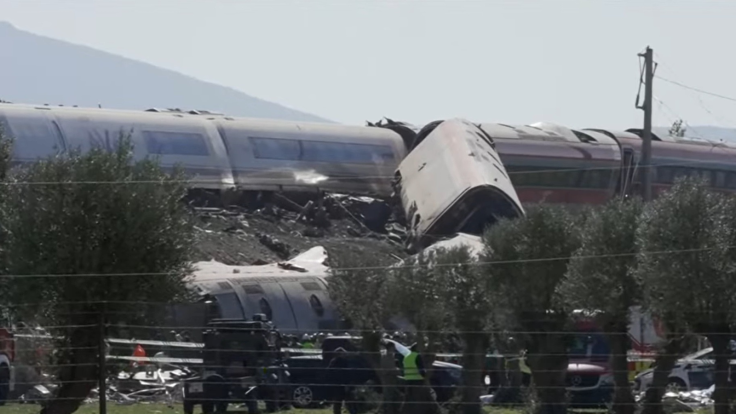
A deadly Spain train crash near Toledo on Wednesday, 28 October 2026, has raised questions about a reported instruction to pass a red signal. Spanish broadcaster Cadena SER, citing government sources, said a Renfe AVE train was allowed to proceed despite the stop indication.
It subsequently struck the rear of a stationary Iryo train near Urda on the Madrid-Seville high-speed line. At the time of publication, regional authorities had reported at least 31 deaths, with emergency crews continuing operations at the scene.
Investigators have not established the cause or confirmed whether the reported instruction contributed to the collision.
The accident occurred at approximately 8.54am near kilometre marker 118, between Mora y Orgaz and Urda in Toledo province. Several carriages derailed, with emergency services reporting that at least two fell down an embankment.
Railway infrastructure operator Adif suspended high-speed services between Madrid, Ciudad Real and Andalusia.
Spain Train Crash Raises Questions About Reported Red Signal
The main question concerns how the Renfe train was permitted to move while the Iryo service remained stationary ahead. Cadena SER reported that a railway operator had allegedly cleared a red signal before the Renfe train continued.
The account followed reports of a malfunction affecting the railway's main signalling system. Preliminary findings cited by Spanish media suggested several trains had stopped before operations switched to alternative signalling arrangements.
According to El País, government sources indicated that an operator at Madrid's Atocha control centre may have mistakenly authorised the Renfe service to continue. The Iryo train reportedly remained stationary after other services were instructed to resume their journeys.
The account points to a possible combination of technical failure and human error, although neither has been established as the cause. Adif has not publicly confirmed the alleged instruction or assigned responsibility for the collision.
Spain's railway safety arrangements are designed to maintain separation between trains. Reporting by state broadcaster RTVE indicated that an alternative signalling system was operating because of a problem with the primary LZB protection system.
Investigators must establish what safeguards remained active and whether the reported authorisation was issued.
Spain Train Crash Death Toll Rises as Rescue Operation Continues
The scale of the disaster became clearer throughout Wednesday as emergency teams searched damaged carriages and attended to injured passengers.
Castilla-La Mancha government spokesperson Esther Padilla initially confirmed at least 10 deaths. Later, regional authorities raised the figure to 30. Regional president Emiliano García-Page subsequently confirmed another death, bringing the reported toll to at least 31.
The figure remained provisional, with authorities warning that it could increase as recovery operations continued.
Padilla said the Renfe train carried 397 passengers, while the Iryo service had 146 passengers and a baby on board. Emergency teams prioritised the evacuation and treatment of injured passengers.
The Castilla-La Mancha government activated its regional emergency plan at 9.15am before raising its operational response level.
Firefighters, Civil Guard officers, medical personnel and civil protection teams were mobilised. An advanced command post coordinated the operation, while additional emergency resources were requested.
Prime Minister Pedro Sánchez cancelled scheduled engagements and expressed shock over the collision. He said the government was coordinating with regional authorities to assist victims and their families.
Spain Train Crash Disrupts Madrid-Andalusia Rail Services
Adif confirmed that the collision involved services operated by Renfe and Iryo on the Madrid-Seville corridor. Rail traffic was suspended between Madrid, Ciudad Real and Andalusia, affecting one of Spain's principal high-speed routes.
Renfe offered free ticket changes and cancellations to affected passengers. Railway authorities also established assistance arrangements for passengers and families seeking information about those involved.
The crash follows another major railway disaster in January 2026 near Adamuz, where 46 people died after a derailment and collision. Both accidents involved high-speed services, but no evidence establishes that they shared the same cause.
The latest collision has nevertheless renewed scrutiny of signalling safeguards and emergency procedures.
Authorities face the task of establishing why the Iryo train remained stopped and whether the Renfe driver received permission to pass the reported red signal. Investigators must also determine what information was available to railway controllers and whether safety systems were functioning as intended.
The investigation continues as families await further information about those killed and injured. Adif has confirmed the collision and service disruption, while the reported signalling instruction remains a preliminary account rather than an established finding.
The circumstances that allowed the two trains to occupy the same section of railway have yet to be conclusively explained.
© Copyright IBTimes 2026. All rights reserved.