

Did Russia Kill Lindsey Graham? Russian Opposition Figure Claims Kremlin Intelligence Assassinated US Senator
Unverified claims of Kremlin involvement in Senator Graham's death circulate, lacking evidence.
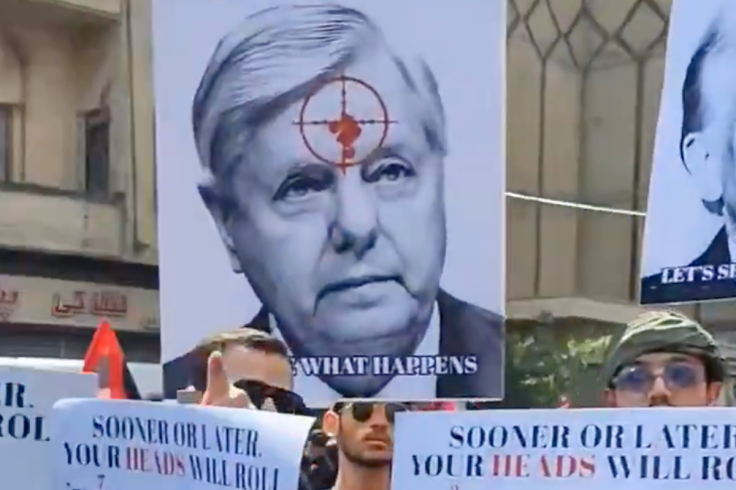
A Russian sociologist has suggested the Kremlin had Senator Lindsey Graham killed, but no evidence has surfaced to support the claim.
Graham, the South Carolina Republican and close Trump ally, died on 11 July 2026 at the age of 71, one day after returning from a trip to Kyiv. His office attributed the death to a 'brief and sudden illness'. Within hours, a Russian dissident's speculation about Kremlin involvement was circulating widely on social media, adding a geopolitical layer to an already fast-moving story.
The Claim: What Igor Eidman Actually Said
The claim originated with Igor Eidman, a Russian sociologist, writer and opposition figure who has previously advised liberal-leaning members of the Duma and served as communications director of the Russian Public Opinion Research Center. Belarusian outlet NEXTA relayed his comments in a post on X on 12 July 2026, stating that 'Russian opposition figure Igor Eidman claimed that Lindsey Graham may have been killed by Kremlin intelligence services.'
According to the NEXTA post, Eidman pointed to two factors: the timing of Graham's death, which came roughly 24 hours after he met Ukrainian President Volodymyr Zelensky in Kyiv, and the location. Eidman argued Moscow had a motive, given Graham's long record of advocating military aid for Ukraine. Eidman offered no forensic, medical or intelligence evidence for the claim; it is presented as analysis rather than a confirmed finding.
Russian opposition figure Igor Eidman claimed that Lindsey Graham may have been killed by Kremlin intelligence services
— NEXTA (@nexta_tv) July 12, 2026
According to sociologist Eidman, two factors point in this direction — the timing and the location.
Moscow had a motive: Graham actively advocated for… https://t.co/AbEeNZNQkd pic.twitter.com/K7G1i1xDkq
DID RUSSIA JUST ELIMINATE WARMONGER LINDSEY GRAHAM IN KIEV?
— RussiaNews 🇷🇺 (@mog_russEN) July 12, 2026
The US Senator who famously called killing Russians "the best investment we ever made" has died at 70 following a "sudden illness" right after his trip to Ukraine.
The 48-Hour DEATH TIMELINE is too wild to ignore: 👇… pic.twitter.com/5tnmCu3F0b
No Official Evidence of Foul Play
Graham's office has not amended its original account of the senator's death. Emergency responders were called to his Capitol Hill residence on Saturday night for a report of cardiac arrest, and his office subsequently described the cause as a 'quick and sudden illness', according to accounts relayed by NBC's Kristen Welker on 'Meet the Press'.
President Trump, discussing his final phone call with Graham on the same programme, said the senator 'sounded a little tired' but otherwise 'was fine'. No autopsy or toxicology results had been made public at the time of writing, and no US law enforcement agency, including the Secret Service or Capitol Police, has announced an investigation into foreign involvement.
Right-wing activist Laura Loomer separately called for a toxicology report and Secret Service inquiry, citing both Russia and Iran as potential suspects. Loomer's claims, like Eidman's, remain unverified and unconnected to any official finding. Russian and Iranian officials have not responded to Loomer's claims.
Did Russia just poison Lindsey Graham?
— Laura Loomer (@LauraLoomer) July 12, 2026
There seriously needs to be an investigation. Russia just sent a delegation to Khamenei’s funeral in Tehran where the IRGC and funeral organizers was calling for myself, President Trump and Senator Graham to be assassinated.
Lindsey… https://t.co/bEBz7LpuLi
A History of Kremlin Hostility Toward Graham
The speculation did not emerge in a vacuum. Graham had a long, publicly hostile relationship with Moscow. In March 2022, he told Fox News he hoped 'someone in Russia' would 'take out' Vladimir Putin 'by any means possible', prompting Kremlin spokesman Dmitry Peskov to accuse him of 'hysterical escalation of Russophobia' and Russian ambassador Anatoly Antonov to call the remark 'unacceptable and outrageous'.
Ukrainian government adviser Ostap Yarysh wrote on X that Russian state media had called for Graham's 'assassination' in 2023, following a filmed meeting between Graham and Zelensky in which Graham said Russian soldiers dying in Ukraine represented 'the best money we've ever spent', a comment Moscow seized on, and for which Russia's Interior Ministry later issued Graham an arrest warrant. Loomer also cited Kremlin adviser Alexander Dugin, an ultranationalist ideologue, as having called for Graham to be 'flattened' roughly four months before his death; Dugin has not commented on Graham's death. Pro-Kremlin commentator Kirill Fyodorov described Graham after his death as 'the chief ideologue behind flooding Ukraine with weapons', according to a review of Russian state media, illustrating the hostility that has fuelled the assassination theory without confirming it.
That documented animosity is what gives the theory its narrative pull, even in the total absence of forensic evidence. Zelensky, Netanyahu, NATO Secretary-General Mark Rutte and other Western leaders have offered condolences over Graham's death without referencing any suspicion of foul play, and no government has publicly disputed the 'brief and sudden illness' explanation given by Graham's office.
Until an autopsy or official investigation says otherwise, the claim that Russia killed Lindsey Graham remains exactly that: a claim, built on motive and timing, not evidence.
© Copyright IBTimes 2026. All rights reserved.