

South Africa's Xenophobic Violence Crisis: Poverty, State Abandonment and a Fragile National Identity
Exploring the economic and historical factors fuelling South Africa's anti-migrant violence
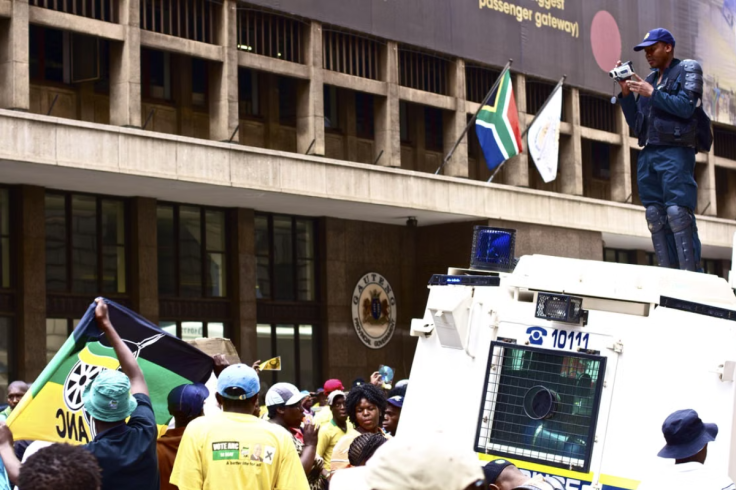
South Africa's latest wave of anti-migrant violence has left at least four people dead, according to police, and forced thousands of African nationals to flee their homes in recent months. The unrest, driven by movements such as Operation Dudula and March and March, has been described by one academic as unlike anything the country has seen since apartheid ended.
Fezokuhle Mthonti, a cultural historian and writer based in Johannesburg, said this iteration of xenophobic violence 'is not something that we've seen in the post-apartheid dispensation so far'. She said it is better funded and has been legitimised by mainstream media coverage, adding, 'This is a new moment.'
A Fragile Sense of Belonging
Mthonti said Black South Africans still hold what she called a 'tenuous' grip on their sense of place, despite having become citizens in 1994. She said that sense of belonging has felt precarious ever since, particularly for poor, rural South Africans who have not seen the promises of a transformed post-apartheid life come to fruition.
She linked the unrest to a wider global pattern. 'When there's a particular global economic crisis, we see this across the world, there's a turn to fascism, to conservative values, to scapegoating politics,' she said, adding that this shift becomes sharper still when set against South Africa's own history, its resulting fragile national identity and its ongoing political failures.
Mthonti also described the campaign as part of a broader victimisation of the poor working classes by a state she said has abandoned them, abdicating its role in providing economic security and services and leaving communities to fend for themselves. She said South Africans and migrants alike are 'the same folks who are trying to eke out an existence together' under those conditions.
'It is why this xenophobia is more troubling,' she said. 'The violence is more intimate. These are people who are next door to one another, who are suddenly turning on each other, because now there are these conversations about "us v them"'.
The Numbers Behind the Anger
The economic backdrop is stark. According to Statistics South Africa's latest Quarterly Labour Force Survey, the country's official unemployment rate climbed to 32.7 per cent in the first quarter of 2026, up from 31.4 per cent the previous quarter, with 8.1 million people now out of work. Youth unemployment is far worse, with the rate among South Africans aged 15 to 24 standing at 60.9 per cent in the same quarter.
The government has responded with a large-scale enforcement campaign. Justice and Constitutional Development Minister Mmamoloko Kubayi announced on Sunday that more than 53,000 foreign nationals had been deported or repatriated since the campaign began five weeks ago, with most coming from Malawi, Zimbabwe and Mozambique. Kubayi said authorities would continue enforcing immigration laws and warned protesters against conducting unauthorised searches of homes and businesses suspected of sheltering undocumented migrants.
President Cyril Ramaphosa has acknowledged public concerns about immigration but condemned attacks against migrants, warning citizens against taking the law into their own hands. The UN has warned against using migrants as scapegoats for South Africa's socioeconomic challenges.
Mthonti argued that the economic strain is being misdirected at migrants rather than at the state. She said both South Africans and foreign nationals are 'the same folks who are trying to eke out an existence together' under conditions of state abandonment, which she said makes the resulting violence 'more intimate'.
SOUTH AFRICA XENOPHOBIA: Nigerian Man Refuses to Shut Down Business, Says He Employs Over 25 South Africans
— CrownprinceCom2 (@CrownprinceCom2) June 16, 2026
A Nigerian businessman has stood his ground amid ongoing anti-immigrant tensions in South Africa, insisting that he will not close his shop😭😭 pic.twitter.com/1cgNGBoKag
Apartheid's Unfinished Business
Mthonti traced the roots of the crisis further back, describing South Africa as 'deeply marred by three systems of violence': slavery, colonialism and apartheid. She said the anti-Black racism entrenched under apartheid has resurfaced in a new form.
'What we are seeing is the same logic that was used to divide South Africans being repackaged around xenophobia,' she said, citing the treatment of the Tsonga minority, who she said face backlash despite having lived in South Africa for centuries.
She also pointed to the scale of forced migration behind the country's own wealth, noting that Johannesburg's economy was built on 'indentured labour'.
Not a Case of Poor People Turning Violent
Mthonti pushed back against the idea that poverty automatically produces xenophobia. 'I want to stress that poor people are not inherently xenophobic,' she said. 'Poverty doesn't equate to bigotry. More South Africans are open to pan-African unity than are not.'
Instead, she pointed to state failure and political scapegoating as the true drivers, describing the movement as part of a wider global trend involving figures such as Donald Trump and Jair Bolsonaro.
The scale of the fallout has already reached beyond South Africa's borders. Malawi, Ghana, Nigeria and Zimbabwe are among the governments that have organised the return of tens of thousands of their citizens, and anti-migrant activists have threatened weekly protests until their demands are met, raising fears of further violence.
© Copyright IBTimes 2026. All rights reserved.