Australian Tech Founder Uses ChatGPT and AlphaFold to Design Dog Cancer Vaccine — Tumours Shrink by 75%
A data engineer's innovative use of AI has led to a breakthrough in canine cancer treatment.
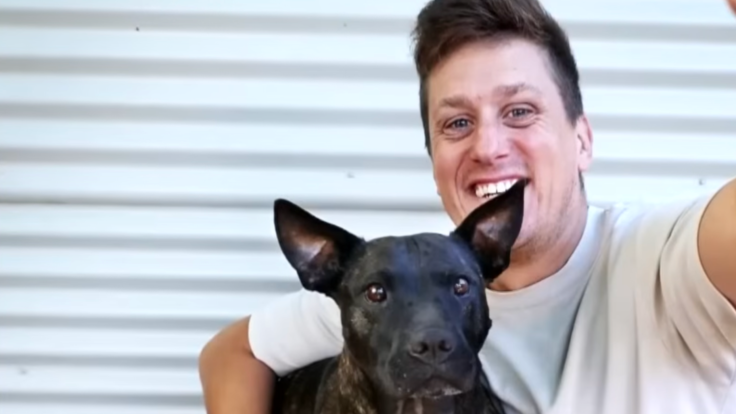
A Sydney data engineer with no background in biology has used ChatGPT and AlphaFold to design what researchers are calling the world's first personalised mRNA cancer vaccine for a dog, and the results have stunned the scientists who helped make it.
Paul Conyngham, co-founder of Sydney consultancy Core Intelligence Technologies and a former director of the Data Science and AI Association of Australia, spent months analysing the genomic data of his rescue dog Rosie after conventional chemotherapy and surgery failed to shrink her aggressive mast cell tumours.
Working with researchers at the University of New South Wales (UNSW) and the University of Queensland, Conyngham produced a bespoke mRNA vaccine that was administered to Rosie over the Christmas break in December 2025.
Within one month, the tennis-ball-sized tumour on Rosie's hock had shrunk by 75% — a result that Conyngham's treating veterinary team described as astonishing, and one that has since prompted serious questions among oncologists about the future of personalised cancer medicine.
A Data Problem, Not a Biology Problem
Conyngham, 42, adopted Rosie, an eight-year-old Staffordshire Bull Terrier-Shar Pei cross, from a Sydney animal shelter in 2019. In 2024, large tumours began appearing on one of her back legs. The diagnosis was mast cell cancer, the most common skin cancer found in dogs, and her veterinarians estimated she had between one and six months to live.
He spent tens of thousands of dollars on chemotherapy and multiple surgeries. The tumours slowed but refused to retreat. Facing Rosie's prognosis with the mindset of a machine learning engineer rather than a grieving pet owner, Conyngham opened ChatGPT and began mapping a research strategy. 'We took her tumour, sequenced the DNA, we converted it from tissue to data, and we used that to find the problem in her DNA and then develop a cure based off that,' he told Australia's Today programme on March 15, 2026. 'ChatGPT assisted throughout that entire process.'
ChatGPT suggested immunotherapy as a direction and pointed him toward genomic sequencing. Conyngham then contacted the UNSW Ramaciotti Centre for Genomics, where Associate Professor Martin Smith, director of the centre and a computational biologist, received what he later described to The Australian as an unusual request. 'We often get oddball queries,' Smith said. 'This one was coming from a private individual looking to sequence his dog.'
Smith was initially reluctant, concerned that generating raw genomic data is relatively straightforward but interpreting it is technically demanding. Conyngham's response was blunt, saying, 'No worries, I'm a data analyst and I'll figure this out with the help of ChatGPT.' He paid approximately £1,920 ($3,000) for the sequencing, which compared Rosie's healthy cells to her tumour cells to identify where mutations had taken hold.
AlphaFold, mRNA and a Half-Page Formula
Once he had the sequencing data, Conyngham ran it through several computational pipelines. He used Google DeepMind's AlphaFold, the AI protein-structure prediction programme that won the Nobel Prize in Chemistry in 2024, to model the three-dimensional shapes of the proteins encoded by Rosie's mutated genes. From those models, he identified which mutated proteins, known as neoantigens, were most likely to trigger a meaningful immune response.
The output of months of analysis was condensed to half a page of formulas describing the mRNA sequence for a vaccine that would target Rosie's specific cancer mutations. Smith, observing Conyngham's work, was forthright about his reaction saying, 'Paul was relentless. I was like, "Woah, that's crazy!"'

Conyngham brought those formulas to Professor Páll Thordarson, director of the UNSW RNA Institute, who synthesised a bespoke mRNA vaccine encased in lipid nanoparticles. 'He ran an algorithm to inform the design and sent it to us, and we made a little nanoparticle,' Thordarson told The Australian. From the point at which Conyngham delivered the sequence, Thordarson's lab completed the vaccine in under two months. 'Once we had the sequence that Paul designed, it was less than two months until we handed it over to Paul, to the vet,' Thordarson said on the Today programme.
Thordarson confirmed this is 'the first time a personalised cancer vaccine has been designed for a dog.' He added, 'This is still at the frontier of where cancer immunotherapeutics are — and ultimately, we're going to use this for helping humans. What Rosie is teaching us is that personalised medicine can be very effective, and done in a time-sensitive manner, with mRNA technology.'
The Red Tape Was Harder Than the Science
Before Rosie could receive a single injection, Conyngham faced a bureaucratic obstacle that dwarfed the scientific challenge. Australia's regulatory framework requires ethics approval before any experimental drug is administered, even to an animal. 'I had to do everything by the book because you can't just willy-nilly create a vaccine in Australia,' he told The Australian. 'The red tape was actually harder than the vaccine creation.'
He spent three months preparing a 100-page ethics application, dedicating two hours every evening to the task. A pharmaceutical company also declined to supply an immunotherapy drug his team had initially identified as a target, forcing a pivot to the mRNA approach.
Intervention came through Mari Maeda, founder of the US-based Canine Cancer Alliance, who connected Conyngham with Professor Rachel Allavena at the University of Queensland, a veterinary researcher who already held the ethics approval necessary to administer experimental treatments. Conyngham then drove ten hours to Gatton, Queensland, with Rosie in December 2025 for her first injection, followed by a booster.
One week after the initial injection, the tumour began to visibly shrink. By January 2026, Rosie had regained enough mobility to jump a fence at the dog park after a rabbit, a moment Conyngham described as nothing short of extraordinary. 'In December she had low energy because the tumours were creating a huge burden for her,' he said. 'Six weeks post-treatment, I was at the dog park when she spotted a rabbit and jumped the fence to chase it.'
One rescue dog, a £16 ($20) ChatGPT subscription, £1,920 ($3,000 USD) in genomic sequencing, and the determination of a data engineer may have quietly illuminated a path that pharmaceutical companies with billion-pound budgets are still struggling to navigate.
© Copyright IBTimes 2026. All rights reserved.
- MOST POPULAR IN Technology